Post Icon

Dodge confirms gas-powered Charger Sixpack coming this summer


via Dodge confirms gas-powered Charger Sixpack coming this summer

Dodge has confirmed that the combustion-powered Charger Sixpack will hit dealerships by the summer of 2025. The announcement came directly from Stellantis while speaking to dealers at the National Automobile Dealers Association (NADA) convention in New Orleans, according to a press release from the company. This marks an important moment for Dodge as the brand attempts to rebound from a rough 2024, in which sales dropped by 29%.

The Charger Sixpack will be a crucial counterpart to the electric Charger Daytona, which has only recently begun arriving at dealerships despite initial plans for it to arrive last summer. Dodge initially focused on launching the EV variant, but delays and leadership changes, including former Stellantis CEO Carlos Tavares’ abrupt resignation, seemed to slow progress. Now, the addition of a gas-powered model could help attract traditional muscle car buyers who aren’t ready to go electric.

Related: Honda eyes sub-$30,000 EV for U.S. market

The Sixpack’s place in Dodge’s lineup
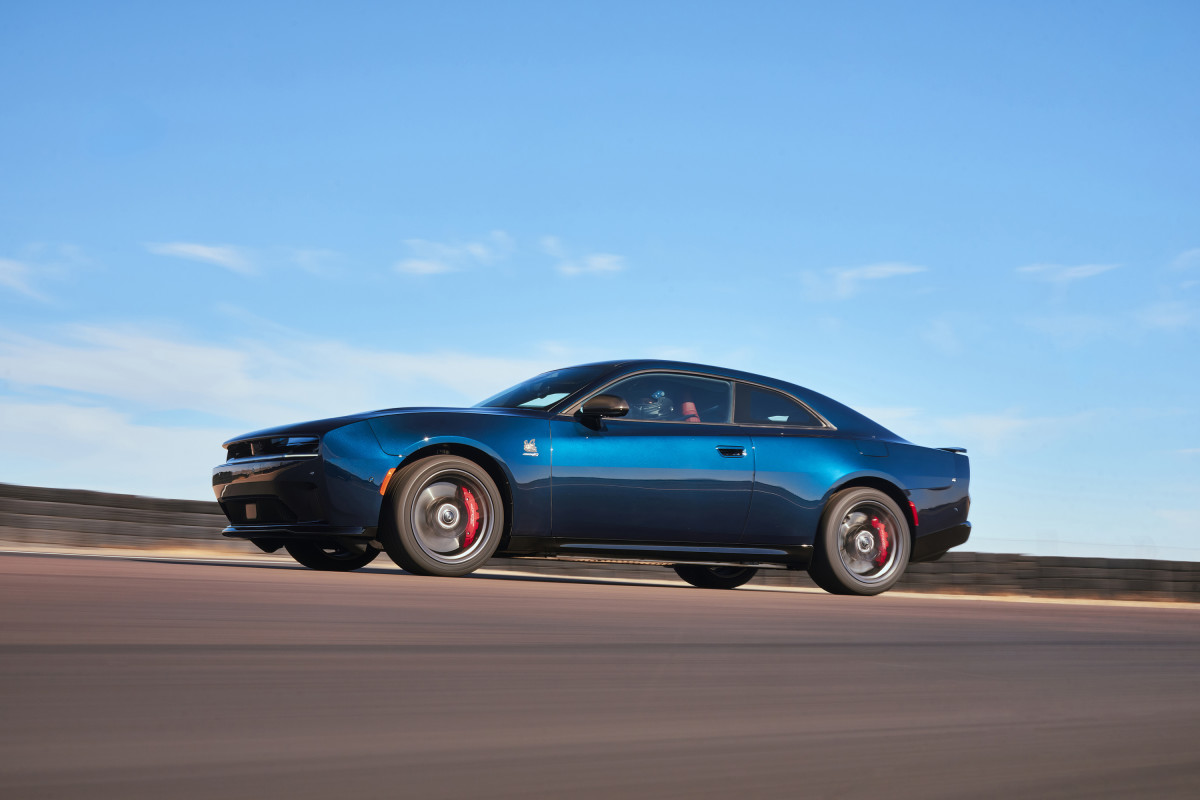
2025 Dodge Charger Daytona

Stellantis

Though full details remain scarce, we do know that the Sixpack will feature Dodge’s Hurricane 3.0-liter twin-turbocharged inline-six engine. It will be available in two power levels, with 420 horsepower in standard trim and 550 horsepower in high-output form. Buyers will also have a choice between two-door and four-door configurations, with all-wheel drive as an option. While Dodge hasn’t confirmed all performance specs, the Charger Sixpack will almost certainly deliver the tire-smoking antics enthusiasts expect.

Related: The new Tesla Model Y looks a little too much like Cybertruck

Dodge’s sales woes and dealer frustrations

The timing of the Sixpack’s release is critical. Dodge’s sales have plummeted, mirroring struggles across Stellantis’s North American brands, including Jeep, Ram, and Chrysler. Dealers have expressed frustration, blaming inconsistent product strategies and pricing policies for the decline.
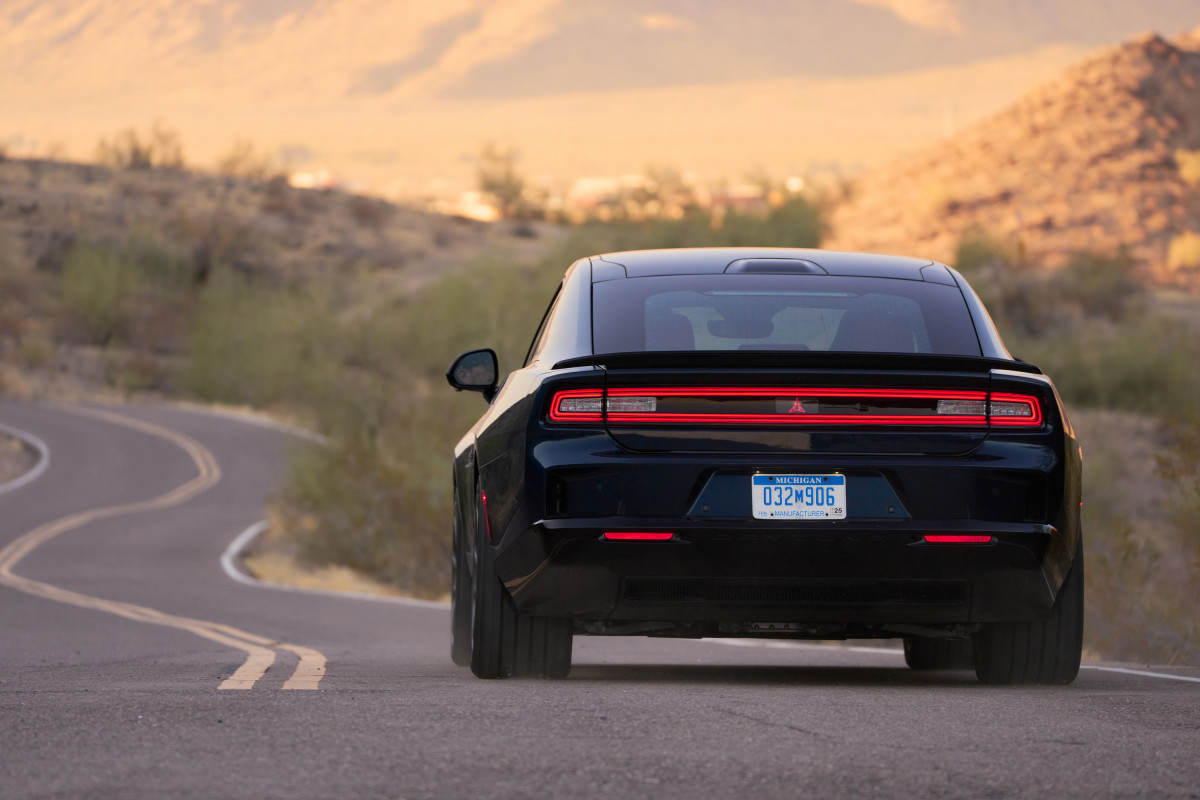
2025 Dodge Charger Daytona

Stellantis

“As we look at the year ahead, we recognize that consistency is what our dealers are seeking from us,” said Jeff Kommor, head of U.S. sales for Stellantis. “Following a challenging 2024, we told dealers—directly—that we will be consistent and focus on gaining their trust, especially when it comes to our products, our pricing, and our incentives. We’ve seen an overwhelmingly positive response based on these promises and commitments, and we have confidence that 2025 is going to be a great year for the company and dealers alike.”

Related: Volkswagen cancels ID.7 EV for North America amid “challenging EV climate”

A global play for Dodge

Dodge isn’t just looking to American buyers to save the brand. In late 2025, the Charger lineup—including both the EV and ICE variants—will expand to Europe and the Middle East. The move is ambitious, as American muscle cars have historically struggled to gain traction overseas. However, offering both combustion and electric options could give Dodge an edge in these markets, where EV adoption is higher than in the U.S.
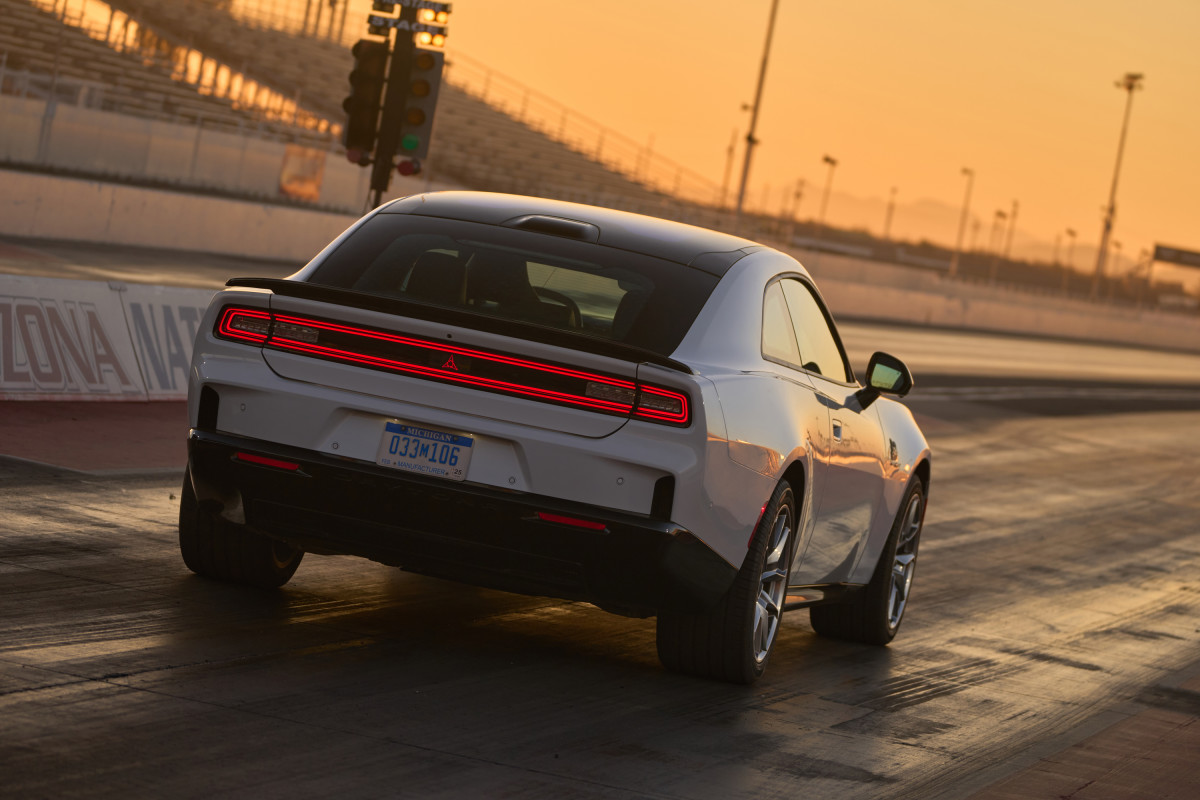
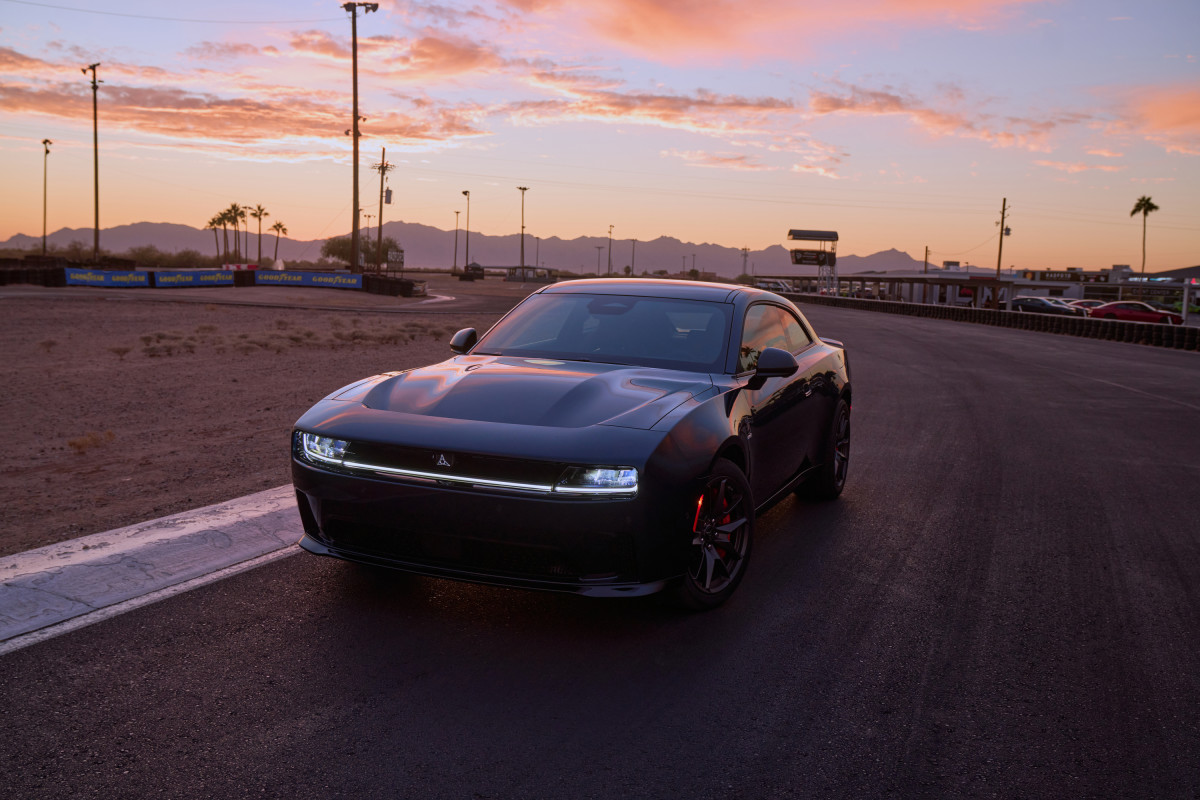
2025 Dodge Charger Daytona

Stellantis

The Charger Daytona EV will be the first international model to arrive, followed by the gas-powered Sixpack. While Dodge hopes to appeal to muscle car purists, the lack of a manual transmission could be a sticking point for some buyers. Still, the availability of a high-performance ICE option alongside an EV gives Dodge a flexible approach in a changing market.

Related: Automakers brace for impact as Trump's 25% tariffs take effect Saturday

Final thoughts

The muscle car market isn’t what it once was. Even after Dodge and Chevrolet discontinued their previous generation muscle cars, Ford’s Mustang—the only remaining muscle car in production for a time—still struggled to drive sales. Dodge’s future remains uncertain as the new Charger emerges into a much different market from the one it left.

The Charger Sixpack represents an attempt to keep combustion power alive while the brand experiments with electrification. Whether this strategy will work depends on how well Dodge executes its plans and whether muscle car fans are ready to put the cash down to buy gas-powered muscle while it’s still around.

Related: 2025 Alfa Romeo Giulia review: When a 3-Series is too boring

  • Digg
  • Del.icio.us
  • StumbleUpon
  • Reddit
  • RSS
Post Icon

Have you ever wanted a twin-engine Honda CRX?


via Have you ever wanted a twin-engine Honda CRX?

It's hard to think of a good reason to only have one engine in your car if having two is a possibility. At least that was the thought process of Car and Driver when they created the CR-X² in the 1980s that is now for sale on Bring a Trailer. This one's a fun tale, so sit down and grab some popcorn.

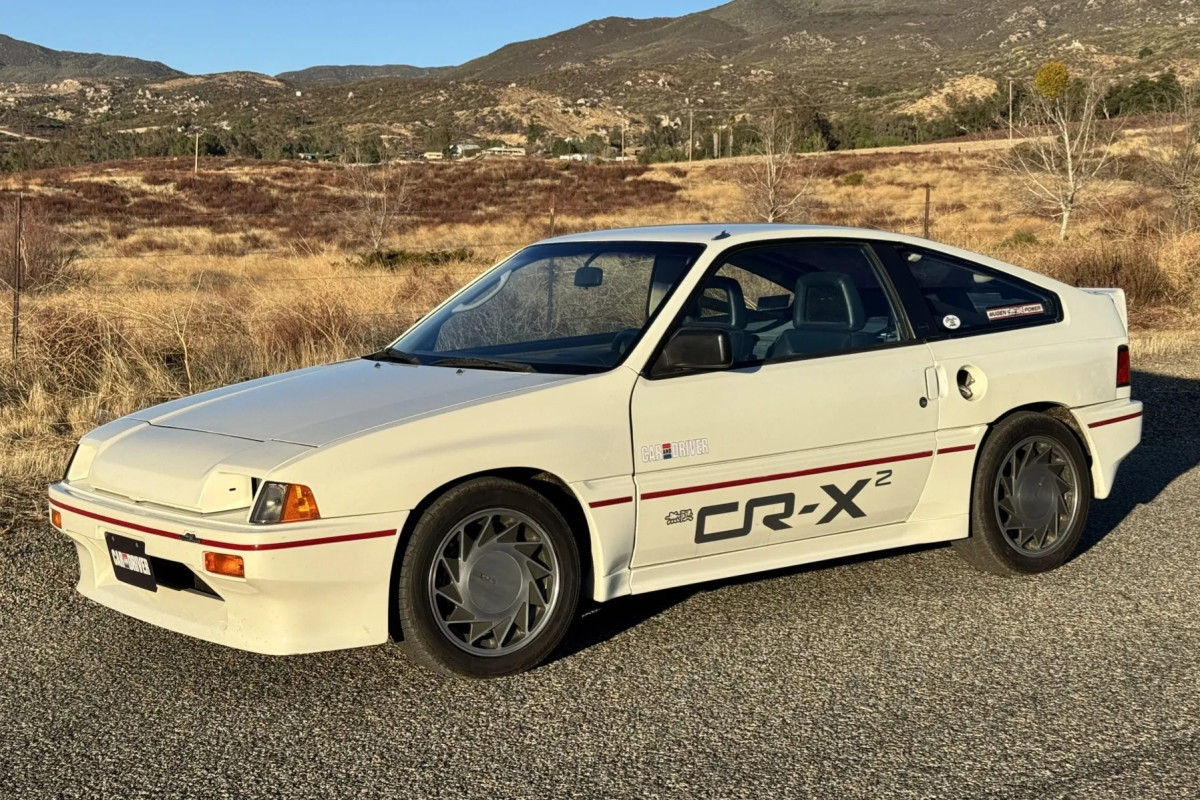
This car began innocently enough as a run-of-the-mill 1984 Honda CR-X finished in Greek White with a 1.5L inline four-cylinder engine mounted up front. It didn't take long before Car and Driver editor Don Sherman had the wacky idea of turning the bog-standard CR-X into a CR-X with twice the engine, twice the power, and twice the fun.

"I saw how tidy the driveline was in the CR-X. And the thought occurred to me, why not two of them?" Sherman said.

Related: Joe Rogan’s new Tesla Model S Plaid pushes customization to the extreme

Honda CR-X²

bugnbox/Bring a Trailer

The project begins with official blessings from Honda

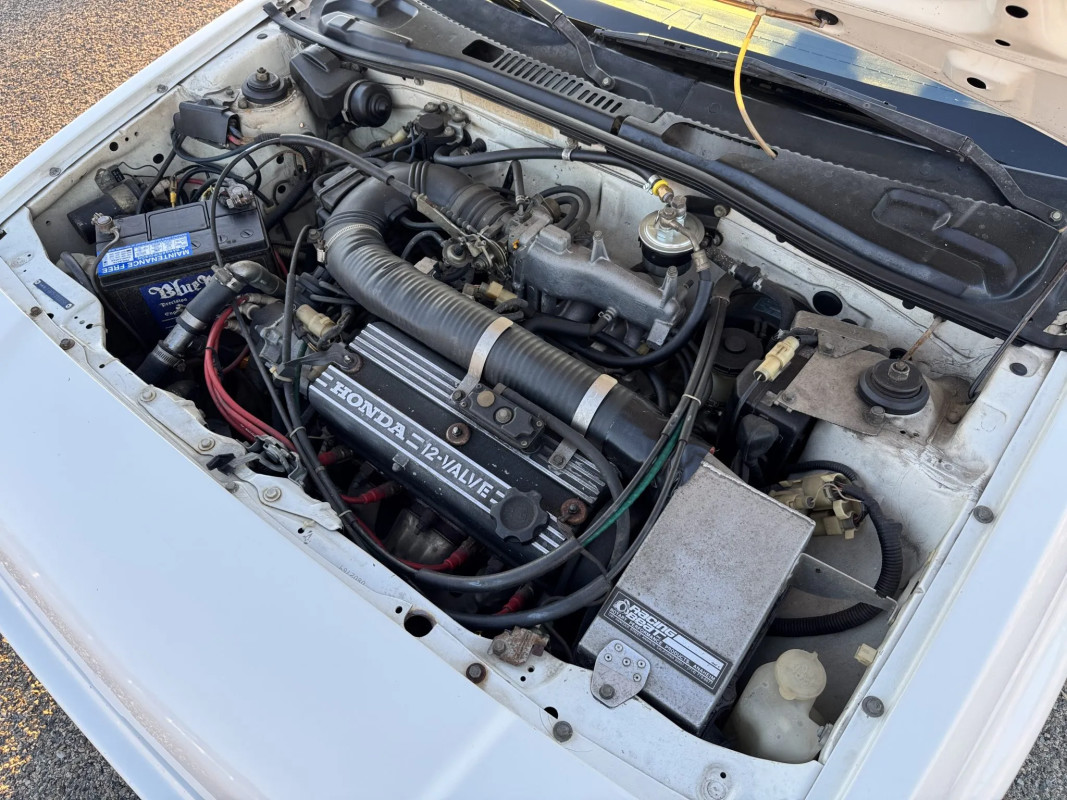
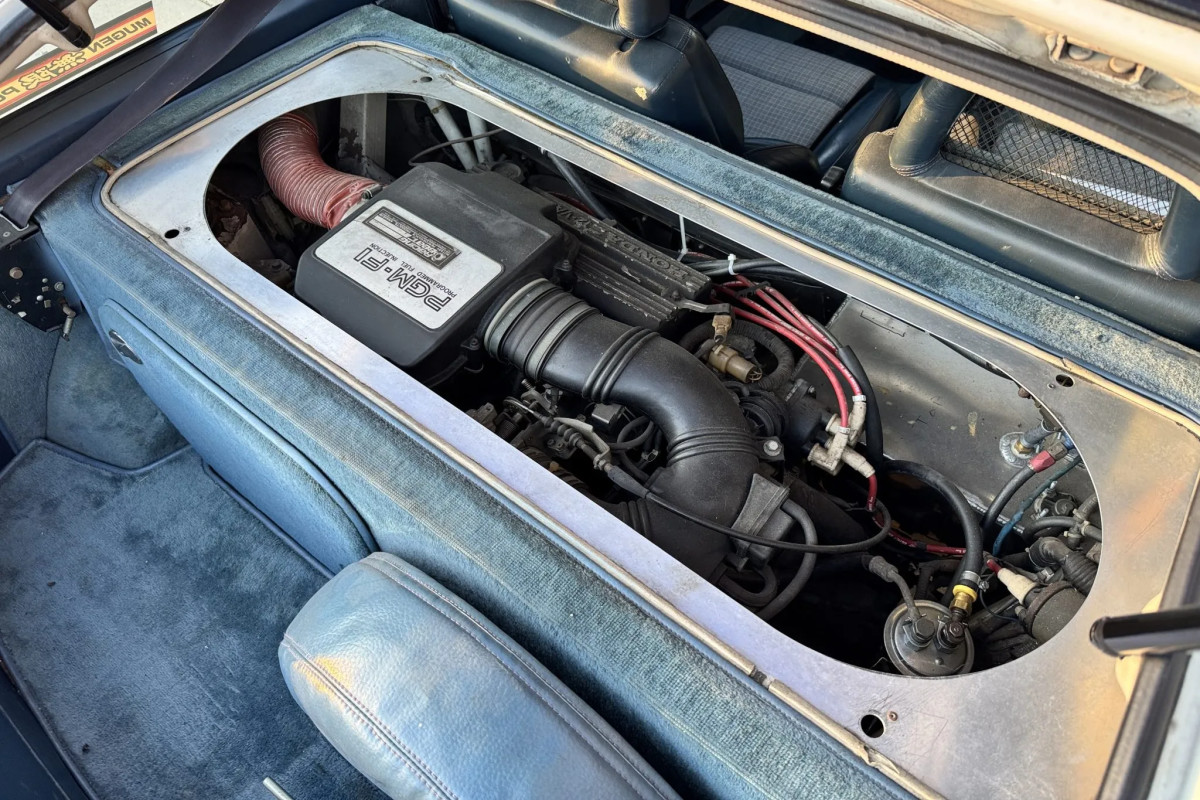
Car and Driver partnered with Honda themselves to get a second 1.5L inline four-cylinder engine, a three-speed automatic transaxle, as well as all of the wiring and mechanicals needed for a dual powertrain car. The magazine staffers employed the expertise of the Los Angeles-based shop Racing Beat to actually put everything together before the car appeared in a May 1985 article dubbed "Synchronicity."

CR-X² proved to be as reliable as a Honda of that era was expected to be, with track testing resulting in a 0-60 time of 8 seconds and a quarter-mile time of 16 seconds at 85 mph.

Honda CR-X²

bugnbox/Bring a Trailer

Related: It turns out that Akio Toyoda was right

CR-X² gets upgraded

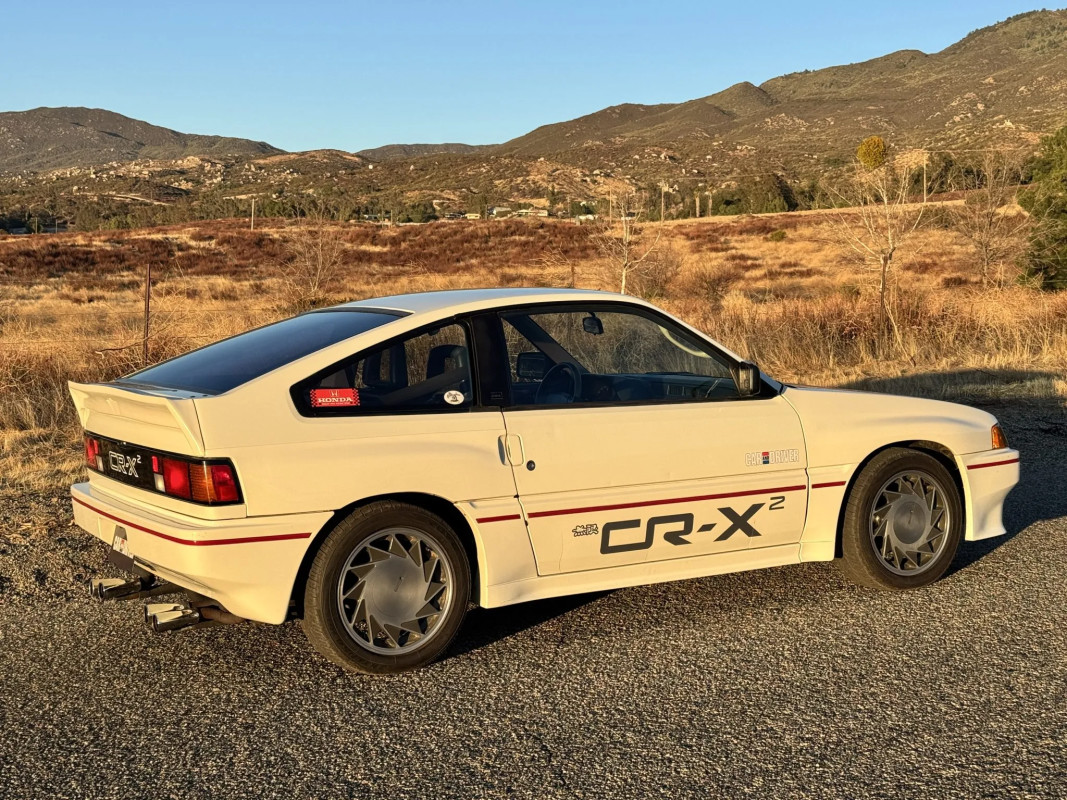
In October 1985, a follow-up article dubbed "Super Synchronicity" hit the newsstands, detailing the evolution of CR-X². Rather than the stock 1.5L inline four-cylinder mills, the car was fitted with a Mugen body kit and twin 1.8L inline-fours paired with four-speed automatic transaxles from a Honda Accord. New tests yielded a 6.2-second 0-to-60 run and a quarter-mile time of 14.5 seconds at 95 mph.

Following its Car and Driver ownership, CR-X² changed hands a few times between the late 1980s and early 1990s before being acquired by the seller in 2022. He began a cosmetic refurbishment process that was documented on their Carchaeology YouTube. The work performed included custom CR-X² graphics, repainting the exterior trim black, and paint touch-ups at the rear to correct damage from shipping.

Car and Driver and even Jay Leno took the car for a drive in December 2024.

Honda CR-X²

bugnbox/Bring a Trailer

Related: Genesis GV80 Desert Edition: Is this luxury SUV ready for Dakar?

Final thoughts

There are no words short of "cool" and "astonishing" to describe CR-X². A CR-X on its own is a fantastic throwback to 80s Hondas, but one with a Mugen kit and twin 1.8L inline-four cylinder engines is in another universe. We can't even begin to guess how one would put a price on such a project, but it's likely one of those things where it's worth as much as what someone is willing to pay for it.

The Bring a Trailer auction ends in four days, with the bid currently at $22,500. Much like other auctions we've written about before, we have but one request to the future owner: can we drive it?

Related: Toyota’s $10B Woven City: From sci-fi dream to reality

  • Digg
  • Del.icio.us
  • StumbleUpon
  • Reddit
  • RSS
Post Icon

What's New for 2025: Volvo


What's New for 2025: Volvo 2025 Volvo EX30 With the launch of three EVs in two years, Volvo still hastens the electric vehicle future It may not be fully electric by 2030 as once planned, but most new Volvos will have a plug Expect the EX60 counterpart to the XC60 to arrive in 2026 Volvo may not be full throttle on its plans to transition to a fully electric automaker by 2030, but the...

  • Digg
  • Del.icio.us
  • StumbleUpon
  • Reddit
  • RSS
Post Icon

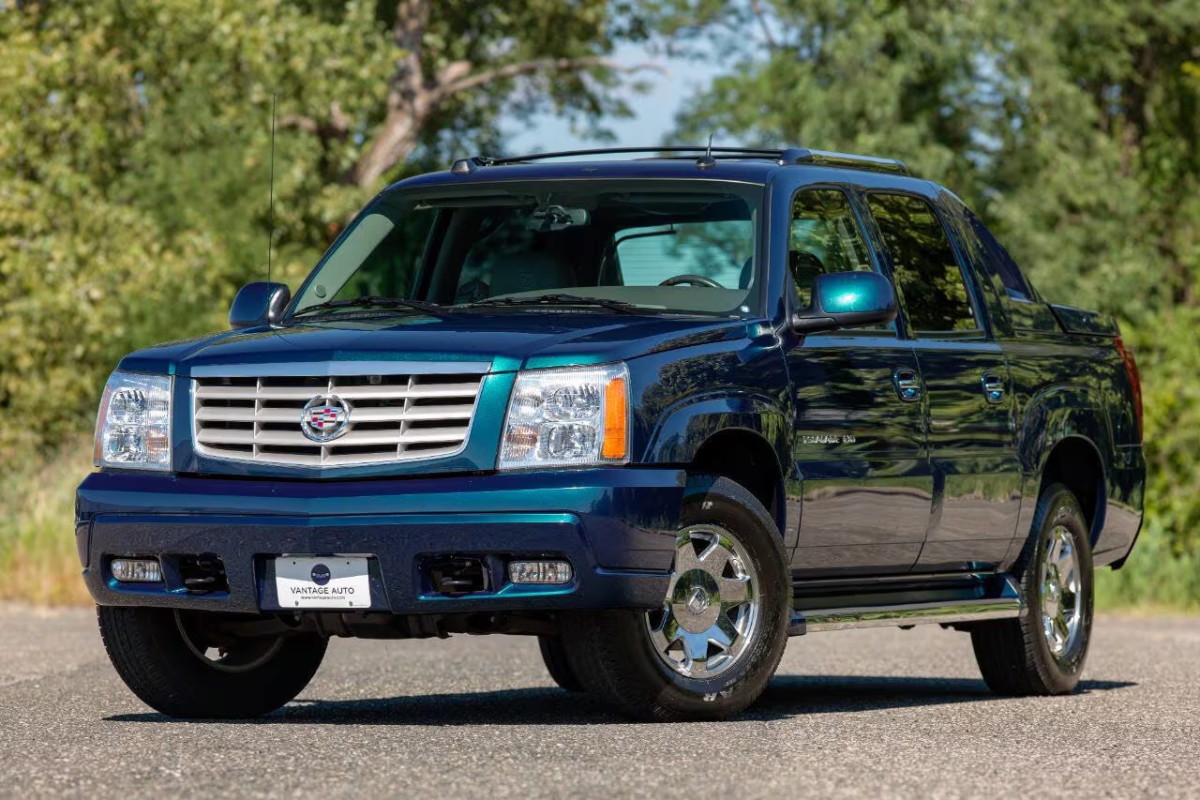
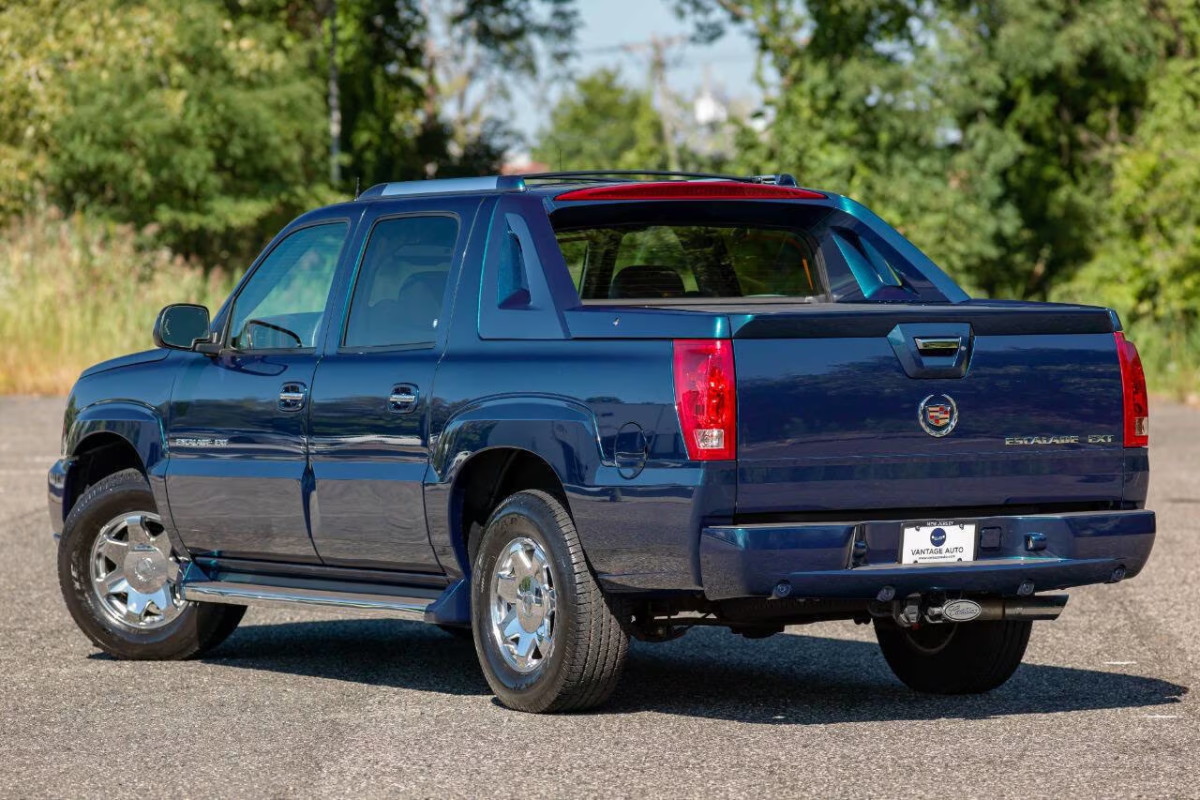
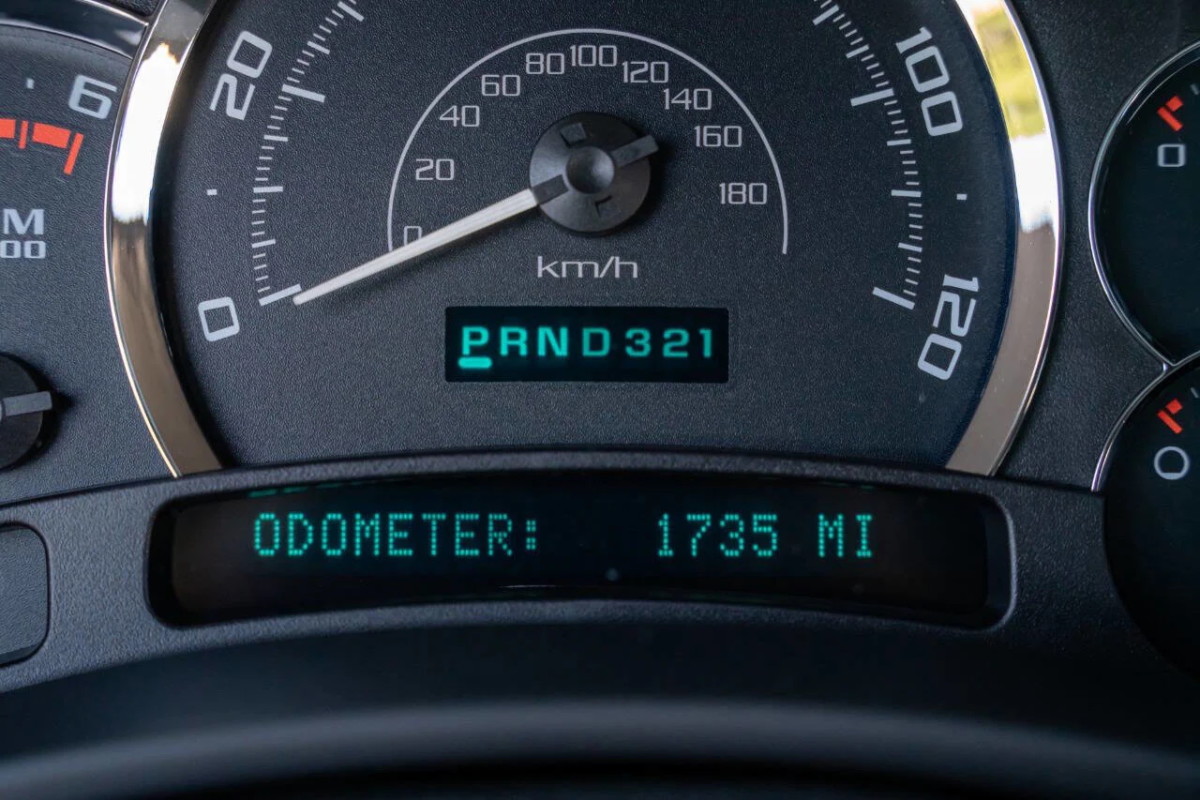
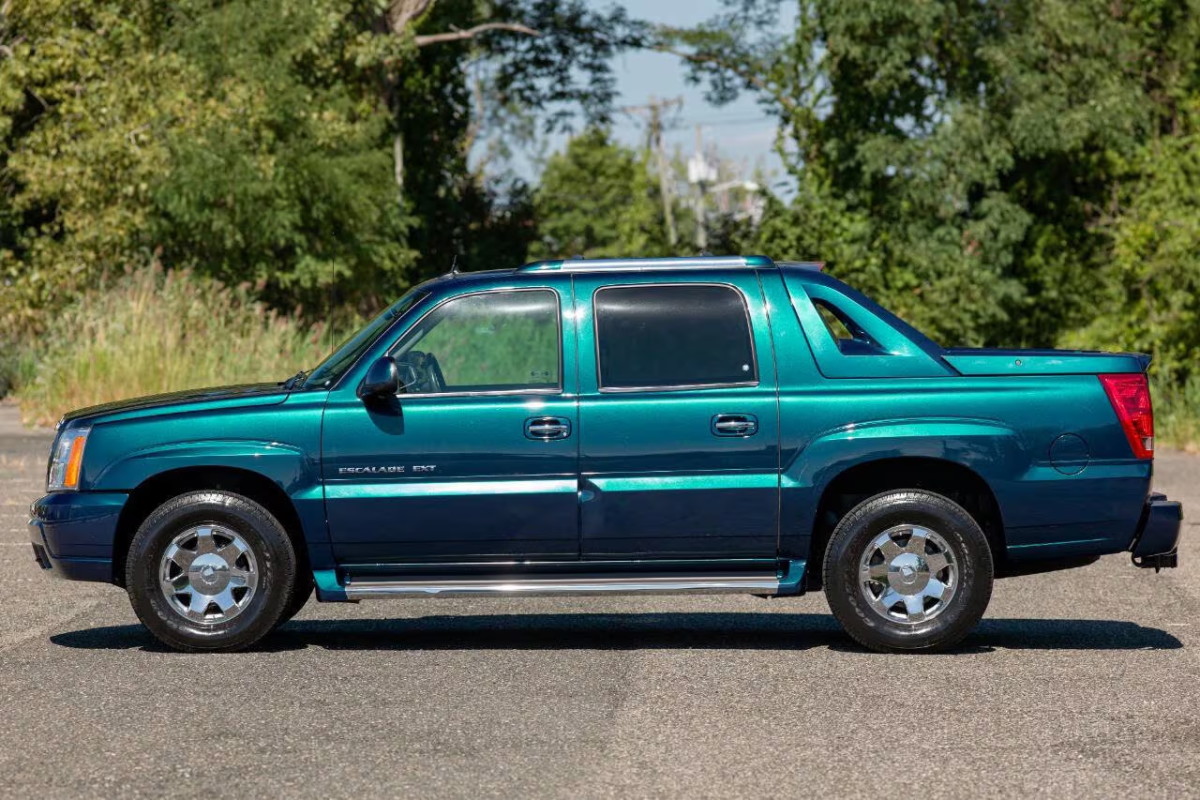
A 2005 Cadillac Escalade EXT with just 1,735 miles is up for sale


via A 2005 Cadillac Escalade EXT with just 1,735 miles is up for sale

The Cadillac Escalade EXT has been dead for some time, killed off after the 2013 model year. That means it’s been two whole generations since we’ve seen such a luxury pickup. General Motors let the trademark expire in 2023, so it’s likely we won’t see a new one anytime soon.

Given their age, it’s tough to find an EXT with a lot of life left. Somehow, though, a garage queen has popped up for sale with ridiculously low miles and an equally as attractive color that isn't a shade of gray.

Related: The top 6 driver's cars for $25,000 in 2025

This Escalade EXT is a chromed bling time capsule

2005 Cadillac Escalade EXT

Vantage Auto

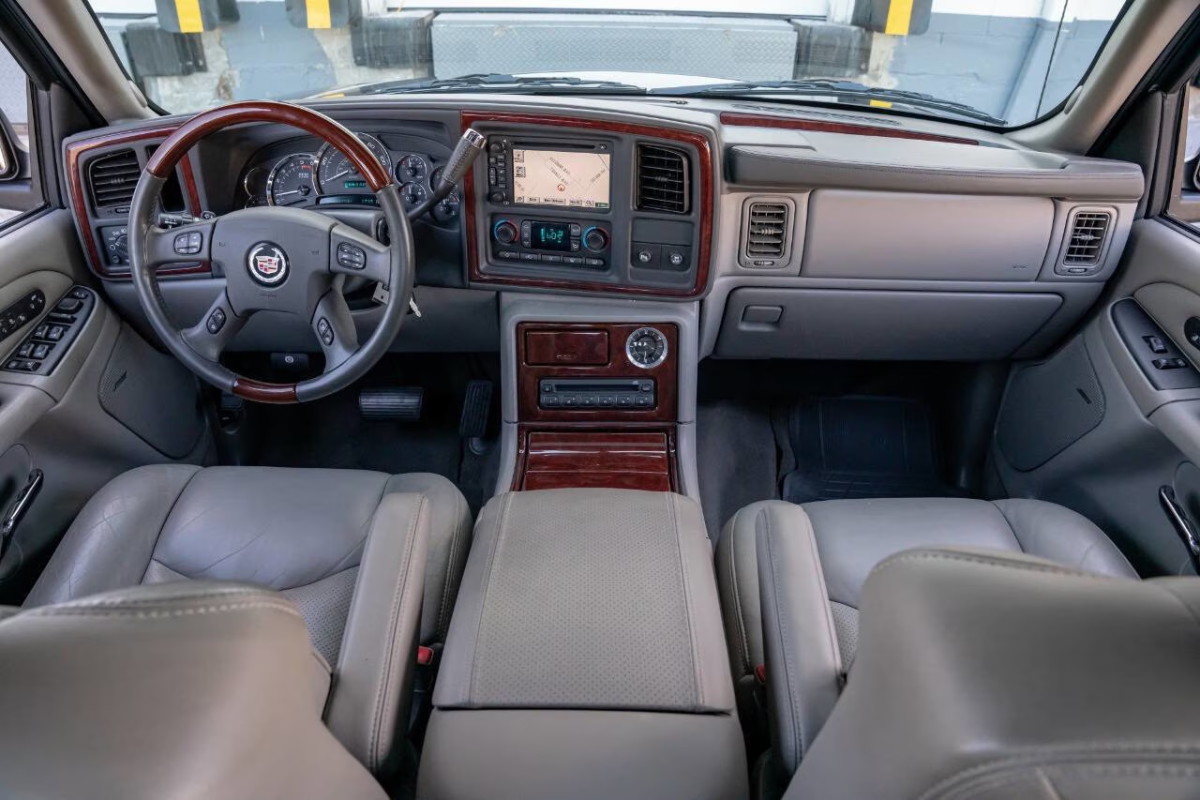
In Moonachie, New Jersey sits a 2005 Cadillac Escalade EXT wearing Riptide Blue Metallic paint and a gray leather interior that looks like it has never been sat in. Considering that the odometer shows just 1,735 miles, that condition is not at all surprising.

For some people, 1,735 miles amounts to a regular weekly commute. It's even rarer to see such miles in an Escalade from the northeast, with the description claiming it’s the “lowest mileage 2005 Cadillac Escalade EXT AWD you will find anywhere!” The dealer claims it’s loaded with every option imaginable, while the CarFax report reveals just one owner.

In 2005, these Escalades had standard all-wheel drive (AWD) and the 6.0-liter LQ9 V-8, which was an optional engine in Chevrolet and GMC trucks. The Escalade's V-8 produced 345 horsepower and 380 pound-feet of torque mated to a four-speed automatic. If properly equipped, it can tow up to 7,300 pounds.

Related: Vehicle prices approach all-time high—Here is what’s driving the trend

It somehow didn't sell on Bring a Trailer

2005 Cadillac Escalade EXT

Vantage Auto

Vantage Auto, the company selling the car, tends to list cars for sale on Bring A Trailer. The 2005 Escalade EXT is no exception. It went live in October 2024 but failed to meet the reserve with a final bid of $34,000.

As of this writing, the dealer is asking $53,500 to take home what may serve well as a collectible, or a new daily to the right buyer. One could argue that’s a steal since the base MSRP in 2005 was $53,335, meaning this example essentially beats inflation.

Collectible pickup meets legendary reputation

2005 Cadillac Escalade EXT

Vantage Auto

The 6.0-liter available in this era of Escalades in 2005 was a bigger version of the Vortec V-8 engines that sat under the hood of every truck and SUV on the GMT800 platform. These gained a reputation for being essentially bulletproof engines that could rack up a ton of miles with little issues.

Vantage Auto

Vantage Auto

View the 16 images of this gallery on the original article

Scour the classifieds for any Escalade, Tahoe, Suburban, or Yukon from the 2000s, and you’ll see examples listed with upwards of 200,000 or even 300,000 miles on the clock, making this EXT a unicorn. The only downside, as with any V-8, is fuel economy, as these achieved a rating of 12 mpg city / 16 mpg highway back then. The cost savings of buying this over a new Escalade can quickly go toward the gas bills.

Related: Leaked letter reveals Jaguar designers' doubts about controversial rebranding

Final thoughts

2005 Cadillac Escalade EXT

Vantage Auto

Although $53,500 is quite a chunk of change for this Escalade EXT, it's a vehicle with a lot to offer in terms of capability and reliability. The low mileage means whoever buys this will give it a second lease on life. You don’t even have to go to New Jersey to pick it up, as the dealer will ship it nationwide. 

So, to whoever fronts the cash, we ask only that you drive it—drive it a lot.

Related: 2024 Bentley Continental GT Azure review—luxury and power in perfect harmony

  • Digg
  • Del.icio.us
  • StumbleUpon
  • Reddit
  • RSS
Post Icon

Vehicle prices approach all-time high—Here is what’s driving the trend


via Vehicle prices approach all-time high—Here is what’s driving the trend

Car prices just keep rising. According to new data from Kelley Blue Book, the average transaction price (ATP) of new vehicles climbed to $49,740 in December, a 1.5% increase from November and a 1.3% rise compared to the same time period in 2023. The rising average brings prices close to the all-time high of $49,958 set just two years ago.

Several factors contributed to the increase, including a holiday-driven spike in luxury vehicle demand and elevated incentives. Erin Keating, an executive analyst at Cox Automotive, said that consumer optimism and a brief dip in interest rates late in 2024 spurred vehicle purchases. "Vehicles, especially luxury models, are emotional purchases. When optimism rises, so do sales," she noted.

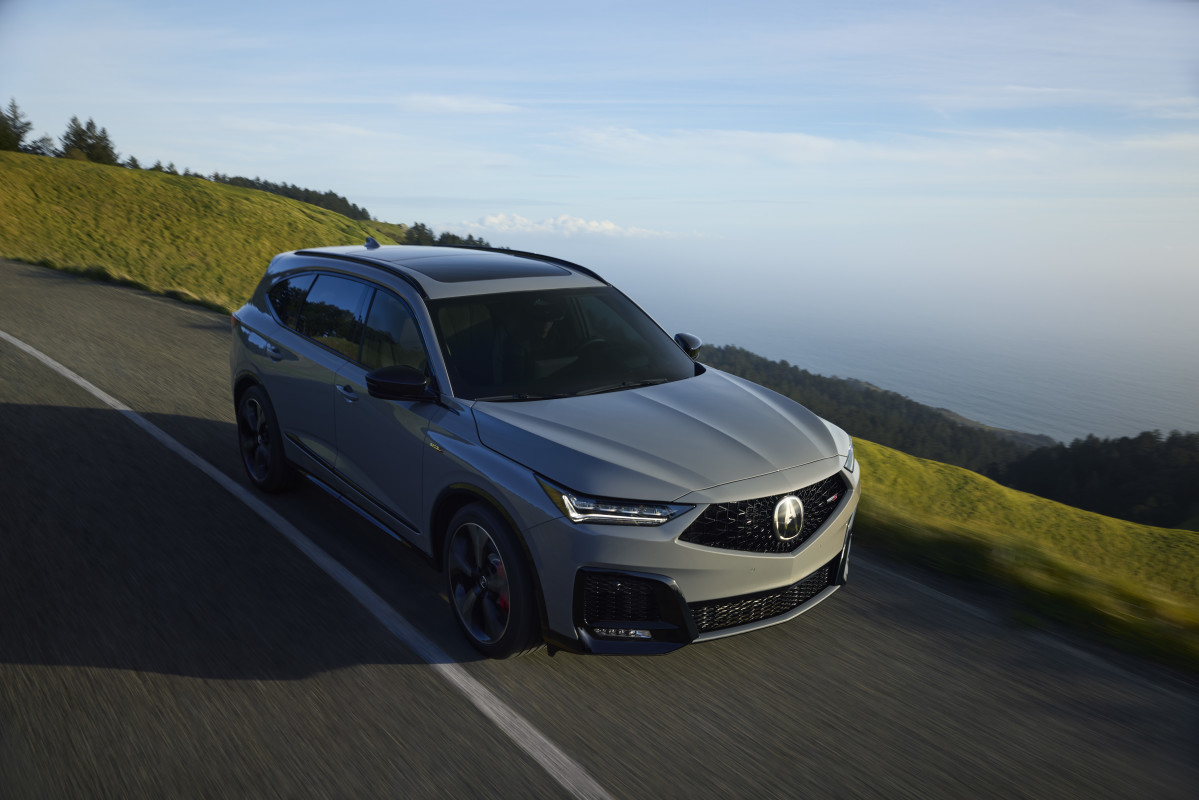
2025 Acura MDX Type S

Acura

Despite a growing affordability crisis in the automotive market, there doesn’t appear to be any relief on the horizon. We crunched the numbers to see exactly what areas of the market are driving prices higher.

Related: The top 6 driver's cars for $25,000 in 2025

Luxury vehicles dominate December sales

December has traditionally been a strong month for luxury sales, and 2024 continued that trend. On average, vehicles priced above $80,000 account for roughly 4.4% of total vehicle sales in a given month, but last month saw that figure rise to 5.6%, representing an all-time high for the segment. Models including the Land Rover Range Rover, Cadillac Escalade, and BMW X7 led the charge, reflecting a growing appetite for high-end vehicles.

View the original article to see embedded media.

Luxury cars saw the biggest year-over-year price increase, up nearly 10% to an average price of $58,931 in December. Full-size Luxury SUVs, a particularly popular category, weren’t far behind, marking an 8.2% increase in price year-over-year with an average price of $107,854.

So-called entry-level luxury cars also experienced notable demand, bolstered by incentives that averaged 10% of their ATP, making them an attractive option for buyers looking to enter the luxury market.

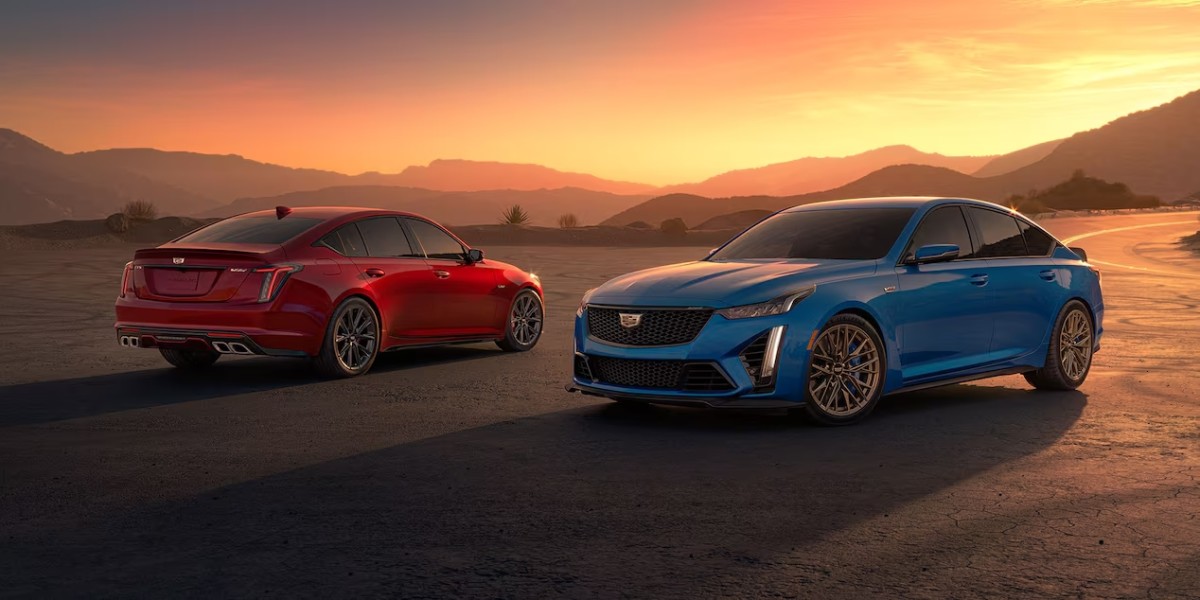
Certain brands saw significant growth in transaction prices. Cadillac reported a 12.8% year-over-year increase in average prices, while Tesla prices rose 10.5%. These gains reflect a shift in consumer preferences toward higher-end models and advanced technology features.

Related: EV sales soar to record heights in 2024: What’s behind the gains?

Incentives are on the rise

Incentive spending reached 8% of the industry average transaction price in December, amounting to nearly $4,000 per vehicle. December marked the fifth consecutive month of increased incentives, a trend driven by automakers looking to boost sales amid growing inventories.

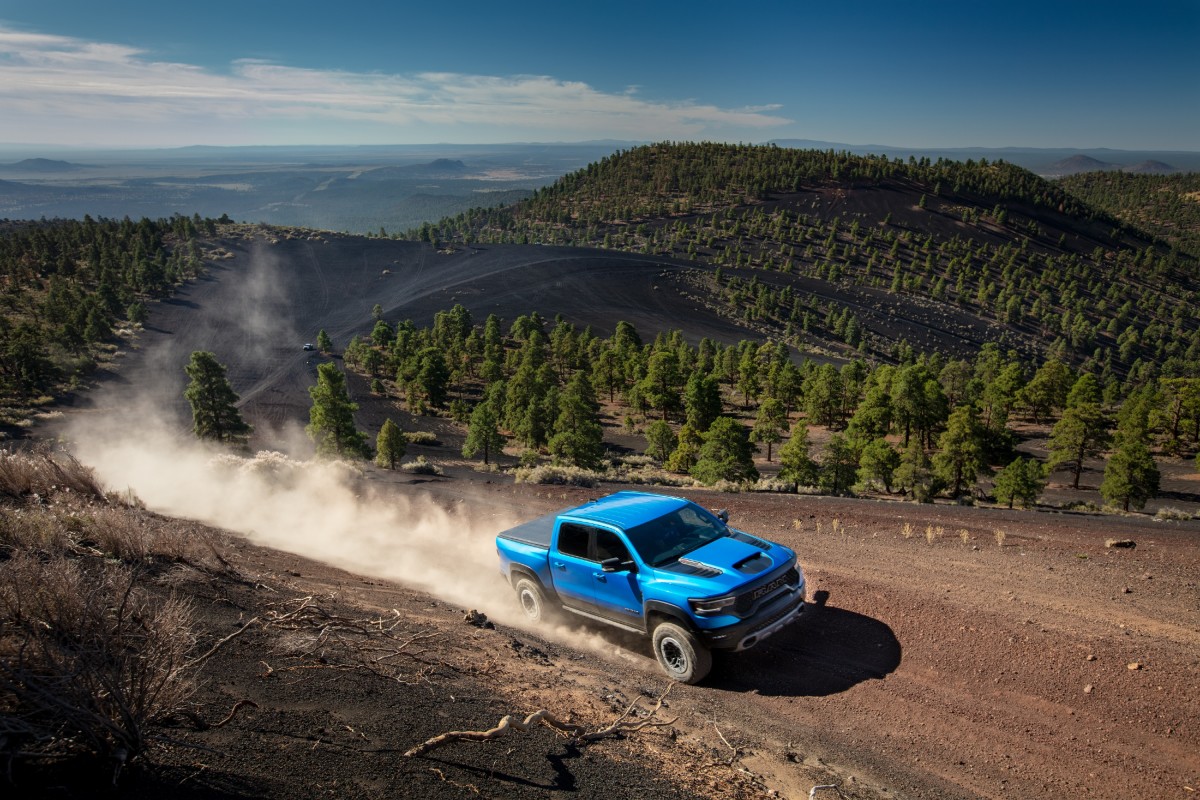
2024 Ram 1500 TRX

Stellantis

Volkswagen, Ram, and Nissan offered some of the most generous discounts, with incentives exceeding 13% of ATP. Meanwhile, Toyota, Land Rover, and Porsche maintained some of the lowest incentives in the industry.

Electric vehicles (EVs) also benefited from substantial discounts. Incentives for EVs averaged 14.3% of ATP in December, a slight decrease from November but still significantly higher than a year ago. This helped propel EV sales to over 1.3 million units in 2024, setting new records for both volume and market share.

Related: Nearly half of young Americans don't want to own a car

Deals in all the wrong places

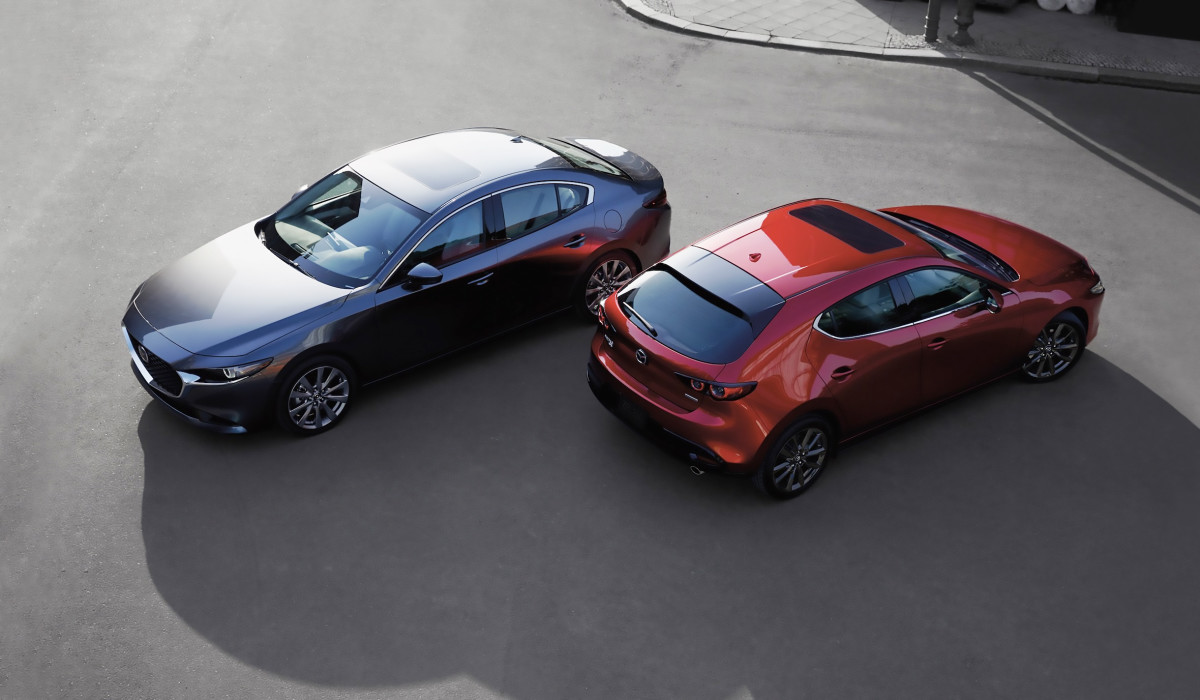
Despite costs rising across much of the market, segments like subcompact cars offer great deals for the cost-conscious buyer. Average prices for subcompacts were down 17% year-over-year in December to a budget-friendly $21,893. Still, issues remain. Most notably that almost no one wants a subcompact car.

Mazda3 Sedan and Hatchback

Mazda

Affordability concerns drove consumers to smaller vehicles last year, according to data from Edmunds, but smaller is a relative term. While consumers flocked to compact trucks and subcompact SUVs, many were still unwilling to make the leap all the way down to a subcompact car. 

Consumers and automakers still managed to align on some key categories. Subcompact SUVs, a favorite of new car buyers in 2024, saw prices decline 2.5% year-over-year in December. Granted, that only amounts to an average savings of about $650 on a nearly $30,000 price tag.

Higher interest rates and extended loan terms are exacerbating affordability challenges. Even with rising incentives, many consumers are finding it increasingly difficult to justify or manage the cost of a new vehicle.

Related: How electric cars are falling behind the pack

A bougie bunch of brands

A few automakers defied the industry trend, with brands like Mitsubishi and Buick reporting significant year-over-year price declines. Meanwhile, luxury-oriented brands like Cadillac, Acura, and Infiniti saw their average transaction prices rise well above the market’s modest 1.3% average.

View the original article to see embedded media.

Cadillacs sold in December cost about $9,000 more on average than they did just a year before, with an ATP of nearly $80,000. Despite Infiniti reporting a 10% decline in sales last year, transaction prices continued to rise—up about $5,000 year-over-year to an average price of $65,667 in December.

Even relatively affordable brands like Kia, Honda, and Toyota saw their prices increase far above the industry norm. In December, an average Toyota cost nearly $42,000, up 3.5% from 2023. Kia and Honda saw even bigger price spikes, with year-over-year prices up 4.8% and 3.8%, respectively.

Related: Biden admin rejects Tesla’s $100 million request for big-rig charging plan

Final thoughts

As the automotive industry enters 2025, elevated prices are likely to persist, driven by strong luxury sales and the growing popularity of electric vehicles. However, the question of affordability looms large. Rising interest rates and economic pressures could temper demand, particularly among middle-income buyers.

For now, consumers navigating the new car market must contend with high prices, limited incentives on popular models, and, potentially, a smaller vehicle than they want. While automakers celebrate record-breaking sales and transaction prices, the sustainability of these trends is far from certain. How long can the market thrive before the affordability crisis takes center stage?

Related: These British classics have a secret: The surprising truth beneath the badge

  • Digg
  • Del.icio.us
  • StumbleUpon
  • Reddit
  • RSS
Post Icon

Burning Teslas in LA add toxic barriers to wildfire cleanup


via Burning Teslas in LA add toxic barriers to wildfire cleanup

The devastating wildfires that swept through Los Angeles beginning Jan. 7 have left a trail of destruction, with at least 27 lives lost and thousands of homes destroyed. While the immediate threat of flames has begun to die down, the aftermath presents a new set of challenges. Among the most pressing are the toxic remnants left behind by burned electric vehicles (EVs) and home-battery storage systems, Bloomberg reported.

“A lot of the cars in the evacuation area were lithium batteries,” said Jacqui Irwin, a California state assembly member. Pacific Palisades, the neighborhood that Irwin represents, was hit especially hard by the fires. Firefighters have expressed concerns about the prolonged and intense fires caused by these batteries, particularly near homes equipped with systems like Tesla Powerwalls.

These challenges are delaying the safe return of residents to affected areas. Toxic debris must be carefully identified, removed, and managed before cleanup crews can address more conventional hazards, such as damaged utilities and structural instability.

Related: Leaked letter reveals Jaguar designers' doubts about controversial rebranding

Lithium batteries: A growing hazard

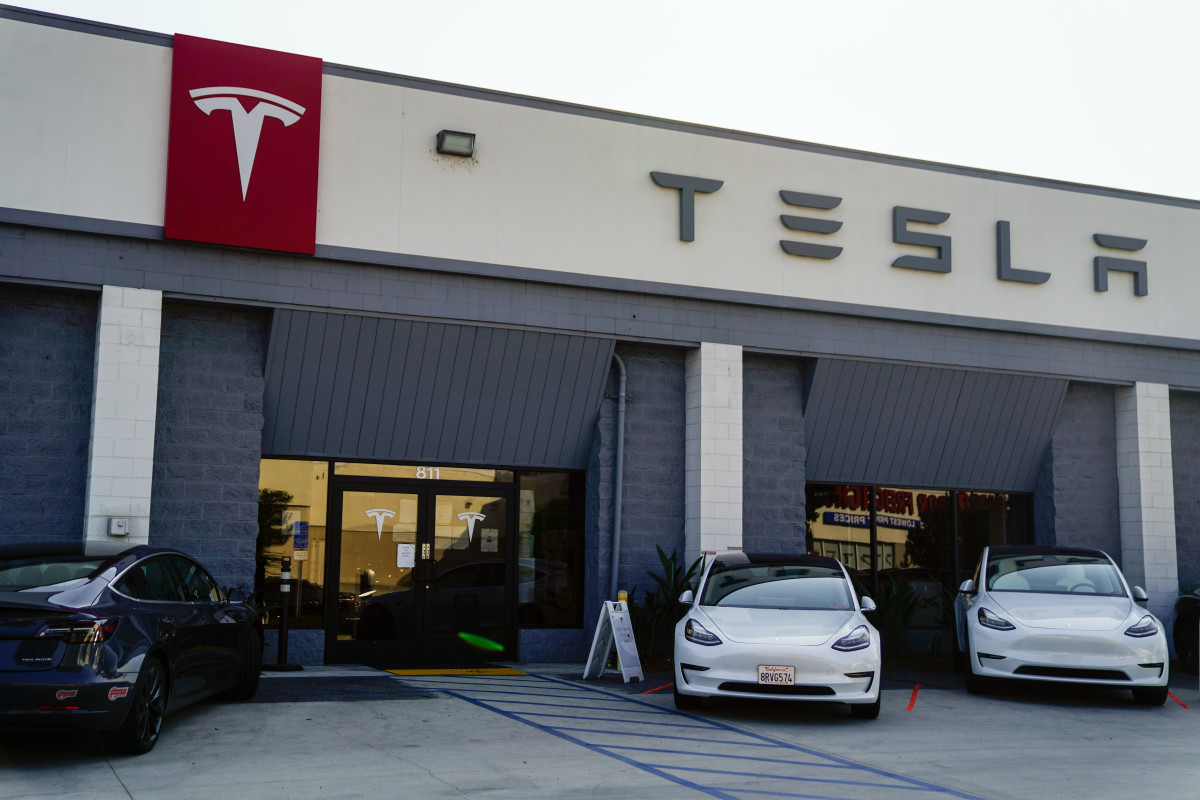
Los Angeles has embraced electric vehicles more enthusiastically than most parts of the United States. As of October 2024, the region was home to over 431,000 Teslas, a market share triple that of the national average, according to data from S&P Global Mobility. The Tesla Model Y, in particular, has dominated the state’s vehicle sales, cementing California’s position as a leader in EV adoption.

A Tesla showroom and service center on Friday, Sept. 4, 2020 in Burbank, CA.

Kent Nishimura/Getty Images

But with this leadership comes unique risks. Fires in lithium-ion batteries are notoriously difficult to extinguish. Unlike conventional car fires, which can often be suppressed quickly, EV battery fires may reignite repeatedly and require immense amounts of water to fully extinguish. First responders are now equipped with guides from automakers on handling such incidents, but the scale of the problem during an urban wildfire presents a challenge of unprecedented magnitude.

Lessons from Maui fires

San Diego firefighter Robert Rezende, an expert in lithium-battery hazards, is among those assisting in the cleanup effort. “The state has seen other fires, but nothing this urban, with so many neighborhoods and structures where you’d expect to see more electric vehicles and other energy storage systems,” Rezende said. “We’re anticipating a pretty big lift.”

Protocols developed during the 2023 Maui fires, which saw over 30 tons of lithium batteries removed from 1,400 properties for recycling, are being adapted for Los Angeles. However, the scale and density of the affected areas make the effort far more complex.

Related: EV sales soar to record heights in 2024: What’s behind the gains?

Health and environmental risks persist

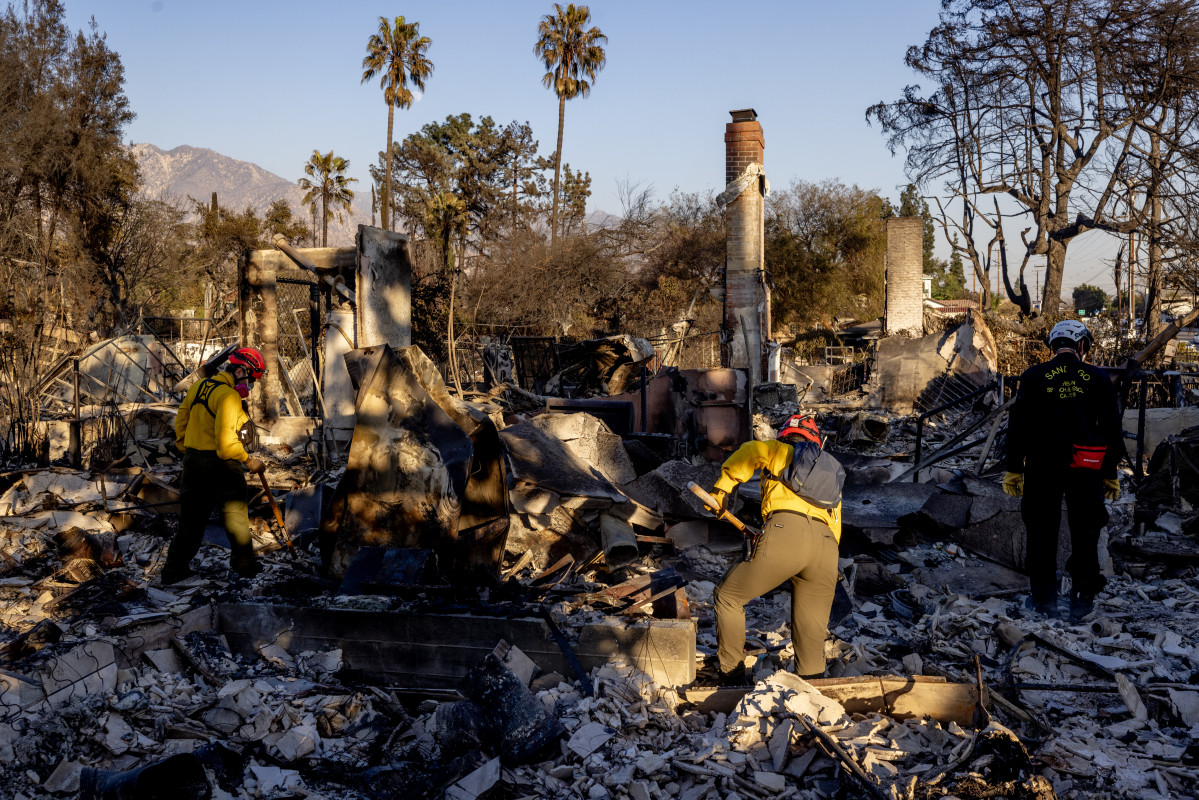
The danger of lithium battery fires is just one piece of a toxic puzzle. Wildfires in urban areas create a cascade of environmental and health hazards. Burned homes and businesses release a mix of hazardous substances, including asbestos from insulation, lead and mercury from electronics, and harmful chemicals from paint, cleaning products, and compressed gas cylinders.

Search and rescue team members search the ruins of one of the thousands of homes that were destroyed by the Eaton Fire on January 11, 2025 in Altadena, California.

David McNew/Getty Images

The Los Angeles County Department of Public Health has issued strict guidelines for handling fire debris, warning that improper removal could have dire consequences for human health and the environment. Residents are prohibited from attempting cleanup without inspections and oversight by agencies like the Environmental Protection Agency (EPA) and California’s Department of Toxic Substances Control.

The complicated path to recovery

The Palisades fire wreaked significant havoc on the nearby city of Malibu. In an interview, Mayor Doug Stewart said that the state has taken charge of debris removal efforts, praising its effective management of the cleanup after the 2018 Woolsey fire, but the process of building back is a long one.

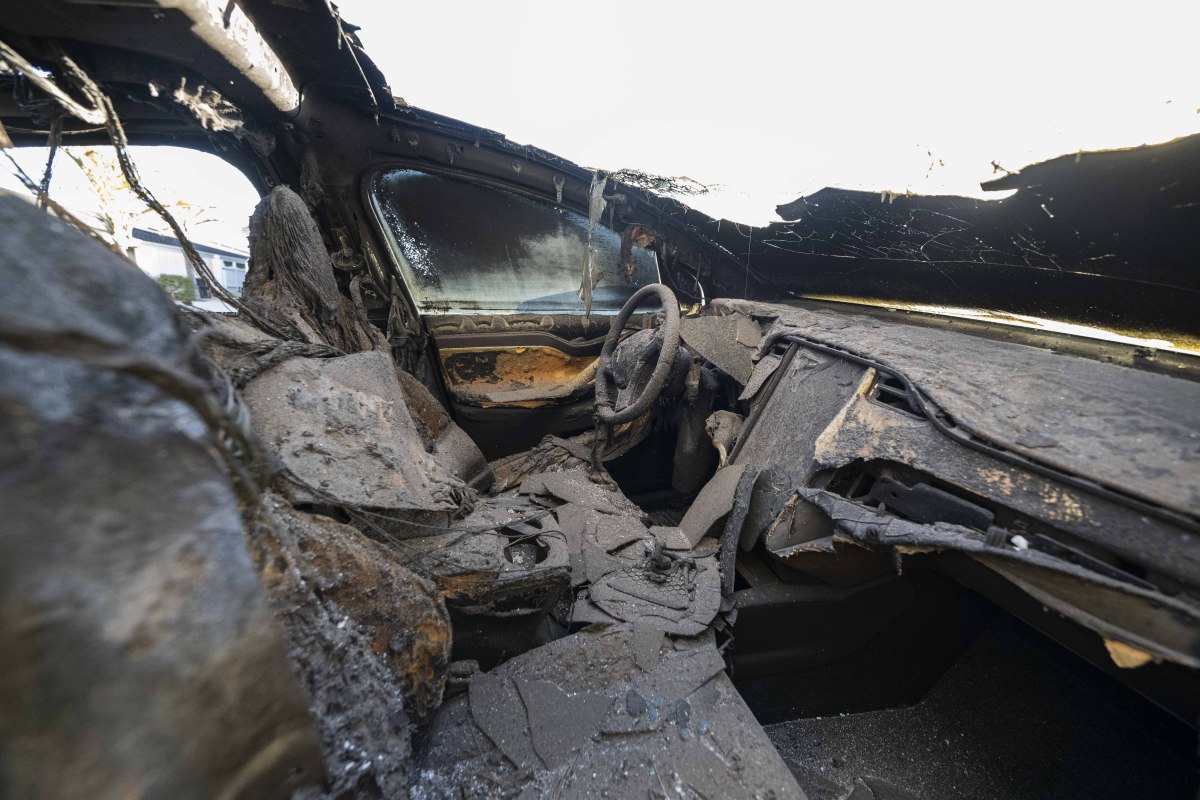
An interior view of burnt Tesla car after Palisade Fire has caused destruction in Pacific Palisades, Los Angeles, California, United States on January 15, 2025.

Anadolu/Getty Images

Six years after the Woolsey fire, just half of the 363 single-family homes approved for rebuilding have been completed. That earlier disaster destroyed 1,600 structures, but the Palisades fire has caused more than double the destruction, leaving the community facing an even more daunting recovery. According to Malibu’s official website, building inspectors have completed about 35% of rapid visual assessments on damaged properties.

Looking across Los Angeles, insurance loss estimates from the fires have surged to as much as $40 billion. BlackRock Inc. CEO Larry Fink cautioned that it might take a decade to fully rebuild the affected areas. The Federal Emergency Management Agency (FEMA) has committed $100 million toward the cleanup effort, marking the beginning of what will likely be a long and costly recovery process.

Related: Is the Ford Mustang GTD Spirit of America the most extreme Mustang ever?

A balancing act for policymakers

The Los Angeles wildfires highlight a pressing need for policymakers to strike a balance between embracing sustainable technologies and addressing their potential risks. California has led the charge toward zero-emission vehicles, with an executive order mandating that all new vehicles sold in the state be zero-emission by 2035. However, the fire has exposed the vulnerabilities of these technologies during natural disasters.

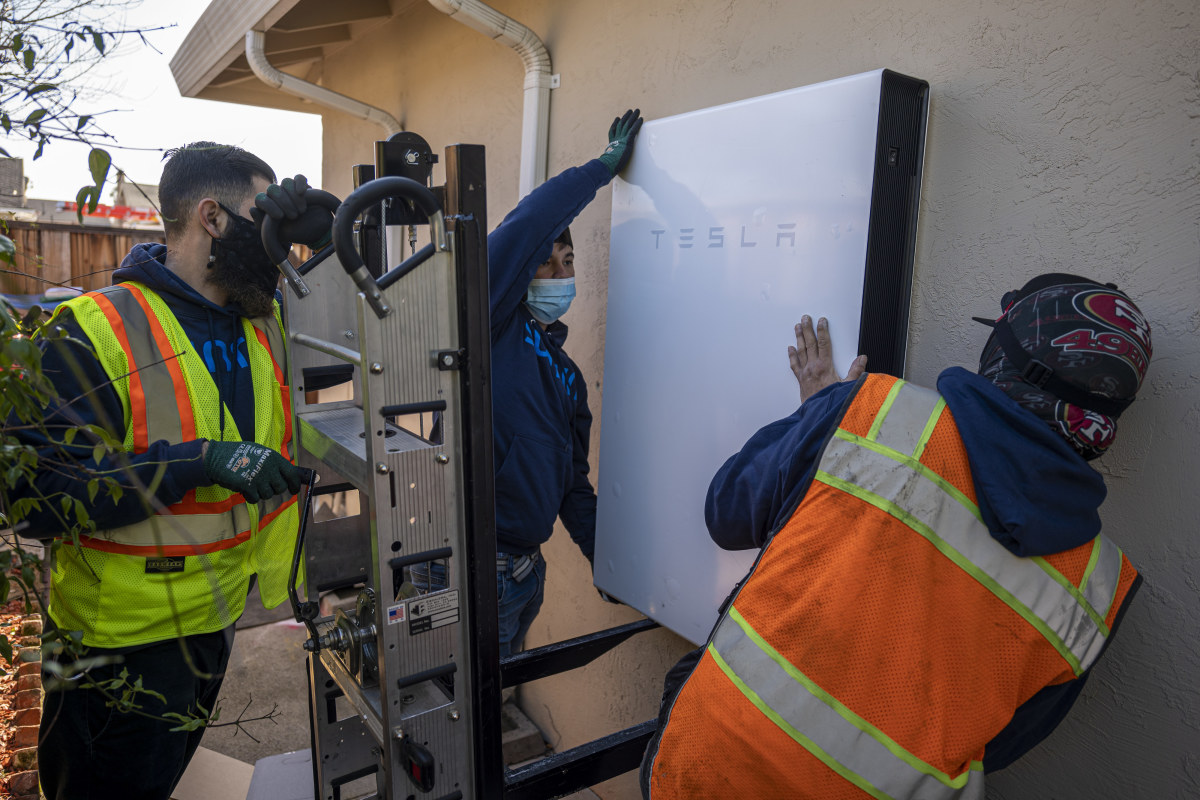
Contractors mount a Tesla Powerwall battery unit at a home in San Jose, California, U.S., on Monday, Feb. 7, 2022.

Bloomberg/Getty Images

Governor Newsom acknowledged these challenges, noting that the state is “still adapting to newer technologies” and the distinct risks they pose. This includes not only lithium-ion batteries but also energy storage systems, which are becoming increasingly common in homes and businesses.

Related: Ford’s 2024 results shine, but is trouble lurking beneath?

Final thoughts

The Los Angeles wildfires serve as a stark reminder of the challenges that come with an increasingly electrified automotive market. While electric vehicles and renewable energy systems are essential for combating climate change, their role in disasters can’t be ignored.

The road to recovery will be long and arduous for fire-stricken communities like Los Angeles and Malibu. Policymakers, first responders, and residents must work together to address the immediate hazards while laying the groundwork for a safer and more sustainable future. As California continues to lead the way in clean energy and emissions reduction, it must also prepare for the unintended consequences of those innovations.

Related: Nearly half of young Americans don't want to own a car

  • Digg
  • Del.icio.us
  • StumbleUpon
  • Reddit
  • RSS
Post Icon

Electric pickup trucks: A complete guide


Electric pickup trucks: A complete guide2025 GMC Sierra EV DenaliElectric pickup trucks may not have the massive towing capacity of heavy duty diesel trucks, but for virtually every other purpose they are superior to gas- or diesel-powered trucks: they're cleaner, quieter, quicker, more fun to drive, more tech-forward, and in many cases more capable. On the downside, they're usually more expensive and towing...

  • Digg
  • Del.icio.us
  • StumbleUpon
  • Reddit
  • RSS