via Ferrari Daytona SP3 sells for record $26 million at auction
New Ferrari Outsells The Classics
Few nameplates are more established on the auction circuit than Ferrari, and classic sports and race cars from the Prancing Horse—like the 250 GTO—typically garner the biggest bids. But a much more recent Ferrari—a unique build from an already-limited series—bucked that trend at this past week's 2025 Monterey Car Week auctions.
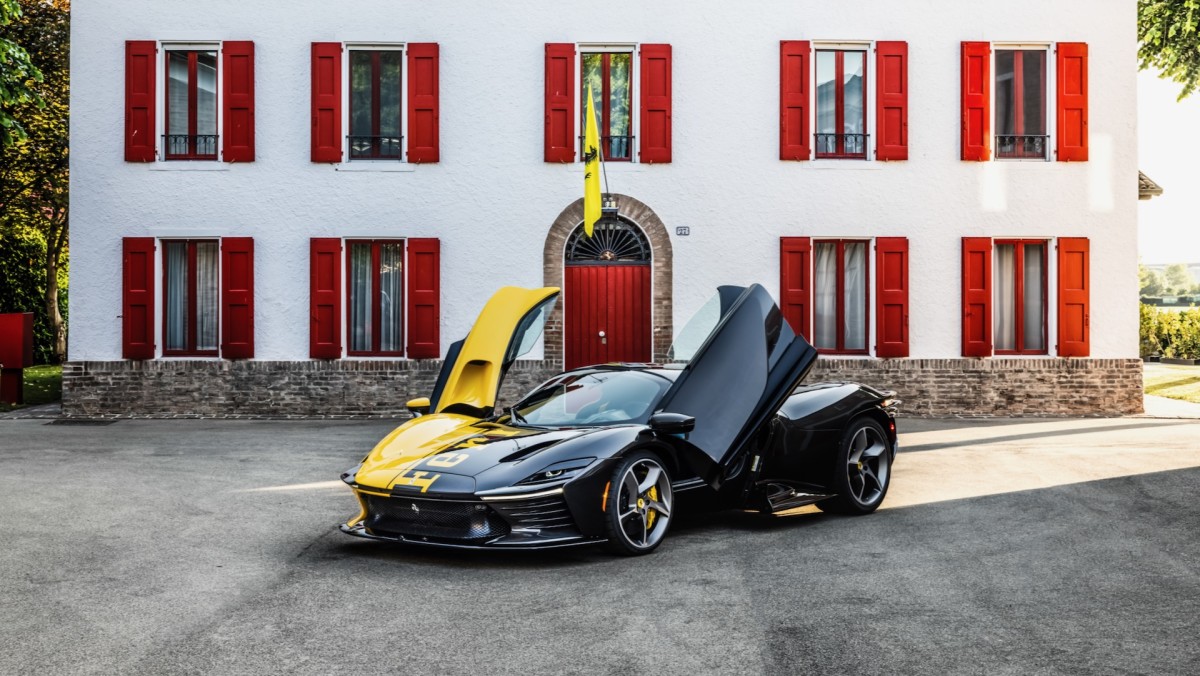
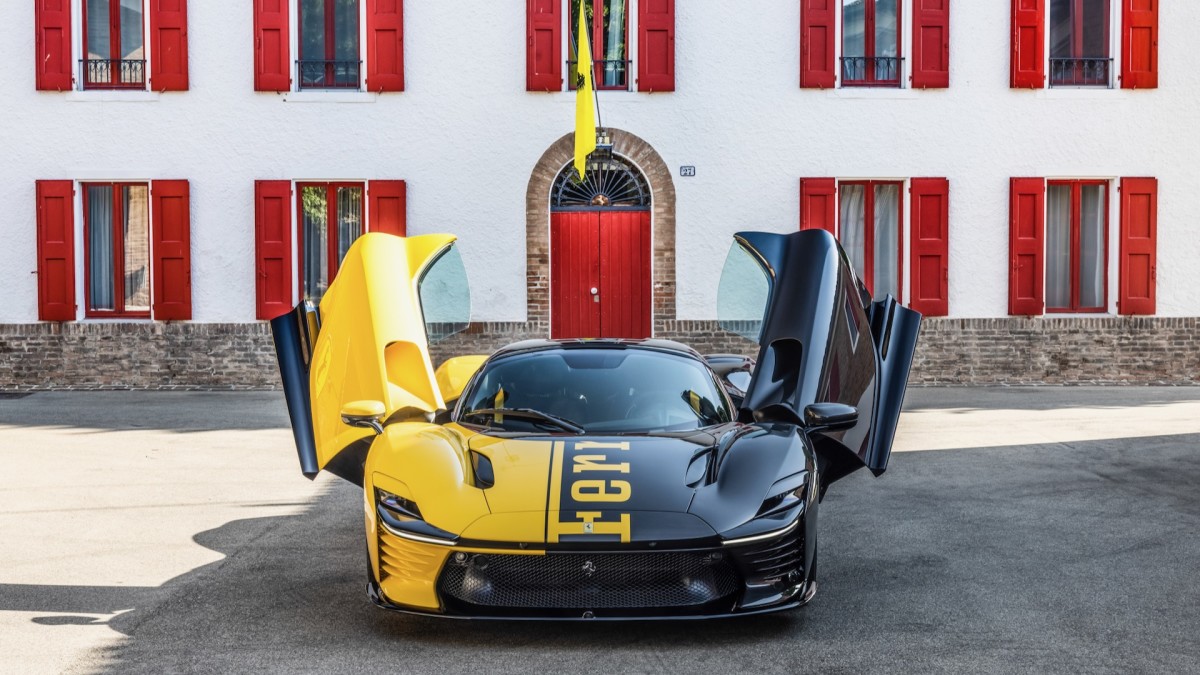
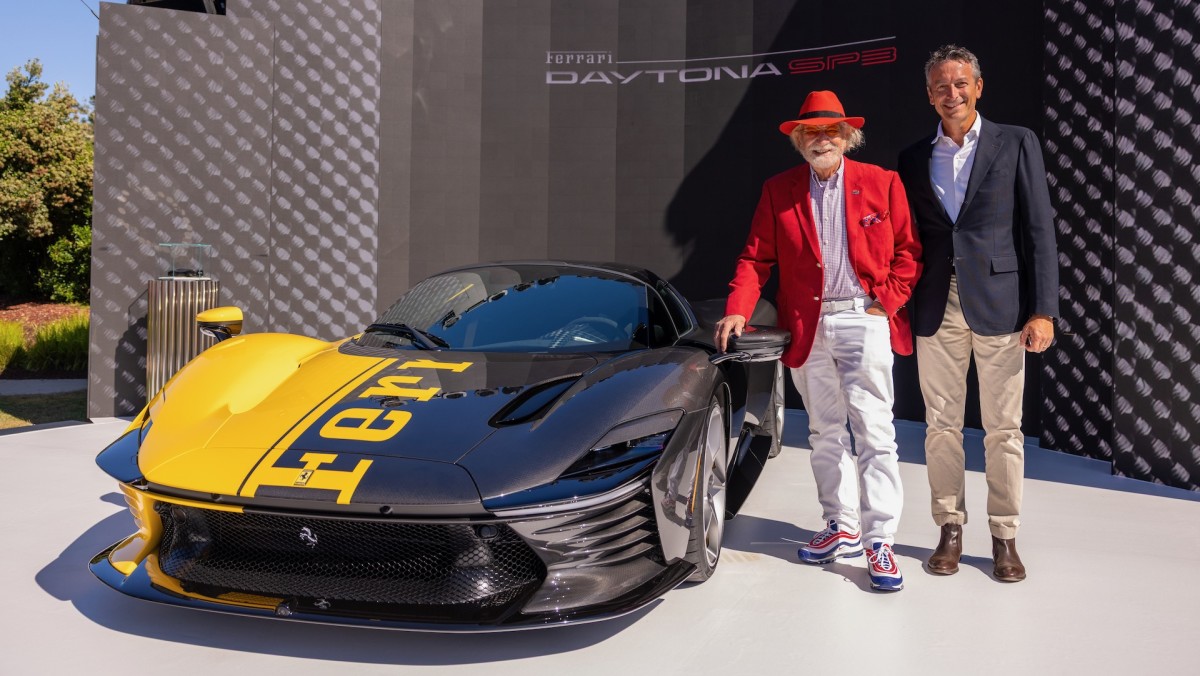
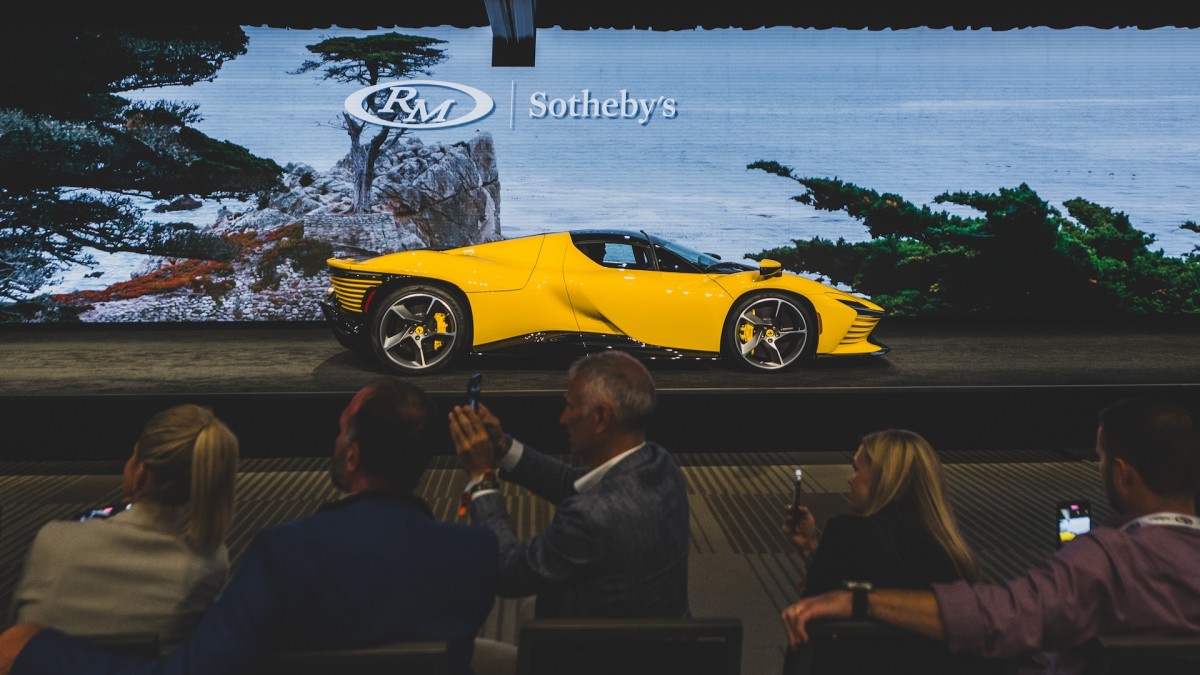
The 2025 Ferrari Daytona SP3 Tailor Made known as "599+1" sold for $26 million at RM Sotheby's Monterey auction, the highest sale price ever for a Ferrari at auction, according to the automaker. Proceeds from the sale will benefit the Ferrari Foundation, a charity that funds educational and community projects.
Revealed in 2021, the Daytona SP3 is part of Ferrari's Icona Series of limited-edition models, which itself started with the Monza SP1 and SP2 in 2018. They were modern tributes to Ferrari race cars of the 1950s, while the Daytona SP3 carried the theme forward, taking inspiration from 1960s Ferrari prototype racers like the 330 P3/4—the sleek racer that battled the Ford GT40 at the 24 Hours of Le Mans and delivered a 1-2-3 victory for Ferrari at the 1967 Daytona 24 Hours.
The SP3 is powered by a modified version of the 812 Superfast's 6.5-liter V12. With 828 horsepower and 514 pound-feet of torque, without assistance from a hybrid system or forced induction. A seven-speed dual-clutch transmission meters the flow of power to the rear wheels, getting the SP3 from zero to 62 mph in 2.8 seconds and to 124 mph in 7.4 seconds, according to Ferrari.
Ferrari initially planned a run of 599 cars, all of which were quickly claimed by customers. But as it's done in the past with the LaFerrari coupe and LaFerrari Aperta convertible, Ferrari decided to build one more example to be auctioned off for charity. That's why this car is called "599+1."
But instead of simply churning out one more car, Ferrari handed the unofficial 600th SP3 off to its Tailor Made personalization division, which gave it a bold asymmetric two-tone livery of Giallo Modena (yellow) paint and glossy exposed carbon fiber. A Ferrari logo graphic, stretching from front to back along the car's centerline, is the first of its kind on a Ferrari road car from the factory, according to the automaker.
Inside, 599+1 has Q-Cycle fabric upholstery made from recycled tires, with yellow seatbelts and Prancing Horse badges in the headrests repeating the exterior color scheme. The instrument cluster and steering column are clad in carbon fiber sourced from the Scuderia Ferrari F1 team, arranged in a checkered-flag pattern.
For A Good Cause
Ferrari
Proceeds from the record-breaking hammer price will go to the Ferrari Foundation charity which, among other recent projects, has been working with Save the Children to help rebuild the Aversion Charter School in Altadena, California, whose campus was destroyed by the Eaton Wildfire earlier this year.
via Porsche 911 GT3’s Sporty Throwback Livery Comes At A Cost
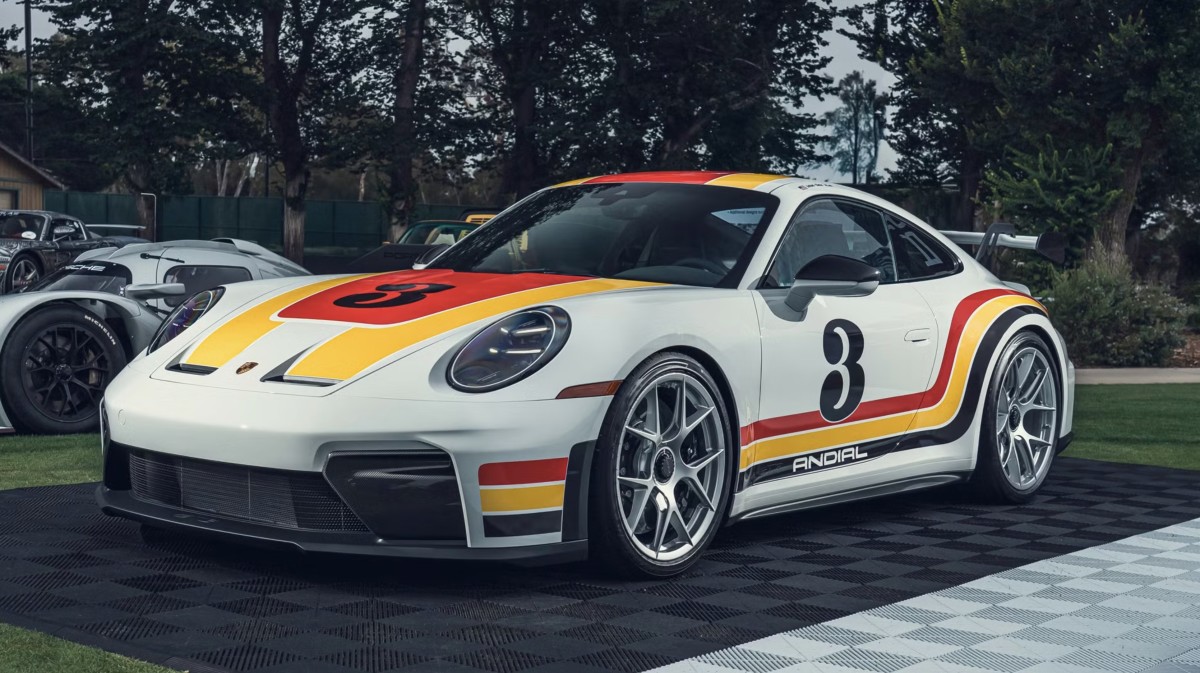
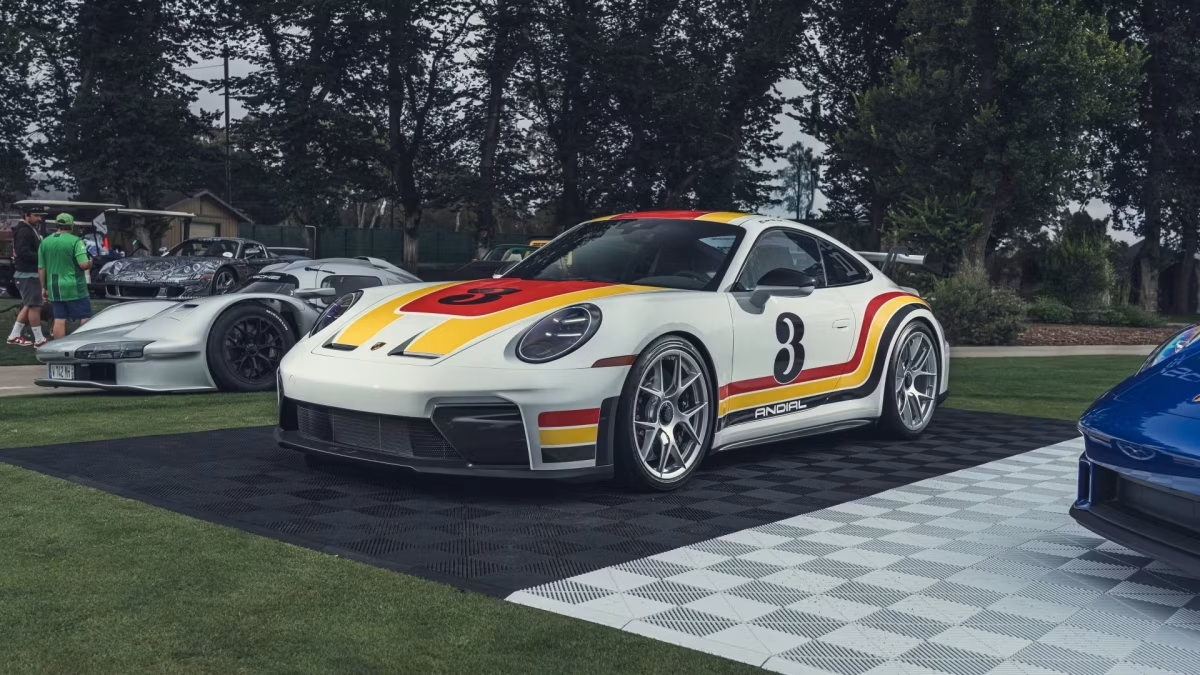
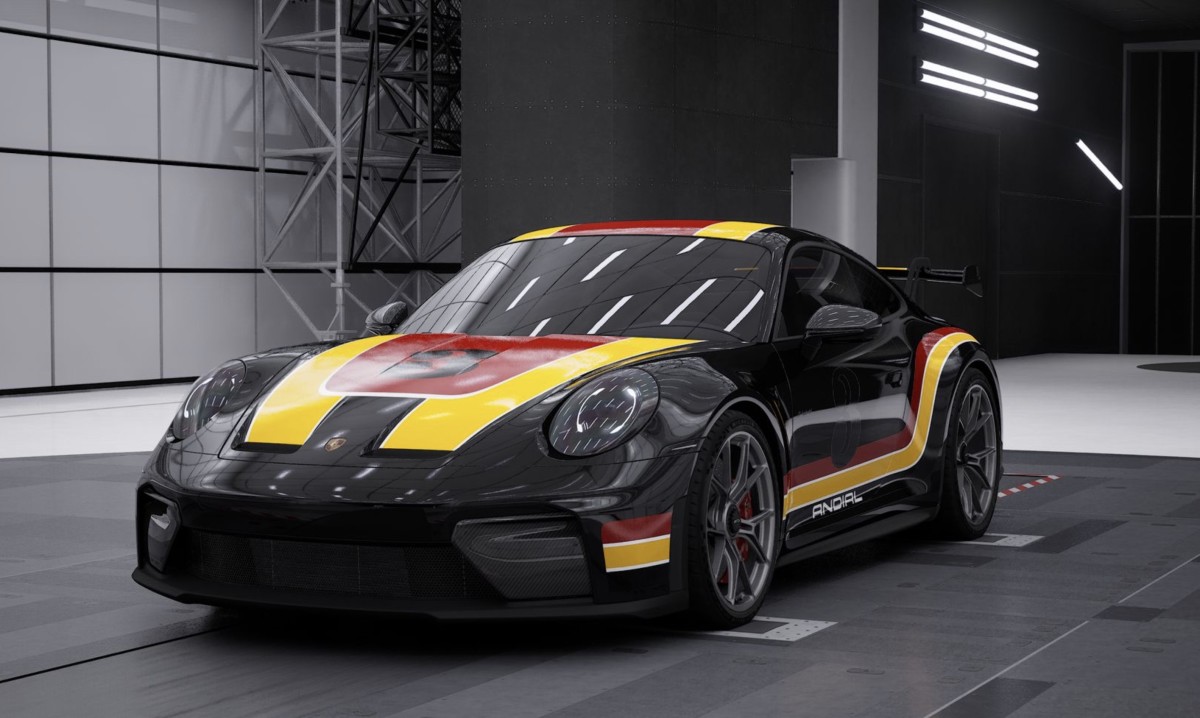
Porsche celebrates 50 years of Andial with new GT3 design pack
Formed in 1975, Andial was once a successful American motorsports and tuning company with its cars and engines achieving victories at almost every key racetrack in North America. One of Andial’s star cars was the Porsche 935-L, which competed in some of the most extreme endurance races of the period.
To celebrate 50 years of Andial, Porsche has unveiled a new livery package for the current 911 GT3, one of the 911 lineup’s most track-focused models. Like any optional package from Porsche, this one is going to cost you.
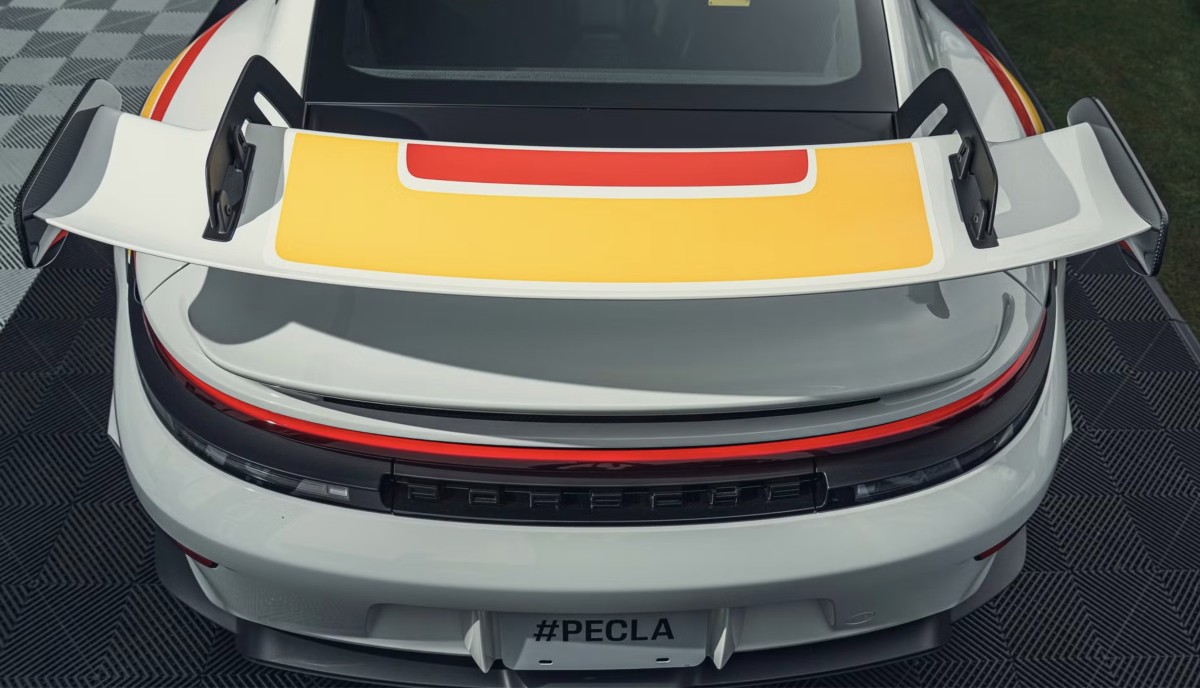
The new partial wrap for the GT3 features the same yellow and red colors seen on Andial’s 935-L, which contrasts especially well with white paint. However, we played around with Porsche’s configurator, and the livery can also be combined with several other Porsche colors.
The colors run along the sides, roof, hood, and across the rear wing. Applied by hand at the Porsche Exclusive Manufaktur center in Zuffenhausen, customers can optionally add a two digit starting number on the doors and hood. A country flag and driver name can also be added above each door.
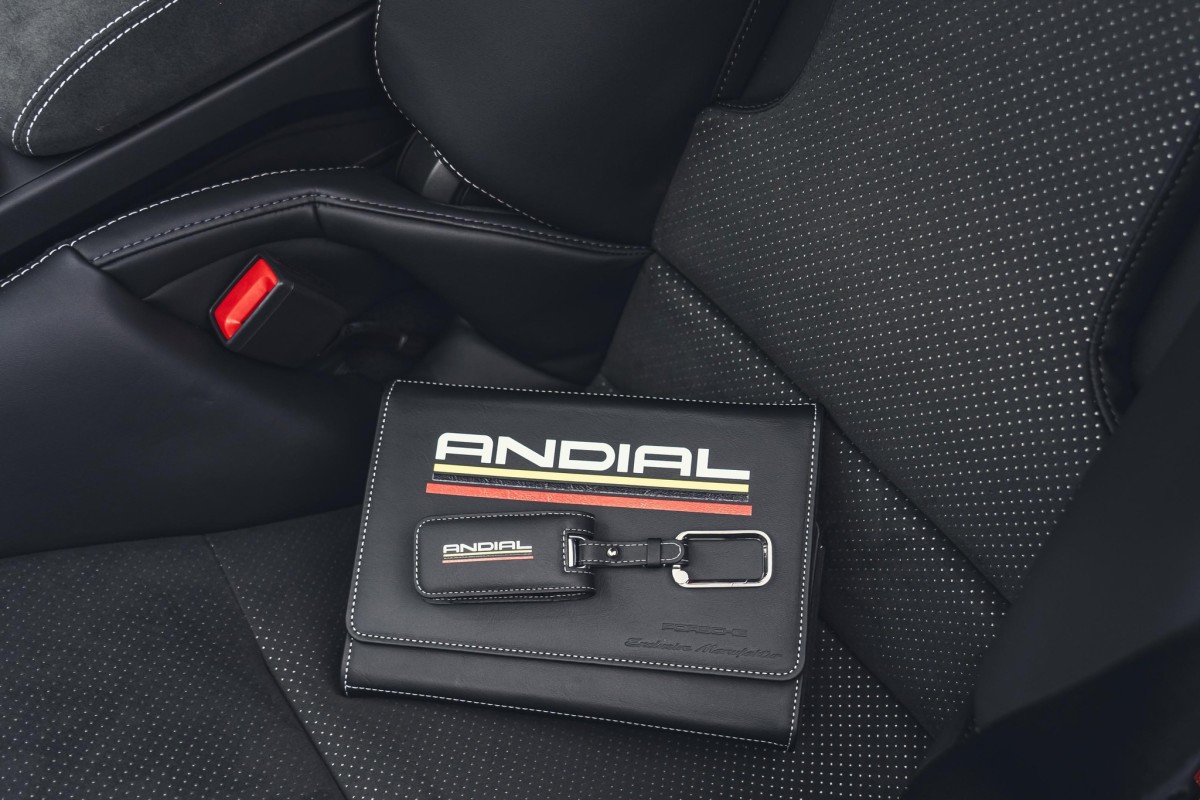
Inside, the Andial logo finds its way onto the floor mats and door-sill guards, and there are also unique design touches for the painted key, key pouch, and owner’s manual case.
The total cost of the Andial Design Wrap is $7,680, which is a lot, but perhaps not all that much for a car that already starts at $230,500—and that’s before a gas guzzler tax of $1,700 and a delivery, processing, and handling fee of $2,350.
Even if you aren’t purchasing a new Porsche 911 GT3, you can still retrofit the Andial wrap, although Porsche has not said exactly when this option will become available.
“The GT3 embodies the connection between Porsche motorsport technology and road cars in much the same way Andial applied motorsport expertise to cars on public roads and in racing,” Volker Holzmeyer, Chief Executive Officer of Porsche Motorsport North America said. “The story of Andial is one that continues to be an inspiration for many of us at Porsche and throughout our enthusiasts across the world, so it only makes sense to release this livery during their anniversary year.”
The Andial Design Wrap isn’t available if you go for the more low-key GT3 Touring, which does away with the normal GT3’s rear wing. You can, however, combine the Andial pack with the popular Weissach Package, a $20,020 option that includes a ton of carbon fiber components and lowers the GT3’s overall weight.
In 2015, the Ford GT made a splash as it marked the return of a storied nameplate. It's directly linked to the GT40 that had once conquered Le Mans, but the new car went beyond its retro-inspired predecessor, adopting a modern carbon fiber chassis, active aerodynamics, and a twin-turbocharged V6.
Production was always meant to be limited, and over the years, Ford delivered 1,350 customer cars. These included road-going versions as well as the Mk II track-only model. That seemed to be the end, but nearly a decade later, Ford is preparing one final chapter. For anyone who missed out on a GT allocation in the past, this is the last opportunity to buy one new.
The closing act is the GT Mk IV, a track-only machine that builds on Ford's Le Mans-winning racer. Developed in partnership with Multimatic Motorsports, the Mk IV adopts a new body, suspension, and powertrain configuration designed solely for circuit use. At its core is a 3.8-liter twin-turbo EcoBoost V6, built by Roush-Yates and tuned to produce more than 820 horsepower. The power is delivered through a paddle-shifted six-speed gearbox with an upgraded clutch.
The car's chassis is still carbon fiber, but it is reinforced with a unique upper roll cage. Suspension is managed by Multimatic Adaptive Spool Valve dampers, which can be adjusted from the cockpit without stopping.
Aerodynamic performance has been increased substantially, with extended bodywork, large radiators down the sides, and reworked rear elements. Ford claims the Mk IV generates over 2,400 pounds of downforce at 150 mph and can corner at more than 3g. Track testing has even shown that non-professional drivers in the Mk IV have recorded faster lap times than Ford's racing team achieved with the GTLM competition car.
Only 67 examples of the GT Mk IV will be produced. While most have already been allocated, Ford confirms that a very limited number remain. Each build can still be specified according to the buyer's preferences. Interested parties must make their intentions known by October 15.
Ownership also comes with additional track support. Development driver Scott Maxwell personally shakes down each car before handover and provides lead-follow sessions with new owners. Buyers gain access to the Multimatic On Track program, which supplies technical support, engineering expertise, and professional driver coaching during private track days.
via This Gullwing Replica Costs More Than A $430,000 Ferrari Purosangue
Honestly, it might be worth every penny
When you hear someone mention a half-million-dollar car auction, you probably think of a vintage Ferrari, a Bugatti Veyron, or the latest Ferrari SUV. But there’s something far more unexpected commanding that sort of money on Bring a Trailer: a Mercedes-Benz 300SL Gullwing replica built by the legendary Anton “Tony” Ostermeier.
Sure, it’s a replica, but it’s far from your typical kit car, held together by gaffer’s tape. Ostermeier's Gullwing Cars company, founded in the 1980s by a former Mercedes-Benz employee, represents the gold standard of 300SL replicas. What makes this particular build so special is the obsessive attention to detail that went into it. Ostermeier didn't just eyeball a few photos and get to work. He used his personal 300SL Gullwing and patterns sourced directly from Mercedes-Benz to create the fiberglass and aluminum bodywork.
The 2000 Ostermeier Gullwing replica, sitting at a heady six figures, features all the hallmarks of meticulous German engineering. Under the silver bodywork sits a welded square-tube steel chassis, housing a 3.0-liter inline-six engine paired with a five-speed manual transmission. This isn’t an engine-swapped, slap-in-the-face to purists either, it’s the same M103 unit that powered contemporary Mercedes models like the W201 190E, W124 300E, and R107/R129 SL, to name a few.
It’s what sets Ostermeier replicas apart: their use of genuine Mercedes-Benz running gear. The independent suspension, steering components, and power-assisted four-wheel disc brakes all trace their lineage to popular Mercedes models. Chrome 15-inch Rudge-style wheels complete the authentic aesthetic, while details like the pivot-out door handles and wheel-arch eyebrows demonstrate the builder's commitment to period correctness. Inside, brown leather bucket seats and mostly correct details create a cabin that would fool most enthusiasts. The tilt-forward steering wheel adds another layer of authenticity to the driving experience. The eagle-eyed may point out the incorrect location of the fuel filler door on the side and not in the trunk, and the placement of the shifter lever. That may be a turn-off for some, but that’s honestly not the point.
With less than 3,000 miles showing on the odometer, this particular example offers the chance to own a piece of Ostermeier's legacy. That is, assuming you're ready to pay for the privilege. The high bid on this rare replica peaked at $430,000, and it still didn't meet reserve, remaining unsold.
With a value hovering around half a million dollars, that puts it way over many genuine classics and certainly more than most modern supercars. For Gullwing enthusiasts priced out by the original's seven-figure plus price tag, these meticulously crafted replicas represent the next best thing. Just be prepared to pay a big six-figure sum the next time it crosses the auction block.
via CX and CX.R Gran Turismo Vision Concepts Offer Glimpse of Corvette’s High-Performance Future
It’s been more than 60 years since the first Chevrolet Corvette hit the road and the bowtie brand has pushed the limits of performance ever since, most recently revealing the 1,250-horsepower ZR1X hybrid.
The Chevrolet Corvette CX-R Vision Gran Turismo and Corvette CX Concepts pose on track.
During that debut, despite referring to the $207,395 sports car as the “ultimate” Corvette, Chevy officials broadly hinted that there will be more to come. And we’re now getting a glimpse of what they have in mind in the form of the Corvette CX and CX.R Vision Gran Turismo Concepts set to be unveiled during the annual Monterey Motor Week.
Designed and fabricated at the Chevrolet Performance Studio in Warren, Michigan, the CX show cars are the latest in a series of concept Corvettes to be revealed this year. And sources tell Autoblog the automaker is closely watching public and media reaction as it starts moving forward on what will eventually become the C9, or ninth-generation Corvette.
The Game is Afoot
“While the shape of a Corvette has always been expressive and forward-looking, each crease and line has its roots in the generations that came before it,” said Phil Zak, executive design director for Chevrolet. “The CX and CX.R Vision Gran Turismo demonstrate our design teams stepping away from the constraints of production vehicles and unleashing their creativity. Through this exercise, we’ve added to Corvette and defined the design direction for Corvette moving forward.”
The front of the CX bodywork "lunges" forward to allow access to the cabin.
As the full name of the two concepts suggest, Chevy developed them with the intent to let them come alive in the long-popular Gran Turismo vide racing game. That required the development of more than just an exterior design. To make the CX and CX.R accurately come to life, Chevy said, “the Corvette design team created detailed blueprints for the chassis, drivetrain, and aerodynamic features.”
Considering most of that work is today done digitally for production automobiles, the Corvette team was then able to transfer their files to Polyphony Digital, an arm of Sony Interactive Entertainment. In the end, it will be able to give fans a chance to put the new sports cars up against the best the rest of the world can come up with as part of Gran Turismo 7 later this month.
Corvette CX Concept
The Corvette CX Concept was conceived to be as comfortable on track as it would be on public roads. Fans of the ‘Vette will likely spot a number of design cues, including the dual-element taillights, though the show car is lower, wider and more curvaceous than today’s production model. The roofline, for one thing, is just 41 inches high. And one of CX’s more intriguing features is the way the upper part of the front body structure “lunges” forward to let occupants enter and exit the two-seater.
The silver-bodied CX pushes aerodynamics to the limit, with aero channels built into the body and the suspension’s front A-arms winged shape to reduce lift. A “Vacuum Fan System” sucks air through those open channels to control airflow over the rear diffuser and further enhance downforce. Both the rear wing and front diffuser actively adjust to control airflow, as needed at any moment.
CX’s cabin resembles more a fighter cockpit than a traditional interior – something likely to click with videogame fans. Drivers don’t have to go hunting around the instrument panel while pushing the sports car concept to the limits. All major controls are built into the steering wheel. And the windshield uses new digital technology, explains Chevy, to provide “an immersive surround display with real-time performance data. The seats are heavily bolstered to keep driver and passenger firmly planted. They’re finished in Inferno Red ballistic textile, while other cabin surfaces use silicone leather, low-gloss carbon fiber and milled aluminum.
CX Drivetrain
While Corvette officials recently said it’s likely to be some time before we see a fully electric version of the sports car go into production, the CX Concept suggests what such a drivetrain eventually might be like. It relies on the instant torque only electric motors can deliver to yield “ultimate straight line performance,” while the suspension and aero components of CX let it handle even the tightest corners at blinding speed.
CX uses four electric motors, one for each wheel, a layout that gives precise control to the torque vectoring system and traction control software. A 90-kilowatt-hour lithium-ion battery sits under the load floor to provide an incredibly low center of gravity. Chevy claims the system is capable of delivering as much as 2,000 horsepower, about 60% more than the new Corvette ZR1X hybrid.
Corvette CX.R Gran Turismo Vision Concept
While it might seem difficult to imagine pushing the Chevy sports car to even greater extremes, that’s where the Corvette CX.R Gran Turismo Vision Concept comes into play. It “imagines the future of Corvette GT racing,” Chevrolet explains, by “embodying Corvette’s history while looking to the future of automotive performance.”
The ultimate Corvette racecar might be a hybrid.
The CX.R starts out with the CX Concept but rides even closer to the ground and integrates even more aggressive aerodynamic design elements. Mass has also been shaved out to further enhance performance. The instrument panel, for example, is made of a lightweight carbon-fiber weave. The seats, meanwhile, are larger and even grippier, with more aggressive shoulder and headrest padding.
The race concept’s powertrain hews closer to that of the new ZR1X hybrid, here pairing three electric motors with a high-revving, mid-mounted 2.0-liter DOHC twin-turbo V-8. There are two motors up front, one for each wheel, a third integrated into the 8-speed gearbox. The V-8 itself can rev up to 15,000 RPMs and delivers a peak 900 hp. The combined powertrain package takes that up to 2,000 ponies – the same as the CX. But it can keep running a full race without having to wait for its smaller battery pack to recharge. It picks up power through a regenerative braking system.
Don’t count on seeing either version of the CX Concepts go into production anymore than some of the other radical Gran Turismo prototypes that have rolled out over the history of that popular videogame.
That said, Chevrolet is clearly looking for what needs to come next after bringing out the C8, the most radical reconceptualization of the Corvette in its long and storied history. At least some of the design cues and technology seen on the two concepts will likely be incorporated in future generations. And the same is true for the two powertrains. Indeed, we’ve already been given a heads-up that the Corvette team is working up a performance package that goes beyond the new ZR1X. While Chief Engineer Josh Holder said last month that an all-electric Corvette is “not soon” in the planning stage, he also said it will all but certainly require a hybrid system to deliver the next step in performance.
via Chevy’s Next Van Could Be a Rebadged Hyundai Staria “Spaceship”
General Motors might be about to replace its aging Express and Savana vans with something straight out of a sci-fi sketchbook. According to reports, Chevy’s next light commercial vehicle could be a rebadged Hyundai Staria — the futuristic van currently sold in Asia and Europe.
The move comes as GM deepens its product-sharing alliance with Hyundai, with five co-developed vehicles planned by 2028. It’s a surprising turn for a brand more often associated with full-size pickups, muscle cars like the rumoured 1,000-horsepower Camaro ZL1 crossover, and giant EV trucks, but it could breathe life into a commercial lineup that’s been stuck way back into the early 2000's.
Under the deal, Hyundai will provide the basic platform and drivetrain technology, while GM handles exterior design tweaks and the all-important Chevrolet badging. The Staria’s space-age looks — tall beltline, wraparound glass, and cab-forward stance — would be a shock to traditional van buyers, but GM sees opportunity in offering something distinctive to fleets and small businesses.
Hyundai has electric and hybrid versions ready, and an American-market Staria could sit alongside Chevy’s other EV projects, including the record-setting Silverado EV, which recently covered more than 1,000 miles without charging.
If it arrives in North America, the van could be built domestically starting in 2028, with passenger and cargo configurations aimed at both retail buyers and commercial operators. Hyundai’s global Staria lineup includes all-electric PBV (purpose-built vehicle) variants and efficient turbo-hybrids — powertrains that would give Chevy a modern edge in a segment dominated by boxy, thirsty rivals.
For Chevrolet, which still sells one of the cheapest cars in America alongside high-end sports cars, this sort of versatility is part of a broader strategy to cover more of the market without huge in-house development costs.
Whether American van buyers are ready for something that looks more like a Star Trek shuttle than a cargo hauler remains to be seen. Yet the move is somewhat sensible: GM gets a fresh, efficient, and safety-tech-packed product years sooner than it could develop one from scratch.
For Hyundai, it’s a way to push more volume through its PBV platform while reaching markets where it has little van presence. If Chevy can combine Hyundai’s engineering with a price point and dealer network that makes sense, the “spaceship van” might just succeed in a segment that rarely makes headlines.
via Two Corvette ZR1s Stolen from GM’s Bowling Green Plant, Both Recovered
The Corvette world was shaken over the weekend when two brand-new C8 ZR1s were stolen directly from GM’s Bowling Green Assembly Plant in Kentucky — only for both to be recovered in dramatic fashion. The incident adds to a growing list of high-profile performance car thefts, raising questions about security at one of America’s most storied automotive facilities.
Chevrolet
The Theft and the Pursuit
The theft happened just after midnight on August 8, when the two ZR1s — still wrapped in their protective factory film — were driven away from the plant. One, finished in Arctic White, was intercepted locally after running over spike strips in Bowling Green.
The other, in Sebring Orange, led police on a multistate chase into Indiana, reportedly reaching speeds of up to 180 mph before being found in Martin County. Both cars were returned to GM undamaged, a relief given the ZR1’s rarity and value.
Arrests and Ongoing Search
Authorities have arrested 20-year-old Daedrin Cook of Detroit, charging him with grand theft auto, evading police, wanton endangerment, and participating in organized crime. He’s currently being held in the Warren County Regional Jail.
The second suspect — believed to have been behind the wheel of the orange ZR1 — remains at large. This is the second time in 2025 that Bowling Green has been hit; a similar incident earlier this year saw eight Corvettes stolen.
A Plant with History
The Bowling Green facility has been the Corvette’s home since 1981, building every generation from the C4 onward. The ZR1, Chevrolet’s ultimate performance model, has just set a blistering Nürburgring lap record alongside the track-only ZR1X, cementing its status as the fastest American car to officially lap the Green Hell.
Losing even one to theft is a blow — especially with production volumes expected to be extremely low.
Performance Car Theft on the Rise
High-performance models are increasingly targeted by thieves. Just days before the Corvette heist, new data revealed the Camaro ZL1 as America’s most-stolen vehicle, underscoring the appeal of powerful V8 machinery to criminals.
While modern security systems make theft harder, these incidents show that determined thieves still find ways to exploit vulnerabilities.
Looking Ahead
Chevrolet has been investing in both future performance and security. Its recent California Concept Corvette created by its UK design team, hints at the next design direction for America’s sports car inputting futuristic styling.
But for now, the focus in Bowling Green will be on preventing further breaches — and ensuring the rare ZR1s reach their owners without taking a detour through a police impound.