via 2026 Ford Bronco 60th Anniversary Package Gallery: Retro Style In A Rugged SUV
The Little Details Make Ford's Celebratory Model Special
The Ford Bronco was first introduced as a 1966 model in August 1965, and to celebrate, Ford has launched the 60th Anniversary Package with either certain accents or the entire body painted in Wimbledon White, one of the original Bronco's launch colors. It's a stylish look worth inspecting more closely, so without any further ado, let's do that.
Whether opting for a Ruby Red or Wimbledon White body, the spare wheel cover is painted the latter hue, with red paint providing contrast. Note the matte black Ford badge on the left side of the tailgate.
The redesign of the grille mesh does a great job of giving the latest Bronco an old-school feel, and the red BRONCO wordmark both adds to this effect and enhances the SUV's visual width. Warm alloy paint almost makes the grille look like chrome, and it's a stunning effect.
A new design of 17-inch alloy wheel painted in Gravity Gray adds to the rugged feel of the vehicle, while a Vermillion Red center cap with a bucking Bronco logo adds more of that nostalgic feel to the SUV.
But of course, there are decals too, and in Vermillion Red over Wimbledon White, they're inspired by those on the 60th Anniversary Mustang revealed last year.
Ford says the 60th Anniversary Package will be available to order in October with either the standard 2.3-liter EcoBoost or the optional 2.7-liter EcoBoost V6, but pricing has not yet been announced.
via A Former GM and Lordstown Motors Factory Might Become an AI Data Center
A former GM facility may be the catalyst for the Stargate AI project
A recent Bloomberg report has revealed the identity of the mystery buyer who purchased the former General Motors and Lordstown Motors factory in Lordstown, Ohio, in a series of multimillion-dollar transactions involving the acquisition of the factory’s buildings, land, equipment, and machinery.
According to unnamed sources who spoke with the business publication, the Japanese investment firm SoftBank is the party responsible for acquiring the vehicle plant in Lordstown, Ohio. SoftBank is primarily known for its investments in the technology sector, and the acquisition is said to be in support of its Stargate data center project.
Cars sit outside the GM Lordstown Plant
Jeff Swensen/Getty Images
The Stargate project, initiated in collaboration with OpenAI and Oracle, aims to invest $500 billion by 2029 toward building infrastructure that supports artificial intelligence (AI) models like ChatGPT. A major backbone of this project is the construction of a large data center in Texas, which is currently underway. However, the companies involved have expressed that they’re interested in building similar facilities in other states and countries.
However, in May, Bloomberg reported that SoftBank was struggling to line up funding for the project and was already hampered by the Trump administration’s tariffs and trade levies. The source noted that although SoftBank has not yet developed a financial plan for Stargate, it has approached Foxconn to collaborate on building AI data centers and related infrastructure across the United States. The sale of the EV plant is said to be a part of these efforts by the Japanese investment firm.
Lordstown Electric Motors Corporation Factory
Getty Images
Earlier this week, Taiwanese electronics giant Foxconn, the contract manufacturer known for building notable consumer favorites like the Nintendo Switch game console and the Apple iPhone, sold the former General Motors car factory in Lordstown, Ohio, to "Crescent Dune LLC" for a total of $375 million. Crescent Dune is a two-week-old Delaware LLC; however, Foxconn spokesperson Matt Dewine stated that the buyer is an “existing business partner.”
Per Taiwan stock exchange filings, the site itself, including the land and buildings, was sold for around $88 million, while manufacturing equipment from Foxconn’s EV subsidiaries fetched around $287 million. In a statement to Automotive News, Foxconn said that Lordstown is an "integral part of the company’s footprint" in the U.S., adding that the decision to sell it "is part of the company’s plan to expand into new business areas."
Though they also stated that they plan to continue operations at the Lordstown site and are still committed to the auto industry, a previous report from The Wall Street Journal said that Foxconn intends to repurpose the EV factory to build AI hardware and equipment at the site. Already, Foxconn has a manufacturing facility in Houston for AI servers and has partnered with electronics giants like Apple and Nvidia to establish AI-related facilities in the U.S.
GM operated the Lordstown facility from 1966 to 2019, where it made a variety of different cars, including Chevy full-size cars, as well as compact cars like the Vega, Monza, Cavalier, Cobalt, and Cruze. In 2019, Lordstown Motors purchased the facility to manufacture the Lordstown Endurance electric pickup. In 2022, Foxconn acquired the facility after the EV company encountered financial difficulties and managed to assemble a small number of electric pickups before Lordstown Motors filed for bankruptcy in June 2023.
Several other startups, including Fisker, considered partnering with Foxconn to manufacture electric vehicles at Lordstown; however, those plans ultimately fell through. Currently, Foxconn is using the Lordstown plant to assemble electric tractors for Monarch, a California-based startup.
Final thoughts
As I have said before, Foxconn’s Lordstown factory can be a crucial asset for automakers who want to reduce their tariff impact, as in its GM days, it produced nearly 16 million vehicles between 1966 and 2019 and peaked at 290,000 cars in 2014. The fact that this AI avenue is something that is seriously being considered for the Lordstown plant, with significant backing from a firm as powerful as SoftBank, really solidifies my belief that this was a wasted opportunity to possibly onshore a car company that exclusively manufactures overseas.
via BMW Already Offering Huge Discounts on 2026 Electric Models
Some Customer Could Get $9,900 Off
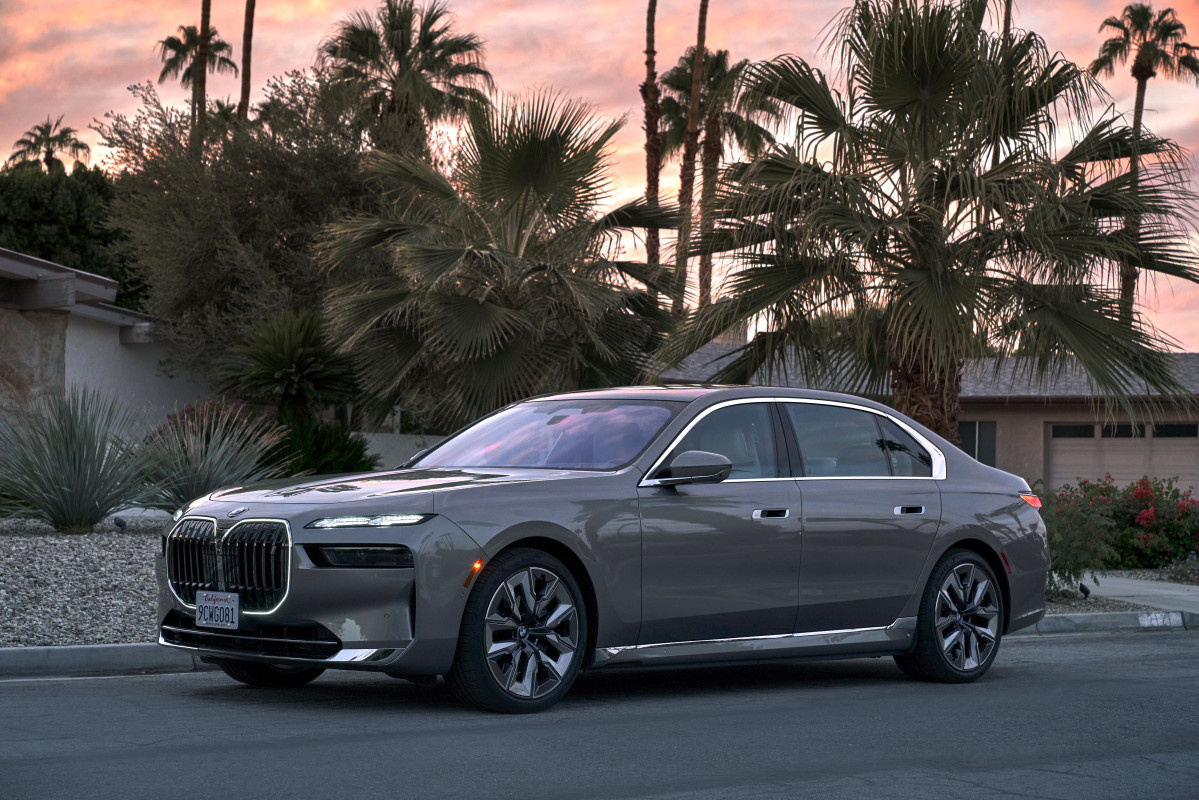
If you've been thinking about an electric Bimmer, now might be a good time to head to the showroom. While they've only just starting appearing at dealerships, BMW is already offering significant discounts on some 2026-model-year EVs, according to CarsDirect.
Dealer bulletins show several incentives for both purchases and leases on the BMW i5, i7, and iX, as well as the BMW XM plug-in hybrid. The deals vary by model, and existing BMW customers will likely see the biggest savings, but there are plenty of discounts to be had.
Financing As Low As 3.99%
BMW
According to the dealer bulletins, BMW is offering financing rates as low as 3.99% for 60 months on the 2025 i5 and i7 sedans, as well as the 2026 iX crossover, which received a mid-cycle refresh (Lifecycle Impulse in BMW-speak) for the new model year. That's a fairly good rate for this luxury brand, in the current financial climate.
BMW is also offering 4.99% financing (again, over 60 months) on the XM, which drops its base model for 2026. That leaves only the more-powerful XM Label, effectively raising the base price by about $20,000. Considering that XM sales fell 23.8% in the second quarter, to 409 units, this high-performance SUV probably needs incentives.
Up To $5,000 In Loyalty Bonuses
BMW
Loyalty programs for returning customers are a common auto-industry sales tactic, but as CarsDirect explains, BMW started doing something different this summer by giving dealers the option to add a $1,000 loyalty bonus on top of other incentives for certain 2026 electric models. The i5 and i7 were already eligible for $1,000 and $4,000 in loyalty cash, respectively, so existing customers could get up to $5,000 off the bigger electric sedan. These incentives apply when buying or leasing, and BMW is offering a $1,000 conquest bonus for customers trading in EVs or plug-in hybrids from other brands, which can also be combined with other incentives.
Customers who finance with BMW can also get a $5,000 loan credit on the i5 and a $7,500 credit on the i7. A $7,500 cash purchase credit is also available for the i7 if customers choose outside financing, giving them the same discount either way.
Those planning to lease will get an even bigger discount. A $9,900 lease credit is now available for the i5, i7, and iX, while the XM qualifies for a $7,500 lease credit. However, these lease incentives are only good through September 2, and CarsDirect notes that some of the other BMW EV incentives may disappear after the $7,500 federal EV tax credit expires September 30.
via The Ferrari SF90 Stradale Will Be Unrecognizable For 2026
A New Hybrid Supercar
The Ferrari SF90 Stradale plug-in arrived as Maranello's first plug-in hybrid supercar in late 2019, and five years on, after run-out XX models have helped make the most of the generation, it's time for an encore. As reported by The Supercar Blog, Ferrari has begun teasing the SF90's replacement on the MyFerrari app, with a short clip revealing that the design is going to evolve considerably, and because this is Ferrari we're talking about, we expect the 986-horsepower supercar to be rechristened. Ferrari has trademarked several new terms of late, but where they may be applied is not obvious.
At first glance, the screenshot we've included appears to depict one of two taillight clusters; the current SF90 has two separate taillights on each end of its rear fascia, and this snapshot appears to show that each unit will evolve into a narrow strip like the new Ferrari Amalfi or Ferrari F80. But in the clip, a more distant perspective seems to indicate that the taillights will join together in one continuous strip, or at least come close to it. Significant changes will take place at the other end of the car, too. Our European spies recently caught a mule for Project F173M (the replacement for the Type F173, or SF90 Stradale) in Germany, and those photographs depicted a car with large intakes where the headlights would traditionally go. But unlike the 12Cilindri and F80, the glimpse of the F173M's front end we see in this clip suggests that the headlights will be vertically oriented.
The development mule mentioned above appears to have been built on the bones of a V6-powered Ferrari 296 GTB, but multiple reports claim that the 4.0-liter twin-turbo V8 in the SF90 will be carried over, along with the three electric motors that make this a hybrid. Considering that Ferrari will have learned a lot in the last five-plus years, it's quite likely that more than a thousand horsepower will be offered, especially since Lamborghini's Revuelto PHEV makes 1,001 hp. Whatever the truth of the matter, the SF90's replacement is expected to be unveiled in Milan, Italy, on September 9.
via Toyota Posts Double-Digit Losses as Tariffs Impact Its Bottom Line
Toyota just took a major hit due to tariffs
In an announcement on August 7, Tokyo time, Japanese auto giant Toyota said that it expects to lose 1.4 trillion yen (~$9.5 billion) from its operating profit by the end of its 2025-2026 fiscal year due to the Trump administration’s hefty tariffs on cars imported to the U.S., which is driving up costs and eating into Toyota’s earnings.
At the same time, Toyota lowered its full-year net profit forecast by 14%, bringing it down to 2.6 trillion yen (~$17.65 billion). This is a sharp drop from its original estimates, which only accounted for tariffs during April and May, which cost it 180 billion yen (~$1.2 billion).
The pain and the money leaving the Toyota City-based automaker’s coffers are already showing. During its first fiscal quarter from April to June 2025, Toyota posted a net profit of 841 billion yen (~$5.7 billion), a staggering loss of 36.9% compared to the same period last year. This sharp decline reflects not only the U.S. tariff, which jumped from 2.5% to 27.5% in April, but also the effects of a stronger yen-to-dollar exchange rate.
Getty Images
Despite this setback, some relief is on the horizon thanks to a trade deal between the Trump administration and the Japanese government. Last month, they agreed to reduce tariffs on Japanese cars by 15%. Toyota believes this new rate could help mitigate the impact, but the damage has already been done.
"[The U.S. tariff] has risen to 15% from the previous 2.5%, which obviously has a significant impact," Takanori Azuma, chief officer in the accounting group at Toyota, said during a news conference on August 7. "And it is a thing we are not able to control. The major challenge is to ensure that our North America business generates solid profits. The result [of a trade deal] remains tough."
Part of that process is a few strategic adjustments. Already, in June, it announced it would raise prices for U.S.-market vehicles by an average of $270 on Toyotas produced from July 1, with further hikes possible if the market allows, according to Azuma. Additionally, Toyota’s head accountant noted that the company would utilize excess production capacity, adding that it aims to “refine our operations by considering every possible scenario."
Azuma emphasized that Toyota is also working to reduce its reliance on the U.S. market, which still accounts for about 33% of its global vehicle sales. "Our [revenue] balance that different regions can cover each other when America catches a cold, is finally coming into place," he said.
Getty Images
Tariffs are not the only problem Toyota is facing
Tariffs aren’t Toyota’s only headache. Currently, fluctuations in the Yen-Dollar exchange rate are expected to cost the company another 725 billion yen (~$4.9 billion). Additionally, the rising cost of materials is expected to reduce profits by an additional 300 billion yen (~$2 billion). Combined, these have caused Toyota to lower its projected full-year earnings by 44.2%.
Despite the challenge, Toyota remains focused on achieving its sales target of 48.5 trillion yen (~$328.98 billion) in net sales revenue by the end of March 2026. In the April-June quarter, Toyota's sales revenue increased by 3.5%, reaching 12 trillion yen (~$81.38 billion), while its operating profit declined by 10.9% to 1.1 trillion yen (~$7.45 billion). The tariffs alone reduced operating profit by 450 billion yen (~$3.05 billion) during the fiscal quarter.
Getty Images
Toyota’s sales are still strong. Global vehicle sales rose 7% to 2.4 million units in its fiscal first quarter, with North America seeing a 12.7% boost and Japan increasing by 11.4%. Surprisingly, Toyota even shipped more cars from Japan to the U.S. after the 25% tariffs on imported vehicles were introduced in April. Toyota’s exports in May rose by 22.9% year-over-year to 41,573 vehicles, and June saw a 15.9% jump to 52,745 units.
Looking ahead, Toyota announced it will build a new plant in its hometown of Toyota City, with operations expected to begin in the early 2030s. Details are scarce for now, but Azuma clarified that Japan is its home and Toyota City is its home base.
"Our top priority is to maintain the production base of 3 million vehicles in Japan," Azuma said. "This is the foundation of Toyota's business, enabling us to expand manufacturing and development in each region. We want to work together to protect it, including through measures to stimulate domestic demand."
Final Thoughts
Toyota isn’t alone in facing these tariff troubles. This week, Honda revealed that its first-quarter earnings fell to ¥244.1 billion (~$1.69 billion) from ¥484.7 billion (~$3.35 billion), on account of tariffs and its own internal struggles with EVs. Meanwhile, Mazda lost ¥46 billion due to its reliance on imports in the U.S. market. Both companies are now looking to shift more production to the U.S. and are rethinking their export strategies.
Ultimately, Toyota and other Japanese automakers face challenges playing ball in their largest market, the United States. However, as time progresses under these conditions, it would not be far-fetched to see automakers drastically change themselves and/or their U.S.-market lineups within the near future.
via Ford Bronco 60th Anniversary Edition Blends Past and Present
From Trailblazer to Heritage Icon
Introduced on August 11, 1965, as a 1966 model, the Ford Bronco was designed to bring the simplicity and excitement of the Mustang into a rugged, off-road-ready vehicle. It marked Ford's entry into what it termed the “sport-utility” space, a phrase that would later define an entire segment.
For decades, the Bronco became a recognizable presence in both everyday use and off-road circles, earning a reputation for toughness and adventure-readiness. After a 23-year production gap, Ford revived the Bronco in 2020 with a design that leaned heavily on its vintage roots.
In 2026, the model marks its 60th anniversary. To commemorate the occasion, Ford is rolling out a 60th Anniversary Package for the Bronco, designed to highlight the vehicle's legacy while maintaining its off-road utility and modern comfort.
Built on the Outer Banks trim, the 60th Anniversary Bronco comes exclusively with the Sasquatch Package. It features 35-inch Goodyear rugged terrain tires, an advanced four-wheel-drive system, high-clearance suspension, and locking differentials. A new 17-inch Gravity Gray alloy wheel design nods to the past with a Vermilion Red center cap stamped with the year “1966” and a bucking Bronco logo.
A reworked grille with Warm Alloy paint and red "BRONCO" lettering is paired with body color options that evoke classic Ford tones. Wimbledon White – a color used on the original Bronco – is available for the body or as a contrast roof when paired with Ruby Red paint. Vermilion Red accents appear throughout the exterior, including a rocker panel graphic with a 60th Anniversary logo and a Wimbledon White spare tire cover with a red Bronco wordmark.
The interior receives a modest upgrade with Ebony and Alpine leather seats embossed with anniversary logos, Alpine-stitched dash accents, and marine-grade vinyl door trim. Red detailing on the dashboard and grab handles continues the subtle nod to classic design. Newly introduced A-pillar-mounted grab handles and standard running boards enhance everyday usability.
The 60th Anniversary Package is only available with the Outer Banks trim and requires selection of the Sasquatch Package. Buyers can choose between a 2.3-liter EcoBoost four-cylinder producing 300 horsepower or an optional 2.7-liter EcoBoost V6 rated at 330 hp found in other Fords. Both are paired with a 10-speed automatic transmission and full-time four-wheel drive.
Ford says the special edition will be available to order starting October 2025, with pricing to be announced shortly beforehand. More will be revealed on August 4.
via This Classic Porsche-Based Supercar Is Expected to Fetch Millions at Monterey
An 80s speed icon hits the auction block
In 1987, German auto manufacturer and Porsche tuner RUF quickly became the darling of Porsche fans worldwide when it released the CTR, a machine better known by its other name: Yellowbird.
Coined by Road & Track photographers by the way its bright yellow paintwork stood out in cloudy weather conditions, the Porsche 911 Carrera-based CTR made a heck of a first impression on the automotive world when it proved itself as a standout in the magazine's July 1987 comparison shootout. Ruf's CTR eclipsed the era’s best in the magazine's “World’s Fastest Cars” test, as the Ferrari Testarossa, AMG Hammer, and even Porsche's own 959 couldn't touch the Yellowbird's 211 mph top speed.
All this was made possible by the many upgrades that the CTR had over a standard 911 Carrera at the time. Under the rear hood of the Yellowbird is the Carrera's 3.2-liter air-cooled flat six bored out to 3.4 liters, fitted with twin turbochargers and a race-spec fuel injection system mated to a RUF-designed five-speed manual. Built with a reinforced chassis for ultimate track performance, RUF further promoted the CTR's prowess and capabilities with a 1989 promotional VHS called Faszination Auf Dem Nürburgring, a 20-minute montage featuring works driver Stefan Roser exploring the CTR's limits on the Green Hell.
But while only 29 CTRs were built for discerning customers, six customers took on RUF's offer for a special 'Lightweight' trim for those who felt they wanted their stripped-out, hardcore machines to be a little more hardcore. Here, key body panels were made out of aluminium instead of steel, the chassis was stripped down, and it also had no center console, no roll cage, no power brakes, no sunroof, no radio, and lightweight Clubsport seats.
Hitting the auction block during RM Sotheby's Monterey event on August 16 is CTR number 9, which is also known by its nickname “Redbird.” This specific CTR was ordered directly through Alois Ruf, and is a German-market Lightweight example finished in a paint-to-sample Bordeaux Red and an interior finished in trim-to-sample black Nutria leather.
In addition to the cool paint job, the car also features a smattering of personalization features that make this Lightweight CTR very distinct, including race-inspired upgrades like RUF sports suspension, a custom telemetry gauge, 959-style door seals, and lightweight door panels. In addition, the CTR comes with many comfort and usability options like power windows, a heated windshield and rear window, and aluminum door sills.
Additionally, this “Redbird” has further personalization features like Sabelt six-point harnesses, a dash-mounted kill switch inspired by the CTR prototype, a Pfaffenhausen hood badge, and chrome trim.
However, despite the extensive personalization options, RM Sotheby's says that this CTR example has an interesting provenance. A previous owner's research in correspondence with RUF confirmed that the car was completed in September 1989, but was never delivered and remained in the hands of RUF until 2005.
During this time, it was reportedly driven and kept by Ruf founder Alois Ruf as a personal vehicle. It was later sold and went through a series of respected collectors in Germany, Austria, Belgium, and the United States. While in Austria, it was returned to RUF for several drivability upgrades, including a revised G50 transaxle and an updated brake system with adjustable bias control.
RM Sotheby's estimates that this special CTR could get between $4,500,000 and $5,000,000 USD. According to the auctioneers, it has fewer than 18,900 kilometers (~11,745 mi.) and is authenticated by a RUF certificate, build sheet, factory correspondence, German registration documents, manuals, and RUF invoices dating back to 2005.
Final thoughts
Whether you know about Ruf through video games like Gran Turismo, Wangan Midnight Maximum Tune, or through videos by Best Motoring, the CTR is an automotive icon like no other. It took the establishment by surprise, and to some enthusiasts, it still has the "if you know, you know" cache.
This, alongside other niche performance vehicles of this era, is part of my hypothetical "unlimited money" dream garage, and in this specific spec, it's one that is sure to find a home with a very discerning collector.