Post Icon

Subaru's Next American EV Has a Wild Name and Familiar Capability


via Subaru's Next American EV Has a Wild Name and Familiar Capability

Subaru's Electric SUV Lineup is Growing

Subaru's American lineup has long been dominated by rugged, all-wheel-drive SUVs that actually back up their outdoorsy image. From the Outback to the Forester and Crosstrek, these aren't just lifted hatchbacks playing pretend – they're built with real-world capability in mind, whether you're navigating unpaved trails or just lousy weather.

Even with its first electric effort, the Solterra, it carried the same Subaru DNA, despite being co-developed with Toyota. Earlier this year, Subaru doubled down on its EV future with the debut of the Trailseeker, a larger all-electric SUV clearly aimed at adventurous American buyers.

Now, a third EV is joining the lineup, and it's a bit smaller and quite curiously named. Say hello to the Subaru Uncharted.

Subaru

Another EV, Another Adventure Name

"Uncharted" might sound like the name of a video game franchise or an adventure-filled TV show, but it bodes well with Subaru's current lineup. Compared to the more conventional but still interesting Solterra or the slightly misleading Trailseeker, which isn't exactly built for long-range expeditions, the Uncharted name feels like a better fit for a brand that has a penchant for outdoorsy vehicles.

The Uncharted will be Subaru's third electric vehicle, and the second all-new EV model specifically aimed at the US market.

Subaru trademarked the Uncharted name last year, alongside other adventure-themed placeholders like "Getaway," "Trailhead," and "Highroad." It's unclear whether those would eventually become production models, but it's evident that Subaru is working on a lineup with names meant to evoke dirt, distance, and a sense of discovery, even if they sound a bit weird.

Subaru

View the 2 images of this gallery on the original article

What We Know So Far

Details are scarce at this point, but since both the Solterra and Trailseeker have Toyota bones, and with their collaboration for this new model becoming official in March, a peek at Toyota's EV range gave us a clue.

The press release for the launch indicated that the Uncharted would be compact, so the newly revealed Toyota C-HR EV is a likely candidate. It's a bit smaller than the Solterra, but a little quicker with its dual-motor AWD setup, which is good for a combined 338-horsepower output. It has a 74.7-kWh battery and an estimated range of 290 miles.

The Uncharted will debut on July 17 at 7:30 PM ET via Subaru's social media and corporate channels. The single teaser image shows a black-over-red two-tone paint scheme, a solid rear light bar, a swept-back coupe-like roofline, and a "Subaru" wordmark across the tailgate.

Pricing remains under wraps, but if it undercuts the Solterra's nearly $40,000 starting point, it could become the most affordable EV in Subaru's American lineup.

Toyota

View the 2 images of this gallery on the original article

  • Digg
  • Del.icio.us
  • StumbleUpon
  • Reddit
  • RSS
Post Icon

Aston Martin Reveals 2026 Vantage S With Shocking Performance


via Aston Martin Reveals 2026 Vantage S With Shocking Performance

Return of the S

Aston Martin is continuing the renewal of its two-decade tradition of applying the ‘S’ suffix to special, high-performance derivatives of core models with the return of the Aston Martin Vantage S Coupe and Roadster. The British automaker promises it’s “the most performance-focused Vantage in Aston Martin’s sports car range.” The move follows the unveiling of the recently launched DBX S, which uses carbon fiber and magnesium to strip the DBX of as much weight as possible while adding the Valhalla supercar's 717-horsepower AMG-sourced, twin-turbocharged 4.0-liter V8.

Aston Martin Vantage S

Aston Martin

The S stands for speed

For Aston’s newest S, its muscular twin-turbocharged 4.0-liter V8 has been tuned to produce 671 horsepower, versus 656 horsepower for other Vantage models, while torque remains unchanged at 590 pound-feet of torque. Peak torque is available between 3,000 and 6,000 rpm through a rear-mounted eight-speed automatic transmission. Weighing in at 3,538 pounds, 346 pounds lighter than standard Vantages, this model hauls S, reaching 60 mph in 3.3 seconds on its way to a 202-mph top speed with the help of Launch Control. That’s a 0.1-second improvement, according to Aston Martin. The powerplant features an 8.6 compression ratio, dual variable camshaft timing, and CNC-machined combustion chambers. 

Aston Martin Vantage S

Aston Martin

The Vantage S boasts numerous refinements, such as throttle pedal weight and responsiveness adjusted for the S and its configurable driving modes, to help satisfy the driver's need for speed. The automaker states that ride quality has been enhanced by reducing the rigidity of the rear spring and gearbox mount, as well as increasing the front-end responsiveness of its Bilstein DTX adjustable dampers. To increase response, enhance front-end grip under high lateral loadings, and accurately adjust the Vantage S’s overall dynamic balance, the suspension's camber, toe, and caster settings have been adjusted, and the rear subframe is now attached directly to the body.

The Vantage S’s updated wardrobe

Like any sports car with a performance upgrade, it’s enhanced with an improved appearance. That means the Vantage S is distinguished by center-mounted hood blades finished in carbon fiber or gloss black to help optimize breathing. There are also brass-forged ‘S’ badges on the front fenders filled with red enamel, a full-width rear spoiler, new front air dam and front venturi vanes, and 21-inch Y-spoke wheels in satin black with red accents.

Aston Martin Vantage S

Aston Martin

The upgrades continue inside, with a cabin fitted with the expected Alcantara, leather, and carbon fiber trim. The seats are embroidered with ‘S’ logos and Aston Martin wings embroidered onto the headrests. There’s also an optional choice of a red or silver knurled metal drive mode rotary, color-matched to the seatbelt, contrast and headrest stitching, as well as full semi-aniline leather or semi-aniline leather and Alcantara cabin. 

Aston Martin Vantage S

Aston Martin

Final thoughts

If the S suffix sounds familiar, that's for good reason. In the 1950s, the DB3S was Aston Martin's first post-war racing vehicle to finish second at Le Mans three times and to win a round of the World Sports Car Championship. At the 2004 Paris Motor Show, the Vanquish S was shown, reviving the S suffix and paving the way for the 2011 release of the V-8-powered Vantage S and the 2013 release of the V-12-powered Vantage S. The Rapide S and its more powerful engine became the only Rapide variant two years later, while the Vanquish S followed in 2016. The Vantage S was last produced in 2017. 

Aston Martin Vantage S

Aston Martin

The new Aston Martin Vantage S debuts at the 2025 Goodwood Festival of Speed this weekend. Buyers can order one now, with deliveries expected to begin in the fourth quarter. Pricing has not been announced. 

  • Digg
  • Del.icio.us
  • StumbleUpon
  • Reddit
  • RSS
Post Icon

How Much Range Do EVs Lose After 5 Years? Data Reveals Surprising Winners


via How Much Range Do EVs Lose After 5 Years? Data Reveals Surprising Winners

“Roll up to a tailgate in 2025 and your five-year-old EV still reads 280 miles on the dash — no spring in your step lost”. Today’s mainstream packs fade only 1.8% — about a 9% total drop in five years — thanks to liquid cooling, smarter BMS balancing and tougher cell chemistries. How is your battery range after 5 years? Find your car below.

The Great Leveling

Not everyone has kept up in this great levelling, though. Let's talk about the winners and losers.

Back in EV’s early days, five-year retention ranged from under 70% for early Leafs to over 90% on rare liquid-cooled prototypes. Now, the top 10 mainstream EVs all cluster between 87% and 94%. Geotab’s analysis of 5,000+ EVs nails average fade at 1.8% — down from 2.3% half a decade ago. That uniformity isn’t magic; it’s the payoff of liquid-cooling loops, advanced cell balancing, and the slow march toward LFP and nickel-rich chemistries.

Heroes vs. Has-Beens

At the summit, Audi’s e-tron and the Jaguar I-Pace boast midpoints above 92%, proof that premium packs and active thermal management pay dividends. Tesla’s Model 3, Ford’s Mach-E and VW’s ID.4 aren’t far behind — hovering near 91–92% retention. Entry-level contenders like the Bolt EV and Kona Electric still muster around 89–90%, a solid showing given their price points. Contrast that with the Worst 10: early Leafs, i-MiEVs and first-gen conversions now languish in the mid-70s to low-80s, victims of air-cooled packs and minimal cell-monitoring.

Expect that second-hand EV to have lost a good deal of its battery range; don't let the salesman argue that the battery holds its original range.

Real-World Rituals

Veteran EV owners treat charging like pit stops: maintain State of Charge between 20–80%, lean on Level 2 overnight, and dodge DC-fast-charge binges. That routine can reclaim 2–3% pack health over five years — enough to claw back 10–20 miles on your daily commute. Nissan’s warranty—guaranteeing 80% capacity at five years — sets the floor; real-world LeafSpy data often show high-80s retention in mild climates.

Beyond the Numbers

With the big thermal fixes in place, the next frontier is marginal: who resists 120 °F summer blasts? Which chemistry outlives the others at decade-old mileages? And how much will solid-state and silicon-enhanced cells narrow that remaining 1–2% gap?

Related: 5 Game-Changing Batteries That Will Change Your Life

Bottom Line

Battery fade has gone from horror story to resolved footnote. Mainstream EVs now play in a tight pack — over 90% range left after five years — while yesterday’s laggards fall far behind. When you shop your next Leaf, Bolt, Mach-E or Model 3, trust the data: charge smart, drive hard and let real-world numbers — not fear-mongering headlines — steer your choice.

  • Digg
  • Del.icio.us
  • StumbleUpon
  • Reddit
  • RSS
Post Icon

SUVs vs Sedans: The Data Behind America's New Favorite Car


via SUVs vs Sedans: The Data Behind America's New Favorite Car

How SUVs Flattened the Sedan Dream

In 2025, for every sedan sold in the U.S., nearly four SUVs rolled off the lot. That’s not a marketing blip—it’s a cultural shift that’s been two decades in the making. Sedans once ruled the American cul-de-sac. Now they sit lonely in rental lots, gathering pollen and existential despair.

Let’s put it into drive: In 2005, sedans outsold SUVs by more than 2 to 1. In 2025, the inverse is true. The station wagon died in the ‘90s. The sedan? That funeral's happening now—in slow motion, with a premium sound system and 360° cameras.

Looking at the data, if you are a geek like me, have you ever seen such a perfect crossover line chart?

So what happened? Why did the sedan, once a symbol of mid-size American reason, lose its spot in the driveway?

Let’s break it down.

1. The View from Up Here: Visibility Wins

Americans like seeing over traffic. Period. We’re a nation of drive-thru pragmatists—if you can’t see the menu board from the driver’s seat, forget it. SUVs give you elevation, posture, and that tall-boy sense of control. Sedans? You’re crouching. Behind a Sprinter van. In the rain.

Sure, center of gravity matters on a twisty backroad. But for most people, the “canyon” is a Costco parking lot, not the Pacific Coast Highway. SUVs ride higher and feel safer—even if crash data tells a more complex story.

2. Trunk Space Isn’t Sexy—Cargo Room Is

You ever tried stuffing a teenage hockey player, their gear, and a golden retriever into a Corolla? SUVs redefined what American families expect from their haulers. Fold-flat seats. Liftgates you can open with your foot. Room for a week’s worth of road trip junk food and regret.

Sedans had trunks. SUVs have zones. And automakers know it—look at the Ford Edge, Toyota RAV4, Honda CR-V. These aren't niche vehicles. They’re the Big Macs of the road.

3. Sedans Got Fancy, SUVs Got Cool

Back in 2008, SUVs were still suburban-school-run boxes. Now they’re sculpted, turbocharged, and optionally electrified. Meanwhile, sedans either went fleet-rental basic or luxury-snob awkward. That weird moment when your neighbor buys a $72,000 electric Lucid Air while you’re still making payments on a ‘22 Civic? That’s what killed the sedan.

Crossovers like the Mazda CX-5 and Hyundai Ioniq 5 offer premium-feel without premium price tags. They look good next to your grill, your gym bag, and your life. Sedans now feel like the “business casual” of transportation: polite, functional, uninspired.

4. Electric Future? SUVs Are Already There

You want a Tesla Model 3? Cool. But what everyone else is ordering is a Tesla Model Y. Or a Mustang Mach-E. Or a Rivian R1S. The EV future is skipping the sedan—straight into crossover shape.

It’s packaging efficiency. Battery layout works better in taller frames. And again: cargo, clearance, command seating. Most automakers are leaning hard into this—because that’s what sells.

5. Real Talk: Sedans Still Have a Pulse… Barely

Toyota’s still making Camrys. Honda’s still moving Accords. But it’s getting lonely. Even performance sedans are pivoting—see the Dodge Charger Daytona EV or BMW’s slope-roofed M variants. The sedan isn’t dead. It’s just being slowly pushed into “enthusiast only” territory. Like stick shifts. Or compact discs.

Final Lap

So here we are: a nation where the driveway kings wear hiking boots, not loafers. Sedans still have their devotees—folks who want refinement over road height, balance over bulk. But they’re losing the numbers game. Fast.

The real question? What happens when the SUV gets too big, too bloated, too… everything? Do we cycle back to the sedan? Or are we just one cupholder away from a full minivan revival?

Don’t laugh. We’ve seen that before.

  • Digg
  • Del.icio.us
  • StumbleUpon
  • Reddit
  • RSS
Post Icon

Keanu Reeves To Star In Cadillac F1 Docuseries Ahead Of 2026 Debut


via Keanu Reeves To Star In Cadillac F1 Docuseries Ahead Of 2026 Debut

Keanu Reeves is back in the fast lane. The Hollywood legend and quietly obsessive motorsport fan is set to narrate and executive produce a brand-new documentary series charting the rise of Cadillac’s all-new Formula 1 team — a project that might just be the biggest shake-up to hit F1’s paddock since Drive to Survive made Netflix shareholders very happy.

Produced alongside Brawn collaborators Neil Duncanson and Simon Hammerson, the yet-unnamed docuseries will follow Cadillac and Andretti Global’s rollercoaster bid to enter Formula 1, from their original 2022 application (rejected), to finally securing a grid slot for 2026 (approved, just barely). It will be filmed under Reeves’ KR+SH production company and North One Television.

“I’m very honored and excited to be a part of telling the remarkable Cadillac Formula 1 Team story,” Reeves said. “Our goal is to bring audiences into the heart of this journey and showcase what it takes to participate in one of the most exclusive sports arenas in the world.”

From Silverstone To Indy — The Team Behind The Team

Unlike most F1 newcomers, Cadillac’s team is being built entirely from scratch. No buyouts, no rebranding, no leased chassis. It’s a clean-sheet operation with big ambitions, split between Andretti’s U.S. base in Fishers, Indiana, and a UK outfit operating out of Silverstone — right in the heart of motorsport valley.

Between the two, they’re hiring 600 people before lights out in Melbourne, with around 400 already on board. Engineers, logistics leads, aerodynamicists — the lot. And since GM won’t have its Cadillac power unit ready until 2028 or 2029, the team will enter F1 in 2026 with Ferrari-supplied engines.

Still, Cadillac insists it’ll be an American effort with international scope. A moonshot project, in every sense — which is exactly why it should make for compelling television.

Star Power Meets Serious Stakes

The documentary is being positioned as more than just another Drive to Survive spinoff. Where Brawn focused on a miraculous underdog season, this project will showcase the blood, sweat, spreadsheets, and budget caps behind building an F1 team from nothing — with cameras embedded in both U.S. and UK facilities.

It’s also perfectly timed. Formula 1 has exploded in the U.S. in recent years, and a homegrown team led by a heritage luxury brand like Cadillac could be the final marketing domino Liberty Media’s been waiting for. Add Keanu Reeves — already proven in motorsport storytelling — and you’ve got a headline act with genuine fan crossover.

The series is expected to land before the team’s 2026 debut, with speculation it could stream on Disney+, Netflix, or Amazon Prime, depending on distribution deals.

Still A Team Without A Face

As of July 2025, no livery or drivers have been revealed. Cadillac has confirmed key hires are in place, and driver talks are ongoing. Rumours swirl around the usual suspects — Colton Herta, Valtteri Bottas, Sergio PĂ©rez — but nothing has been announced.

Reeves’ documentary may well break that news itself, with producers hinting at exclusive behind-the-scenes access. Expect at least one reveal episode before testing begins in early 2026.

Why It Matters

In a landscape where new F1 teams are rare, and even rarer when they’re American, Cadillac’s entry is both bold and politically fraught. The docuseries won’t just show a brand entering a sport — it’ll show how difficult it is to be allowed to enter at all, especially when existing teams are reluctant to split the prize pot.

It’s the drama Liberty Media loves. It’s the spectacle fans crave. And with Keanu narrating it all in that serene, slightly whispery cadence? You might just believe the impossible is possible.

  • Digg
  • Del.icio.us
  • StumbleUpon
  • Reddit
  • RSS
Post Icon

NHTSA investigates 92,000 Land Rovers for steering-knuckle problem


via NHTSA investigates 92,000 Land Rovers for steering-knuckle problem

NHTSA investigation covers 2014-2017 models

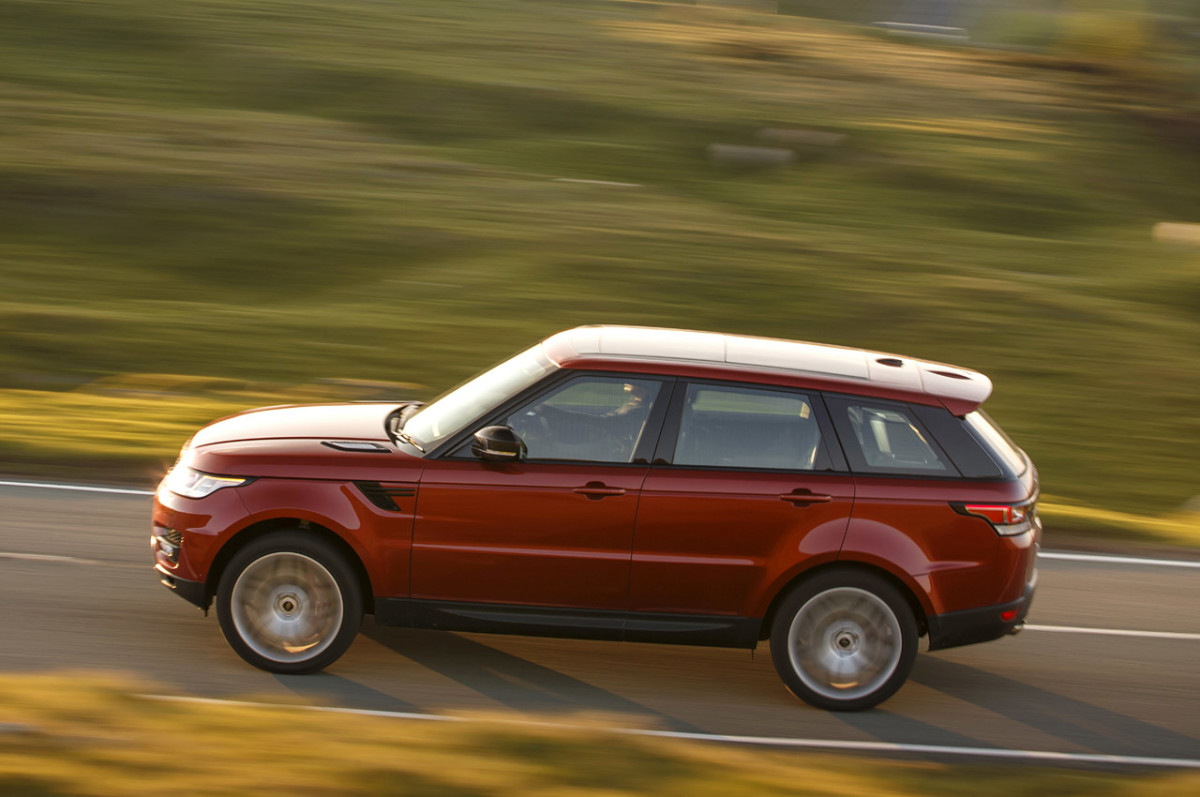
The National Highway Traffic Safety Administration (NHTSA) has opened an investigation into a potential issue with 91,856 Range Rover Sport luxury SUVs sold between 2014 and 2017. First spotted by Road & Track, the investigation focuses on possible fracturing of the aluminum steering knuckles in these vehicles.

Steering knuckles connect the front and wheel-and-tire assembly, hub, and brakes to the suspension via a pivoting assembly that allows for steering. A failure of one of these critical pieces "may lead to detachment of the upper suspension arm, which under extreme avoidance maneuvers may compromise the vehicle's controllability and increase the risk of a crash," the NHTSA said in a statement.

The NHTSA said it received 12 reports from owners stating that "one or both aluminum front steering knuckles have fractured at the top of the joint where the steering knuckle attaches via a pinch bolt and nut to the upper control arm ball joint." Investigating those reports is the first step toward issuing a recall, although that hasn't happened yet.

Family Tree Branches Out

The investigation covers a portion of second-generation Range Rover Sport models sold in the U.S. Known internally as the L494, this generation arrived for the 2014 model year and continued until model year 2022. It ensured the first-generation Range Rover Sport wouldn't be a one-off, cementing what has become Land Rover's core strategy of building families of models around each nameplate.

Since the introduction of the original Range Rover Sport, the Range Rover Evoque and Velar have joined it in the Range Rover corner of the lineup, along with the Discovery Sport as a junior version of the Discovery family hauler. Recent marketing has even subverted the Land Rover name itself, emphasizing the Range Rover, Discovery, and Defender nameplates instead.

Related: What We Know About the Upcoming EV Range Rover

  • Digg
  • Del.icio.us
  • StumbleUpon
  • Reddit
  • RSS
Post Icon

Study Shows How Front-Facing Brake Lights Can Save Lives


via Study Shows How Front-Facing Brake Lights Can Save Lives

Simple Idea, Big Impact

New safety technologies have become almost overwhelming in their complexity. Some, like certain lane-keep assist systems, can be obtrusive. Others, like automatic emergency braking, are proven to prevent potentially fatal crashes.

But often, the most effective safety technologies are not all that complicated. Seat belts are one example, and a new one being investigated is the use of front-facing brake lights (FBLs) on cars. A study from Graz University of Technology in Austria suggests that up to 17% of crashes can be avoided outright, and up to 25% can result in reduced injury severity, with the use of front brake lights.

Assessing Other Drivers’ Intentions Is The Key

As with good ol’ rear brake lights and turn signals, the ability to predict the actions of other drivers close to you is a key aspect of vehicle safety. Whether someone is in the process of stopping or turning, you can take the necessary precautions and respond. FBLs simply add another means of communication that is especially helpful in certain scenarios.

It’s often difficult to gauge the intention of approaching cars in intersections, such as when cross traffic doesn’t need to stop. Pulling into or crossing the road will require an accurate judgment, based on approaching traffic and how fast or slow you think other drivers are going. Instead of taking a complete risk, as many drivers do, FBLs can show whether an approaching driver is slowing down or continuing at a constant or increasing speed. That way, you can make a more informed decision about whether it’s safe to go.

Furthermore, pedestrians can also use illuminated FBLs to determine if it’s safe to cross a road or not. The creators of the study proposed that front brake lights be green, much in the way a green traffic light is associated with right of way or it being safe to go.

Even A Small Reduction In Reaction Time Matters

The study recreated 200 real car crashes to determine reaction times, carefully analyzing each step of how the collision took place and when the car/s started braking. Next, they recreated these accidents but added FBLs to cars coming from the front or side, while assuming that the quicker reaction times would apply when these lights are illuminated. Reaction times were measured at 0.5, 1.0, and 1.5 seconds. Obviously, a lower reaction time is better.

According to the simulations, 7.5 to 17% of the original crashes could have been avoided entirely with FBLs, and as many as 25.5% of those crashes would reduce the severity of injuries, due to the drivers responding more quickly. Even a half-second quicker reaction time can significantly influence the severity of a crash.

The researchers also pointed out that side brake lights would be important in some cases, where front brake lights aren’t visible. Fortunately, as with the front-facing brake lights, these side lights could potentially be retrofitted, and they wouldn’t cost much to install on new vehicles, either.

While more evidence is needed to support the study’s results, these findings suggest that this simple piece of technology could significantly improve road safety for commuters and pedestrians alike. But even if more conclusive proof of FBL’s benefits were to emerge, it would still need to pass legislation via the National Safety Highway Administration (NHTSA), an organization that is notoriously slow to adapt to new safety technologies.

  • Digg
  • Del.icio.us
  • StumbleUpon
  • Reddit
  • RSS