Post Icon

Ram Reveals Revamped, Stylish Sub-$50K 1500 Express


via Ram Reveals Revamped, Stylish Sub-$50K 1500 Express

It seems like everybody wants a truck these days

From rural pastures to the quiet cul-de-sacs of the suburbs outside America's big cities, pickup trucks are vehicles driven by people from all walks of life. Their size and practical utility are some of the characteristics that keep new and potential truck buyers interested in these machines and set them apart from other segments.

Like many new cars these days, brand-new pickup trucks are more than a pretty penny to get into, which leaves some buyers having to decide between breaking the bank or settling for something else. However, Ram's newest truck for 2026 is aimed at buyers who want more premium features and utility for their dollar.

Stellantis

Return of the Express

Though the Stellantis-owned Ram already brought back the Ram 1500 with a new skin for the 2025 model year, it is now reviving one of its most popular trim levels with an entirely new spin for 2026. The Ram 1500 Express may be the cheapest Ram in the shed, but it's being presented as a feature-packed machine for not much more money than the work-centric 1500 Tradesman.
Stellantis

Available as a crew cab and a quad cab with the choice of rear—or four-wheel drive, the Ram 1500 Express packs a lot of truck for a base price of $44,495, which includes destination fees. Under the hood is a 305 horsepower 3.6-liter Pentastar V6, and for $1,695, buyers can upgrade to the 420 horsepower 3-liter Hurricane SO inline-six. Ram says that rear-wheel drive quad cab Express trucks with the optional engine are tow rated up to 11,550 lbs.

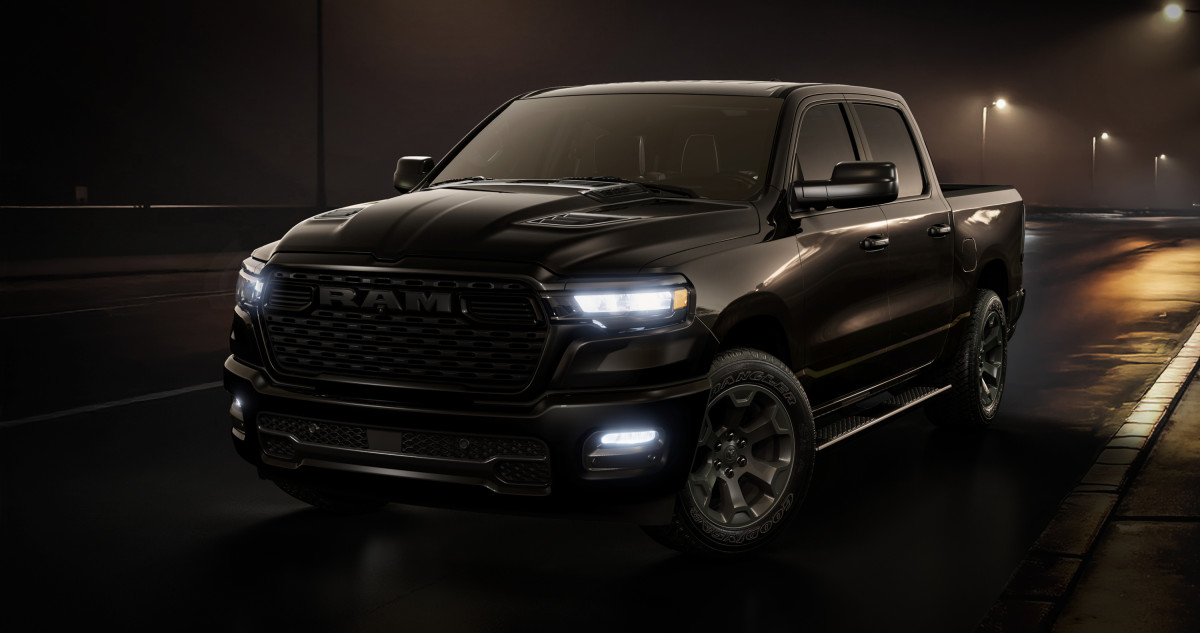
Though it may sound like a tall order to promise so much truck for under $50,000, this Ram packs a laundry list of features for the price. Standard on the Express are 20-inch wheels, adaptive cruise control, automatic emergency braking, pedestrian emergency braking, and black-bezel LED headlights.
Stellantis

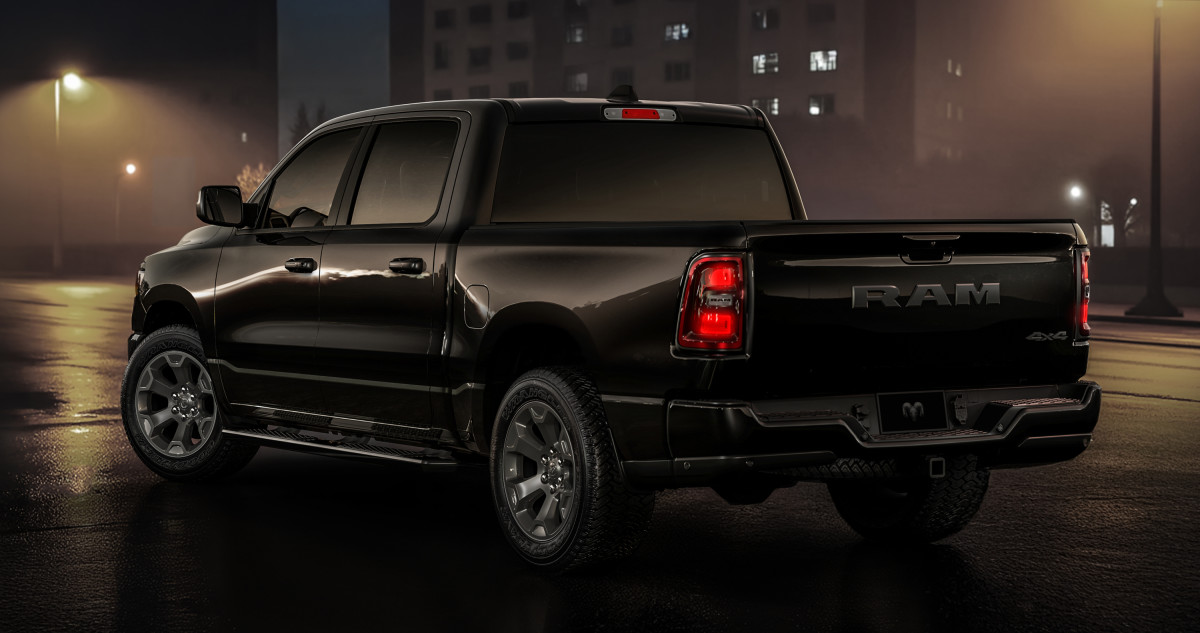
Ram says that the Express version of the 1500 has a "menacing, badge-less monochromatic paint scheme," featuring gloss-black grille surrounds and body-colored front and rear bumpers for the a subdued, stylish, and stealthy look. Though the Express looks like a secret agent's special ride in Diamond Black, Ram is also offering the truck in Bright White, Granite Crystal, Forged Blue, and Hydro Blue.

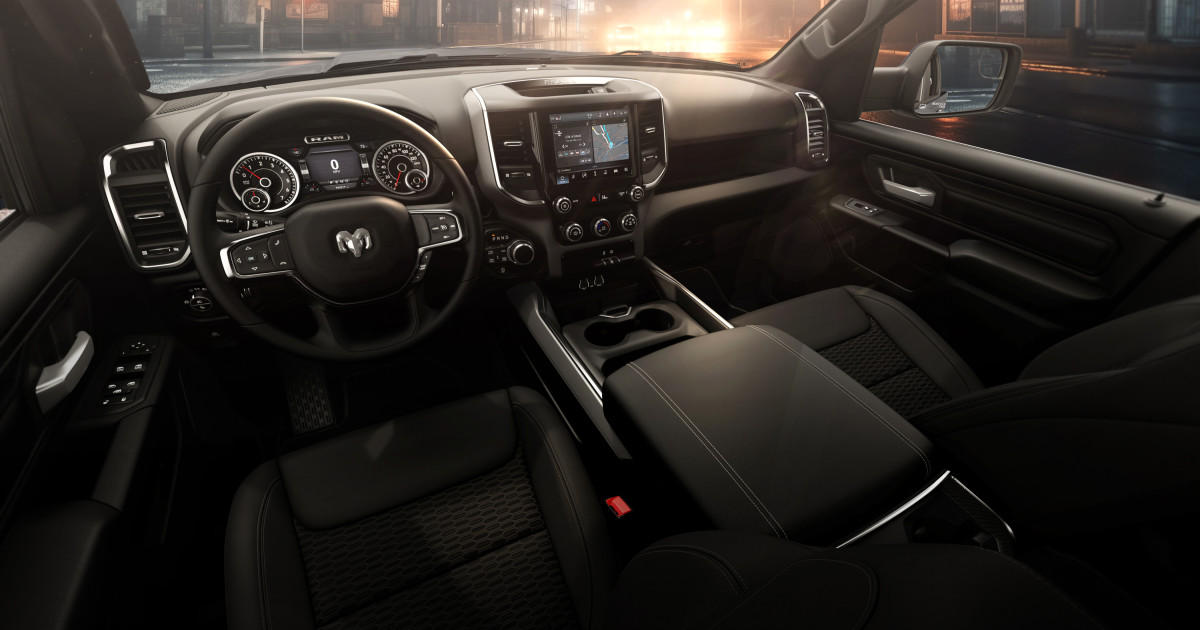
Buyers of four-wheel drive Quad and Crew cab Express models will also have the chance to get the Black Express package, which offers a litany of blacked-out trim pieces and accessories, including black 20-inch wheels, black color badges, a sport hood, side steps, and LED fog lights. The package also includes an upgraded cabin with black cloth bucket seats, a floor console, and a 7-inch gauge cluster.

Ram says that the new 1500 Express will be built at its truck plant in Sterling Heights, Michigan. It expects to open orders for the 2026 Ram 1500 Express sometime in the third quarter of 2025. Before options, the most expensive variant, the 4WD Crew Cab will start at $51,095. 

Final thoughts

In the official press release, Ram brand CEO Tim Kuniskis noted that the introduction of the 1500 Express is the latest move in revamping the brand's strategy for selling more trucks in the future.

“The Express is the latest drop in Ram’s product offensive,” Kuniskis said. “We started the 2025 model year with a new Ram 1500 and new Ram Heavy Duty lineup. With the platforms refreshed, we begin rolling out trim level enhancements.”

Kuniskis also said that Ram isn't done introducing new products, as it has "25 more product announcements planned within the next 18 months, ranging from mild to wild with something for every truck buyer." The existence of the Express as an "essentials" truck with some of the toys of the higher trims, like the Big Horn and Tungsten, seems like a great package at a time when buyers want a foot-in-the-door into a cool-looking truck they can feel proud of having.

  • Digg
  • Del.icio.us
  • StumbleUpon
  • Reddit
  • RSS
Post Icon

Rivian Bet Big on Batteries Before Trump’s Tariffs - And It’s Paying Off


via Rivian Bet Big on Batteries Before Trump’s Tariffs - And It’s Paying Off

Rivian stays ahead of the curve

President Trump’s executive order imposing a 25% tariff on vehicle and part imports sent a shockwave through the auto industry, but some companies appear to have been more prepared than others. A Bloomberg report from people familiar with the matter who asked not to be identified says Rivian quietly assembled a reserve of electric vehicle (EV) batteries late last year ahead of Trump’s tariff policy. Rivian is said to have purchased the lithium iron phosphate cells from China’s Gotion High-Tech company and more recently worked with cell supplier Samsung SDI to ship a large amount of battery inventory to the U.S. from South Korea. The measures aim to maintain a supply flow and mitigate negative ripple effects from Trump’s policies in areas like pricing, which the president enacted on April 3 for vehicle imports, whereas part levies will begin on May 3. The number of cells that Rivian purchased from Gotion High-Tech was undisclosed. 

Getty

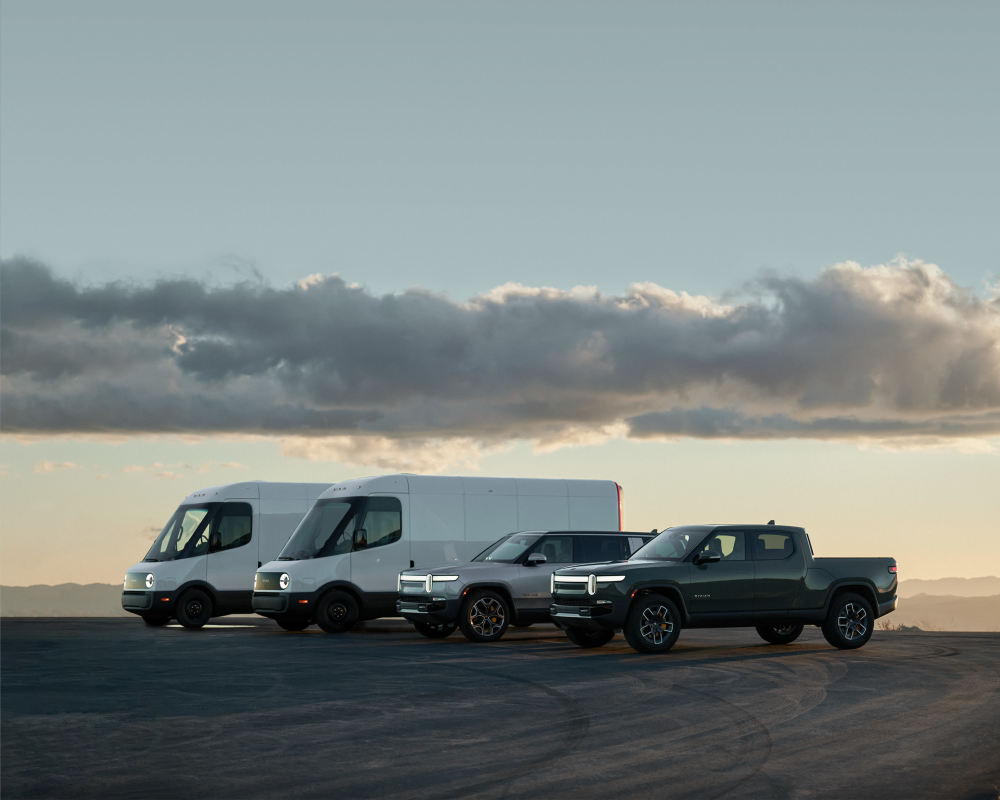
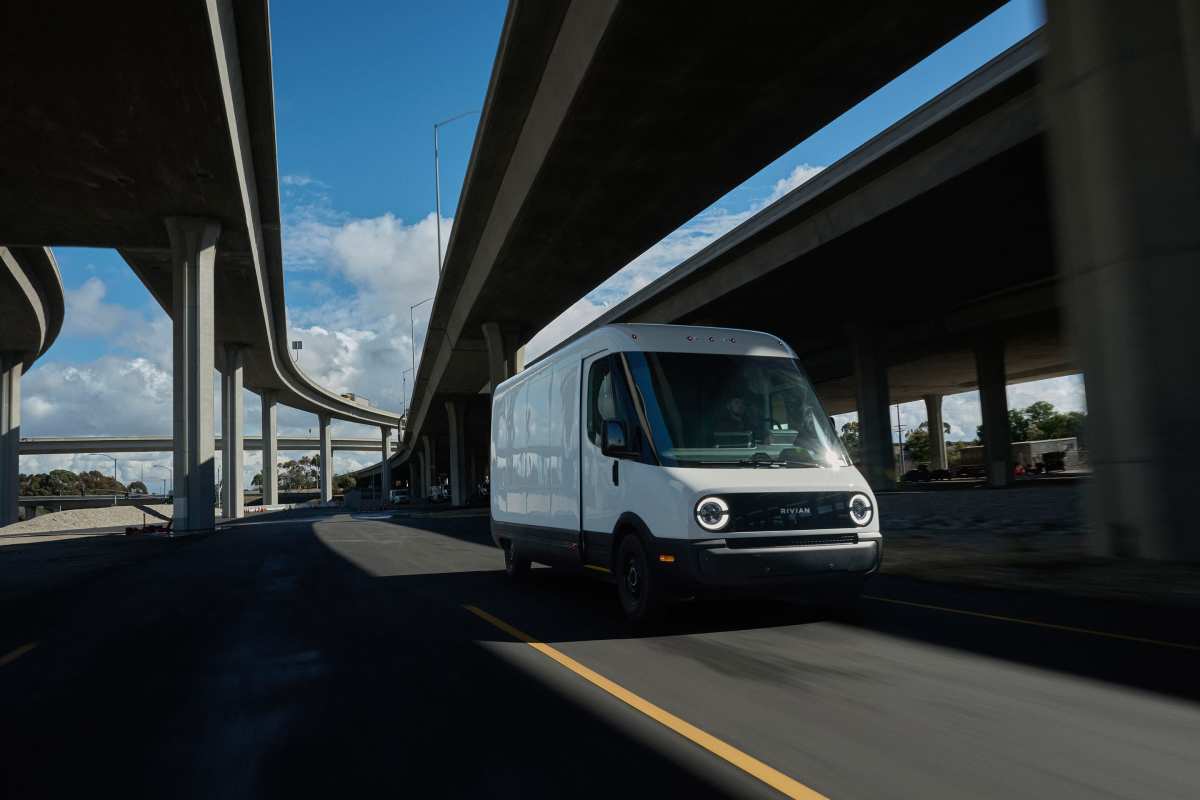
Rivian uses lithium-ion phosphate batteries in its base version, the RS1 SUV and R1T pickup, along with its commercial RCV van. However, the Gotion High-Tech order before Trump’s tariffs was said to be primarily for the RCV. These vehicles are assembled in Normal, Illinois, at Rivian’s plant. The report from Bloomberg states that Rivian paid upfront for the batteries’ shipping costs while Gotion paid and maintained its separate stockpile in the U.S., according to InsideEVs. Rivian is also said to be pursuing similar deals for batteries on raw materials in the future, with a first agreement already signed.

Related: What Tesla and Rivian Can Learn from Saturn and Scion

The automaker’s upcoming 5-seat R2 SUV will use new batteries from LG Energy Solution, which it will initially source from Korea before LG begins production in Arizona. The switch aimed to better accommodate the Inflation Reduction Act (IRA) enacted under former President Biden, which requires that a certain percentage of a vehicle’s battery components be manufactured or assembled in North America to qualify for up to $7,500 in federal EV tax credits. Rivian is currently building a second U.S. plant in Georgia.

Rivian

Final thoughts

Rivian’s stock increased from $13.19 on Monday to $13.83 at the end of Friday trading following reports of its strategic response to impending tariffs. Other automakers, such as General Motors, have projected a $4 billion to $5 billion loss in EBIT (earnings before interest and taxes) for 2025 as a result of Trump’s policies, down from the company’s initial EBIT forecast for the year of between $13.7 billion and $15.7 billion. 

Rivian’s move with China Gotion High-Tech could save significant sums, given that U.S. tariffs on Chinese EV components and lithium-ion battery imports have hit a staggering 145%. The EV manufacturer received more good news when Trump signed a new executive order on Tuesday preventing multiple tariffs from being stacked on the same imported product for companies making cars in the U.S. While the timeline for how long Rivian can maintain its supply chain remains to be seen, the company’s big bet on batteries is paying off.

  • Digg
  • Del.icio.us
  • StumbleUpon
  • Reddit
  • RSS
Post Icon

GM Issues Major Production Shift at Canadian Factory


via GM Issues Major Production Shift at Canadian Factory

Tariffs hit GM's production once more

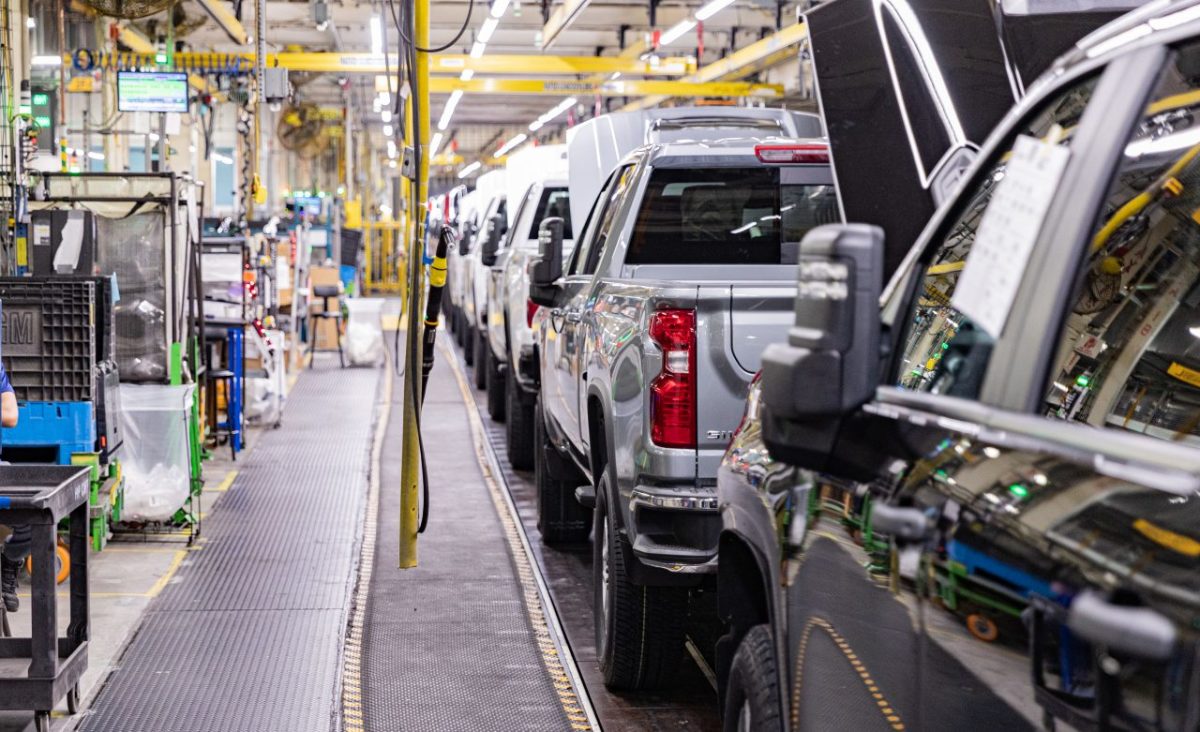
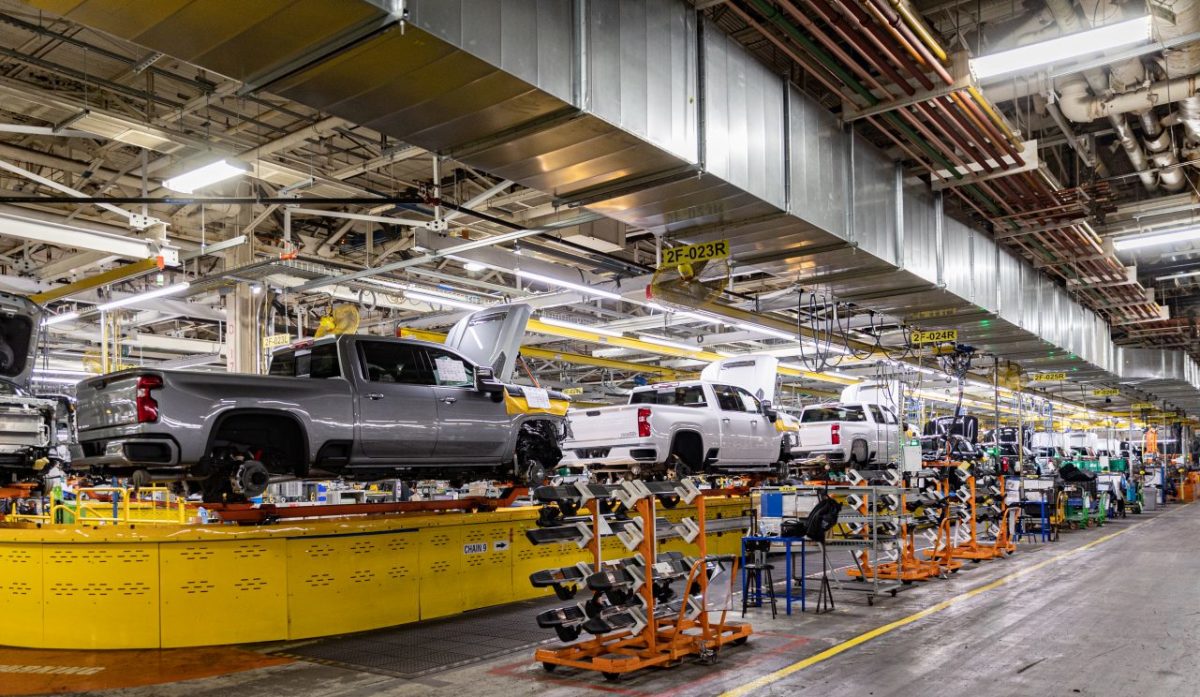
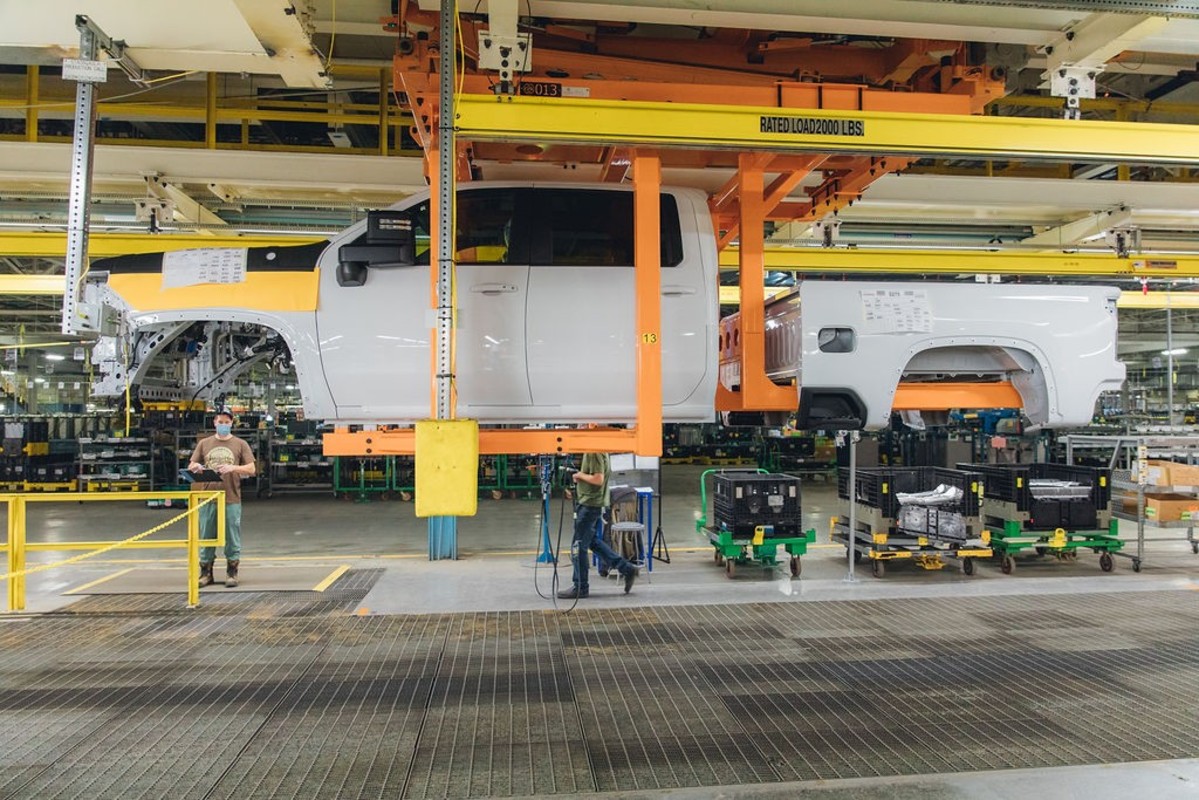
In a move meant to respond to the changing tariff-centric trade environment, General Motors slashed production at its Oshawa Assembly Plant in Ontario, Canada, to the dismay of labor organizers and local political leaders. The plant, which produces heavy-duty and light-duty Chevrolet Silverado pickup trucks, will be cutting production output from three shifts to two, effectively reducing the total number of pickups made there by about 50,000 per year. GM's move comes less than a month after President Donald Trump imposed 25% tariffs on auto imports from Canada and shortly after he signed two proclamations that eased auto tariffs and established a credits program on imported vehicles.

GM Oshawa Assembly Plant in Ontario, Canada

General Motors

According to data from Automotive News, the Oshawa Assembly Plant built approximately 152,190 heavy-duty and light-duty Chevrolet Silverados in 2024. Oshawa’s output will be moved stateside, as Silverados are also built at factories in Flint, Michigan, and Fort Wayne, Indiana. In a letter to shareholders released this week, GM CEO Mary Barra wrote that the tariff situation would cost GM about $4 to 5 billion, while GM Canada President Kristian Aquilina said in a separate statement that the automaker needs to adapt where it can.

“Shifting trade policies, changing market dynamics, and growing global competition present new realities. We must adapt—and we are.” GM Canada President Kristian Aquilina said. “For GM, this means building more in Canada, for Canada. As part of this strategic realignment, we are adjusting truck production at Oshawa Assembly to better reflect Canadian market demand. These decisions are never easy, but they are necessary to preserve and strengthen Canada’s auto manufacturing base for the long term.”

GM Oshawa Assembly Plant in Ontario, Canada

General Motors

Production cuts mean job losses, union and political leaders say

Unifor, the Canadian autoworkers union that represents the workers at GM's Oshawa plant, warns that the cuts will impact 700 of the 3,000 workers at the plant, adding that another 1,500 jobs will be lost within the supplier network that feeds the plant. In a statement, the union's National President Lana Payne called the move a "reckless decision that deals a direct blow to our members," and urged GM to reverse its decision, especially as President Trump and Canadian Prime Minister Mark Carney are due to meet in Washington to negotiate.

“Trump’s tariffs are designed to crush Canadian production — but GM doesn’t get a free pass to abandon its commitments, and the U.S. doesn’t get to free ride in Canada,” Payne warned. "GM has had strong support from workers, the community, and governments. Canadians invested millions to revive this plant. Cutting jobs now has consequences. The company has six months to fix this."

GM Oshawa Assembly Plant in Ontario, Canada

General Motors

Similarly, Ontario Premier Doug Ford called the announcement “extremely tough” for autoworkers in Oshawa in a post on X (formerly known as Twitter), noting that the affected "are hardworking people who have helped build Ontario’s auto industry." He also noted that GM reaffirmed its commitment to the Oshawa plant and that Ontario "remains a global leader in auto manufacturing, attracting billions in new electric vehicle and battery manufacturing investments."

"We are not slowing down. We are building Ontario into the engine of North America’s auto future, and the workers of Oshawa and across the province are a key part of that." Premier Ford said. "In the face of economic uncertainty caused by the chaos of President Trump’s tariffs and tariff threats, we will continue to fight every single day to attract new investment, secure good-paying jobs, and support workers and their families."

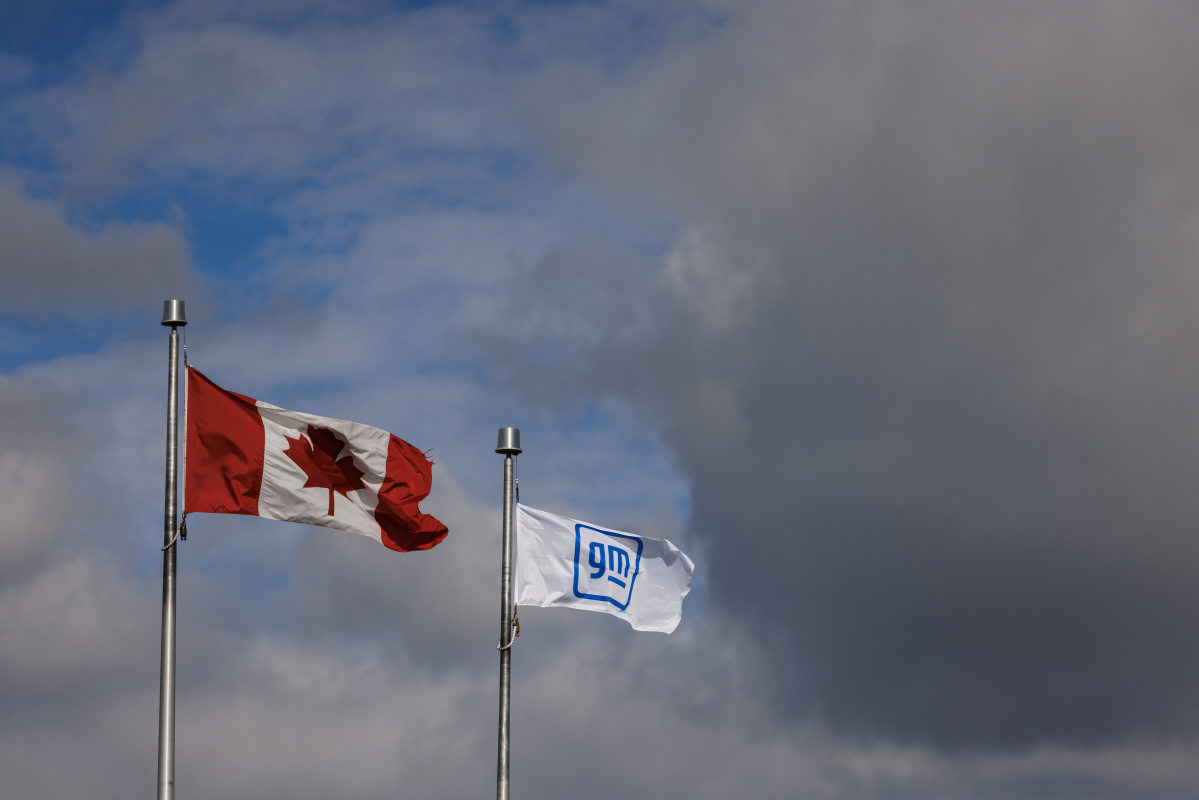
The Canadian and General Motors flags outside General Motors Canada's Oshawa Assembly Complex in Oshawa, Ontario, Canada

Cole Burston/Bloomberg via Getty Images

Final thoughts

Unfortunately, these moves will happen as the Trump Administration's economic plan comes into fruition, whether it be the parts that are installed into cars or, in this case, the vehicles themselves. Given that automakers like GM, Stellantis, and Honda have significant Canadian investments, I wonder how these tariff talks will go between Trump and Prime Minister Carney at the White House on Tuesday.

  • Digg
  • Del.icio.us
  • StumbleUpon
  • Reddit
  • RSS
Post Icon

Hyundai IONIQ 5 N vs. the Grueling One Lap Race: Hyundai & Grassroots Motorsports Take on America's Toughest Road Challenge


via Hyundai IONIQ 5 N vs. the Grueling One Lap Race: Hyundai & Grassroots Motorsports Take on America's Toughest Road Challenge

Hyundai is hunting the checkered flag once more

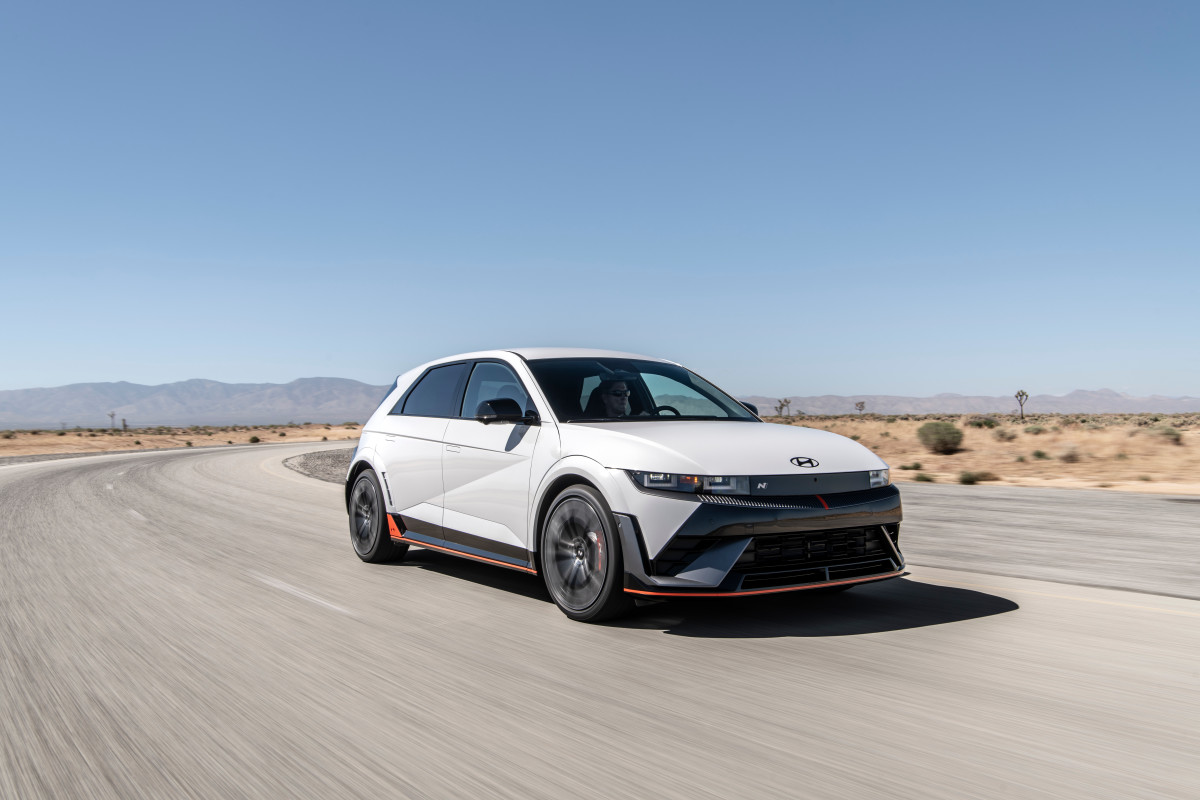
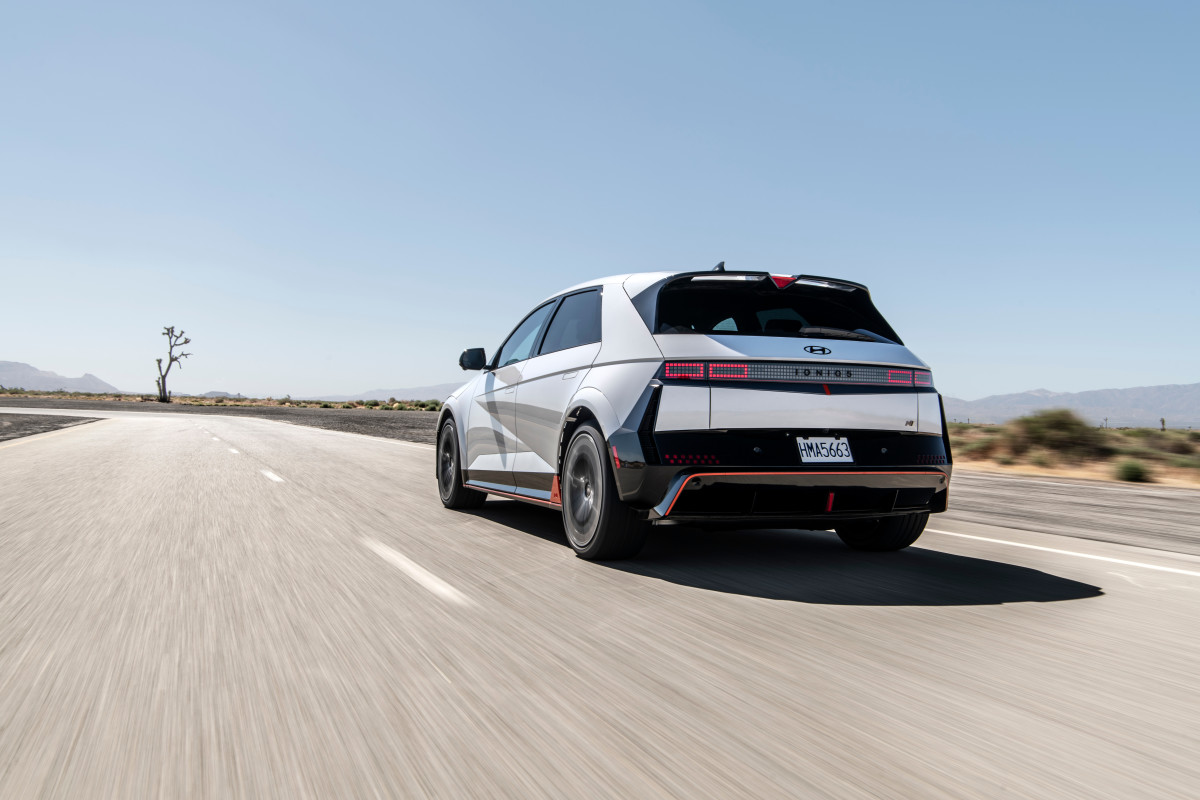
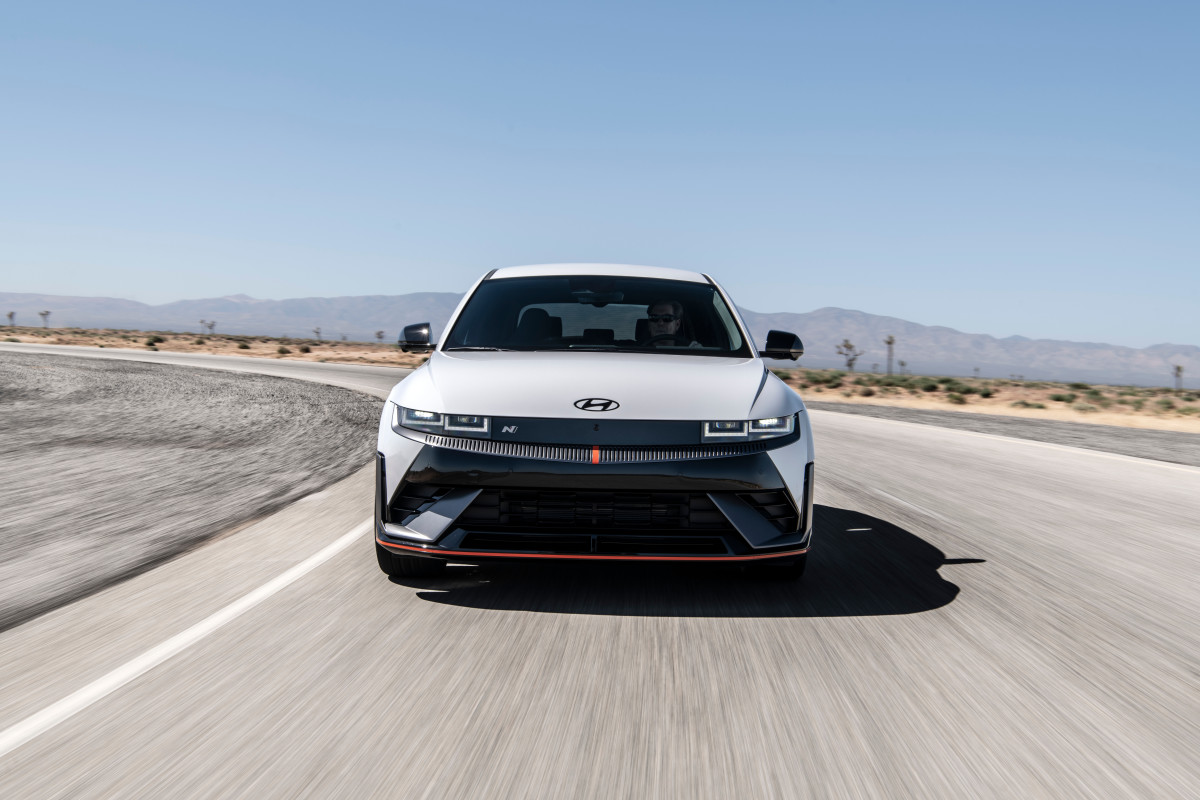
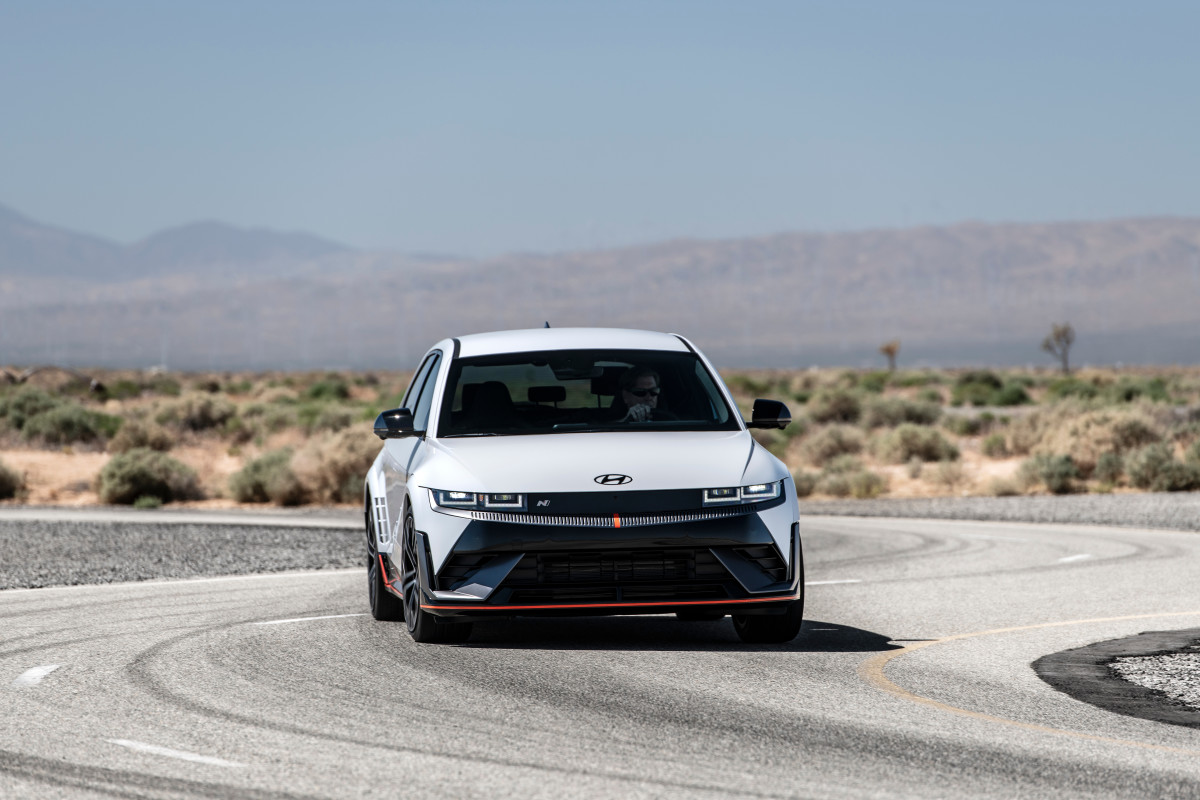
After announcing its foray into racing with the luxury brand Genesis, Hyundai will make yet another appearance that should excite automotive enthusiasts. In partnership with Grassroots Motorsports magazine, Hyundai will enter a 2025 Hyundai IONIQ 5 N into the Alternative Fuels class of the 2025 Tire Rack One Lap of America race. To make their entry even more special, Hyundai has also been named the Official Automaker of the 41st running of the One Lap of America race.

What is the One Lap Race?

One Lap of America was created by the late legendary automotive journalist Brock Yates, who you might know from Cannonball Run fame. Spanning from May 3 to May 10, teams will compete in a series of racetrack challenges around the U.S. in both stock and heavily modified vehicles of all makes and models. The challenges include timed events at road courses, drag strips, skid pads, and autocross courses. As if that wasn't enough of a test of the cars’ abilities, teams will have to drive the cars thousands of miles across the country to each track. This year’s run will host 86 teams from all over the country with 17 scored events over the course of eight days at Virginia International Raceway and NCM Motorsports Park.

2025 Hyundai IONIQ 5 N

Hyundai

Hyundai IONIQ 5 N, from showroom to track

The N variant of the Hyundai IONIQ 5 takes the retro-inspired SUV to new levels both aesthetically and mechanically. Exterior changes include a revised front end with larger air intakes, additional air curtains and air flaps for improved cooling, as well as a rear diffuser. Several new body and motor reinforcements help keep the 601 hp and 546 lb-ft of torque planted as the IONIQ 5 N accelerates from 0-62 mph in 3.5 seconds. Not fast enough for you? N Grin Boost mode will boost power to 641 hp and 568 lb-ft of torque for 10 seconds and drop the 0-62 mph time to 3.4 seconds. The lithium-ion battery is also bigger than the regular IONIQ 5, with a capacity of 84 kWh.

Perhaps the most interesting feature of the IONIQ 5 N is its N e-shift transmission, which is designed to emulate the feel of an 8-speed dual-clutch automatic transmission by controlling motor torque to simulate the feeling between shifts. That transmission is also paired with the N Active Sound+ system, which plays three different sound profiles through eight interior and two exterior speakers: a 2.0-liter turbocharged internal combustion engine from other Hyundai N cars, futuristic EV sounds, and twin-engine fighter jet sounds.

2025 Hyundai IONIQ 5 N

Hyundai

At the wheel of the No. 44 stock IONIQ 5 N will be One Lap veterans Andy Hollis and Tom Suddard. The duo are no strangers to high-speed events, as Suddard is the publisher of Grassroots Motorsports while Hollis is the magazine's tire tester and a 13-time SCCA Solo national champion and professional high-performance driving instructor, with ten One Lap class wins under his belt. Although two of those wins were alongside Suddard, neither has driven an EV in the race before.

Is the IONIQ 5 N right for the event?

Not only is the IONIQ 5 N unique and attractive, but it's also a track-ready machine from the factory. With 601 instantly available horses on tap, the stock electric SUV beats out some of the sports cars on the market in terms of power. 

“I was smitten with the massive torque of an EV the first time I drove one. But until now, none have been truly track-capable right off the showroom floor,” said Hollis. “Hyundai’s IONIQ 5 N checks all the boxes with excellent cornering, great brakes, and sophisticated battery conditioning that allows all that torque to be used for an entire session. I can't wait to get behind the wheel on some of the country's best tracks.”

2025 Hyundai IONIQ 5 N

Hyundai

Final thoughts

The One Lap of America race will be a tremendous rest of the Hyundai IONIQ 5 N's abilities. There's no doubt that it's impressively fast, but track events like this require a precise combination of speed, handling, and braking abilities. If it ends up impressing here too, the event could further cement Hyundai’s image as a true competitor in the motorsports space.

  • Digg
  • Del.icio.us
  • StumbleUpon
  • Reddit
  • RSS
Post Icon

Porsche Warns of a Rough Year Ahead


via Porsche Warns of a Rough Year Ahead

Tariffs and EV slowdown drag down profit forecast

Porsche is bracing for one of its most difficult years in recent memory. The German sports car maker warned it now expects profit margins to dip into the single digits — between 6.5% and 8% — a significant drop from its earlier forecast of at least 10%. The company cited multiple headwinds, including sluggish electric vehicle sales, a sharp decline in China demand, and the mounting cost of U.S. tariffs.

Porsche, which imports all its vehicles into the U.S. from Europe, is especially vulnerable to the tariff regime introduced under President Donald Trump. Despite surging U.S. demand for its Macan and Cayenne SUVs, the company has no plans to localize production, arguing that it would be more costly than absorbing the tariffs. Citi analysts estimate those duties could cost Porsche up to $2.3 billion annually if no price increases are implemented.

EV demand fizzles, forcing strategy shift

A broader slowdown in global EV adoption is also hitting Porsche hard. The company had been investing heavily in electric mobility, but it’s now pulling back. On Monday, Porsche said it will no longer independently expand high-performance battery production through its Cellforce subsidiary, a move that adds roughly $1.5 billion in one-off costs this year.

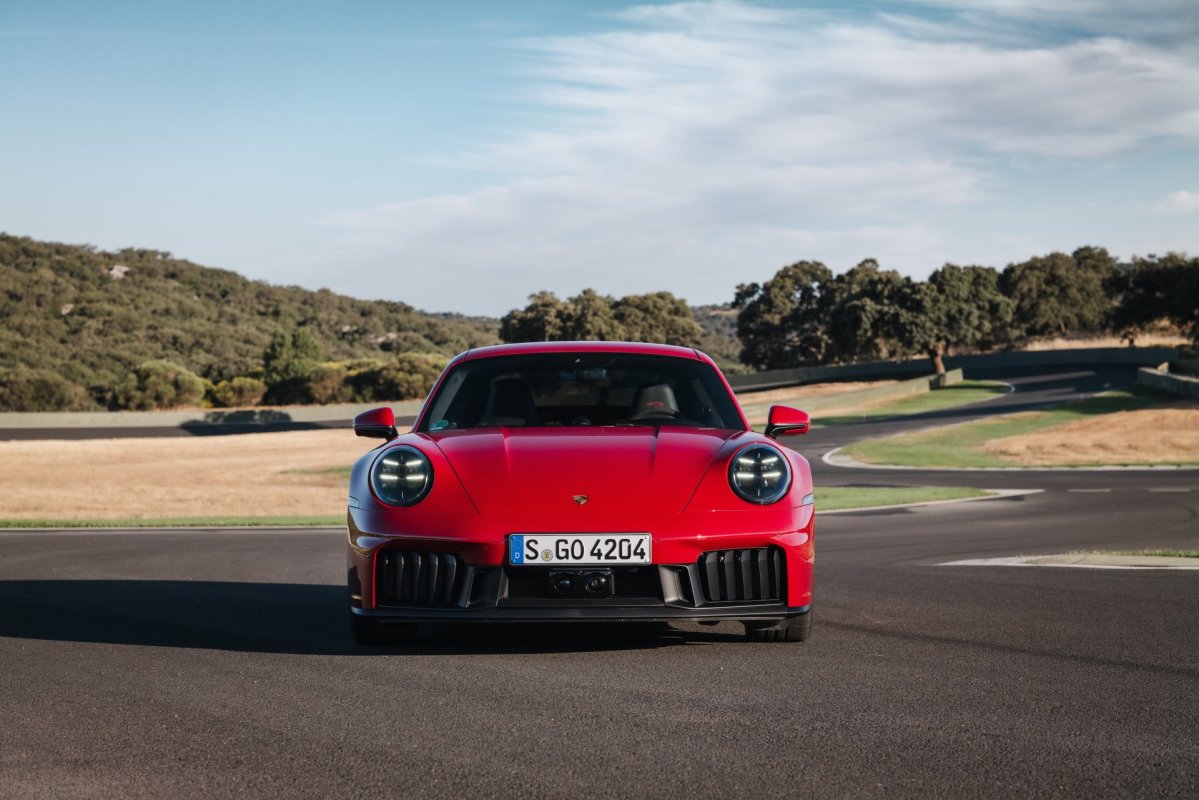
Porsche 992.2 911 Carrera 4 GTS

Porsche

“We have to face the reality that we see from the markets, namely a complete slowdown when it comes to electric mobility,” CFO Jochen Breckner said during a call with reporters.

To compensate, Porsche is pivoting toward expanding its offerings of combustion-engine and plug-in hybrid vehicles, despite previously ambitious EV targets. That shift will cost the company an additional $900 million in 2025.

China sales collapse adds pressure

The picture is equally grim in China. Once Porsche’s second-largest market, the country saw a stunning 42% drop in Porsche deliveries in the first quarter — the brand’s worst performance there since 2013. The company now expects total China deliveries to fall 30% this year to around 40,000 units.

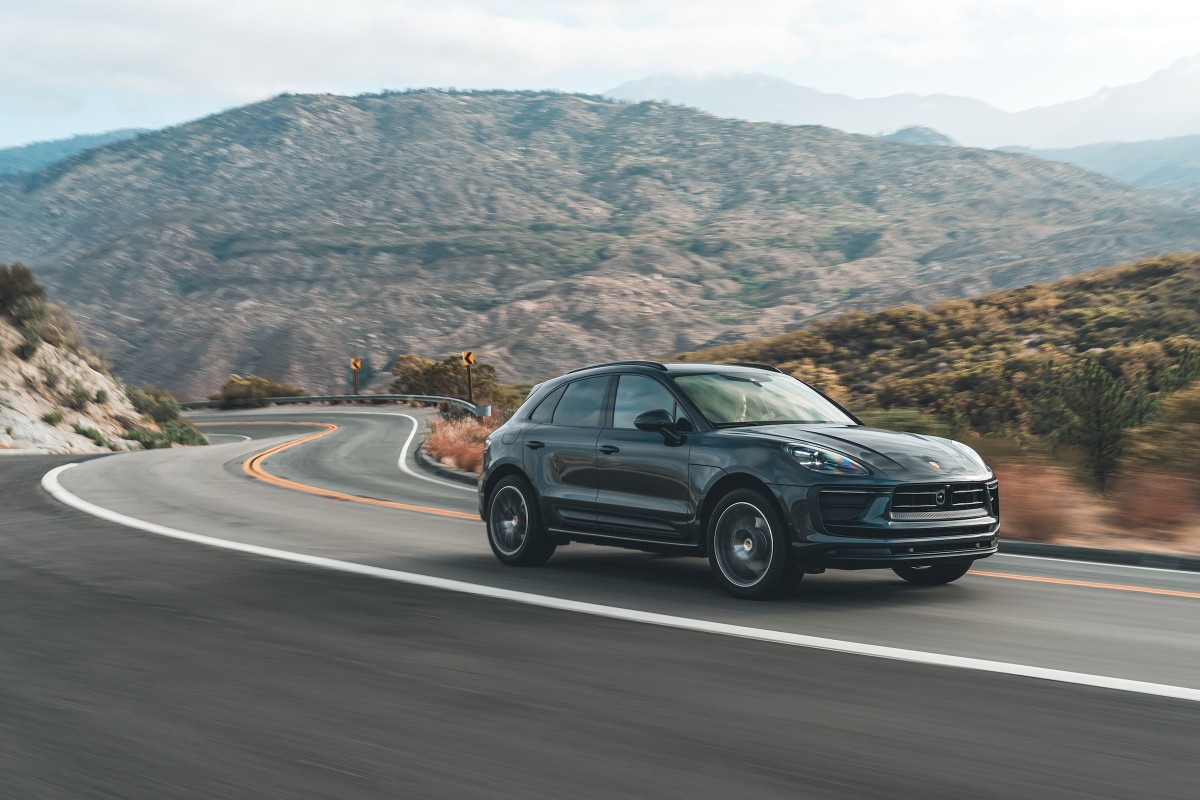
2025 Porsche Macan

Porsche

The culprit? Fierce competition from domestic automakers like BYD and a sluggish Chinese economy. Porsche has responded by reshuffling key executives and initiating job cuts in Germany to trim costs.

Final thoughts

First-quarter earnings reflect the pressure that automakers are facing in China and in the EV segment. Porsche’s operating profit dropped 40% year-over-year to $860 million, and it recorded its first-ever single-digit quarterly return on sales at 8.6%. The company also lowered its full-year revenue guidance to as low as $42 billion, down from previous expectations of $44 billion to $45 billion.

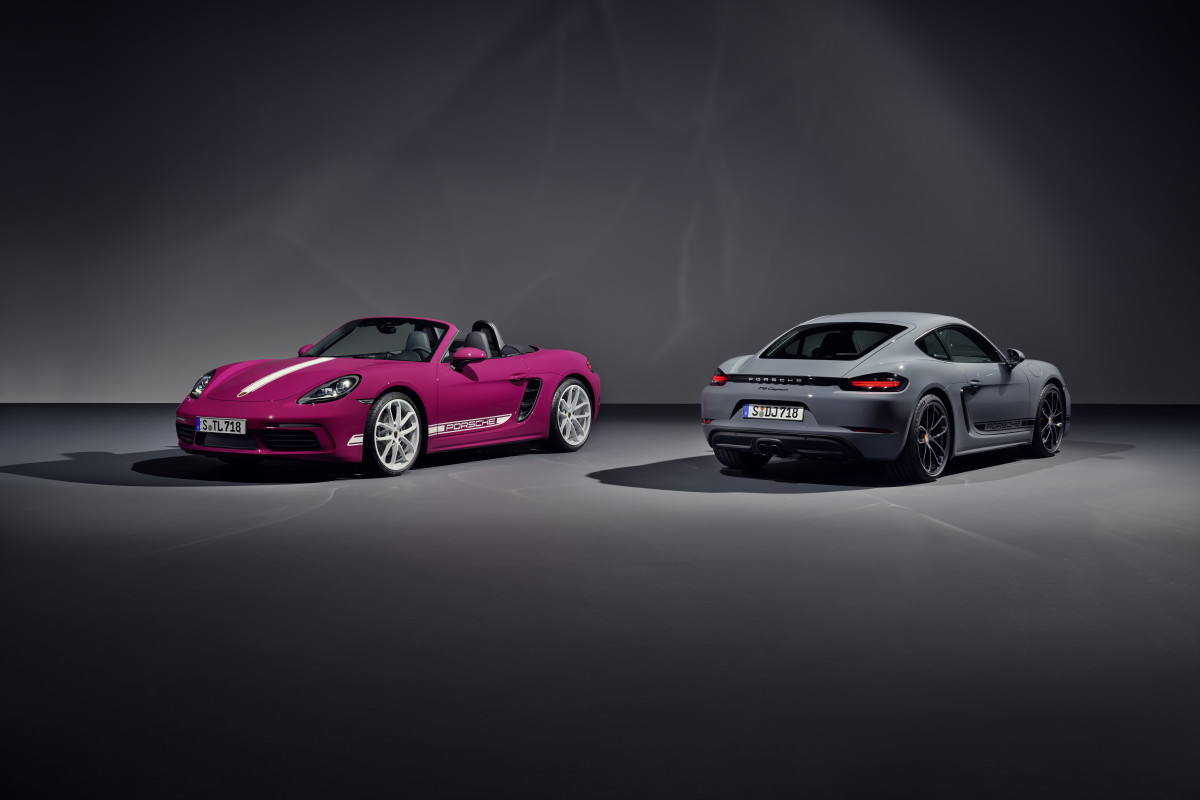
2023 Porsche 718 Boxter/Cayman

Porsche

While external factors are partly to blame, analysts say Porsche needs to regain control of its narrative. “It has work to do to exhibit greater control of its problems,” wrote Citi’s Harald Hendrikse. For a brand known for precision and performance, 2025 is shaping up to be a bumpy ride.

  • Digg
  • Del.icio.us
  • StumbleUpon
  • Reddit
  • RSS
Post Icon

The US Needs More EV Chargers - One Company Is Presenting a Cost-Effective Solution


via The US Needs More EV Chargers - One Company Is Presenting a Cost-Effective Solution

Tritium is addressing a lingering question in the EV world

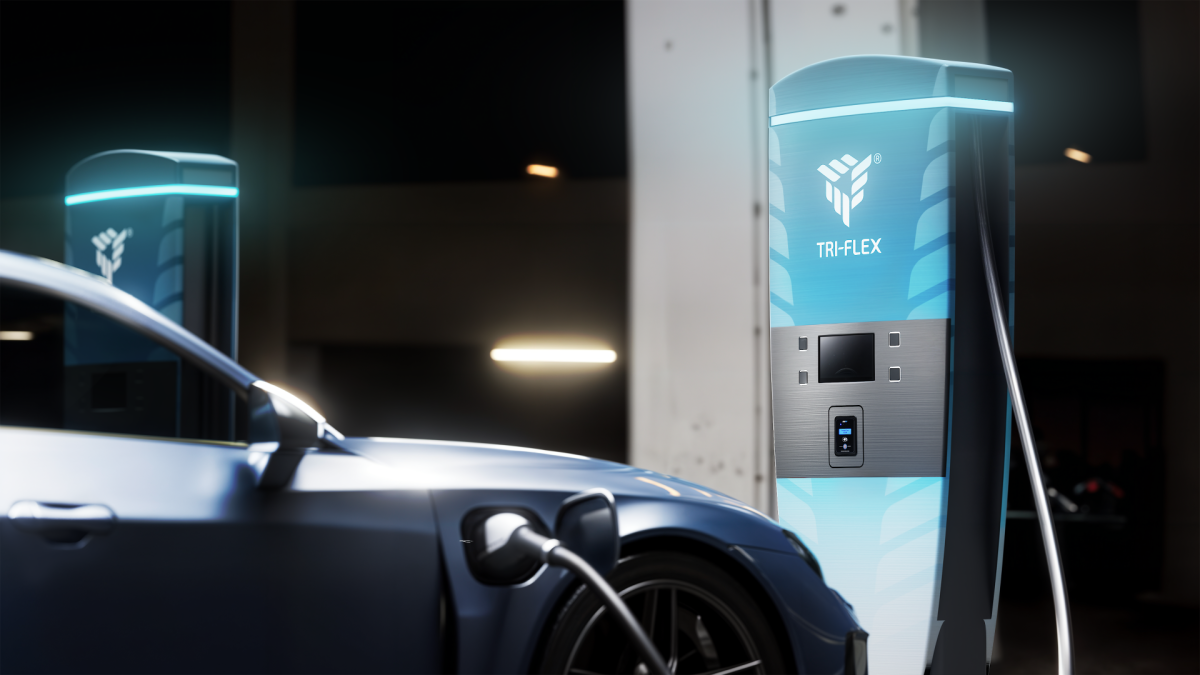
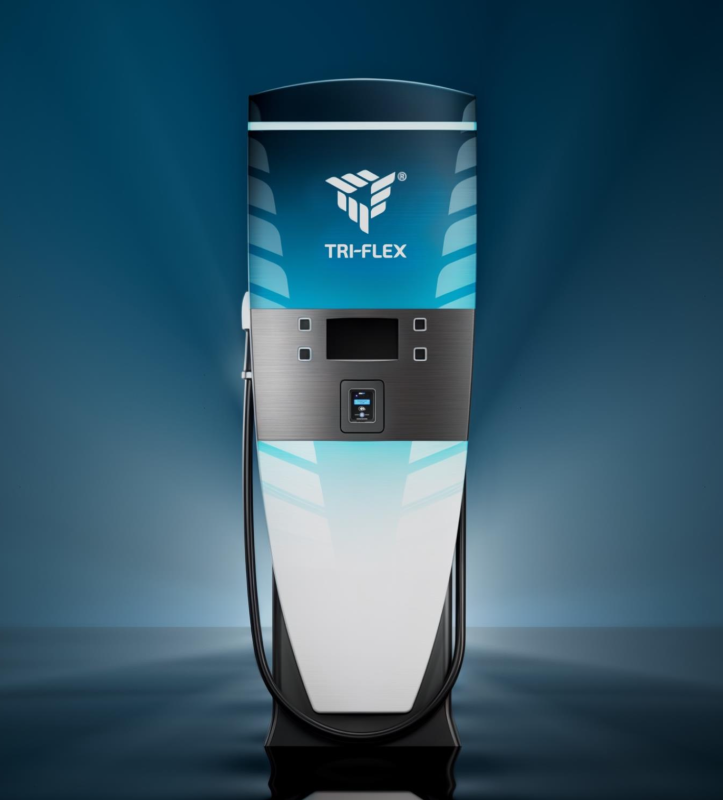
Tritium—a leading producer of DC fast chargers for electric vehicles (EVs), has unveiled a new system that facilitates growth for public charging sites and fleet operators without traditionally significant infrastructure expansion costs. The charging platform, TRI-FLEX, allows operators to easily scale from four up to 64 charge points without replacing their initial investment. TRI-FLEX includes a power conversion system offering from 400kW to 1.6MW of AC power and up to 3.2MW of DC power. One hub can power two to 32 TRI-FLEX dispensers or up to 64 charge points—eight times the amount of conventional systems. 

Tritium TRI-FLEX

Tritium

The platform’s design flexibility helps site owners blend 100kW, 200kW, and 400kW dispensers in a single system to match passenger cars and commercial vehicles, and it’s designed to be reliable in extreme climates that have traditionally posed challenges for EV charging. TRI-FLEX also contains a 25kW power resolution with real-time load balancing for optimal efficiency and throughput. The CEO of Tritium, Arcady Sosinov, told Autoblog in more detail how TRI-FLEX achieves these goals, the system’s unique market position, and how customers sustain the platform amid EV expansion.

How TRI-FLEX beats extreme heat or cold 

When asked what measures Tritium has taken to remain reliable in harsh environmental conditions like extremely hot or cold weather, Sosinov said: “Environmental conditions are one of the biggest causes of reliability issues in charging infrastructure, and what this company pioneered in the earliest days, and is continuing today, is a fully-sealed technology. It’s called the IP65 ceiling. It’s a military-grade level ceiling of the unit, so no contaminants, no water, and no dust ingress of any sort can come into the unit. We can do that because we fully liquid-cooled all of our technology.” Sosinov compared this process to using liquid cooling for processors when building computers instead of air cooling for more efficiency. He added that TRI-FLEX can operate in temperatures from arctic cold to desert heat.

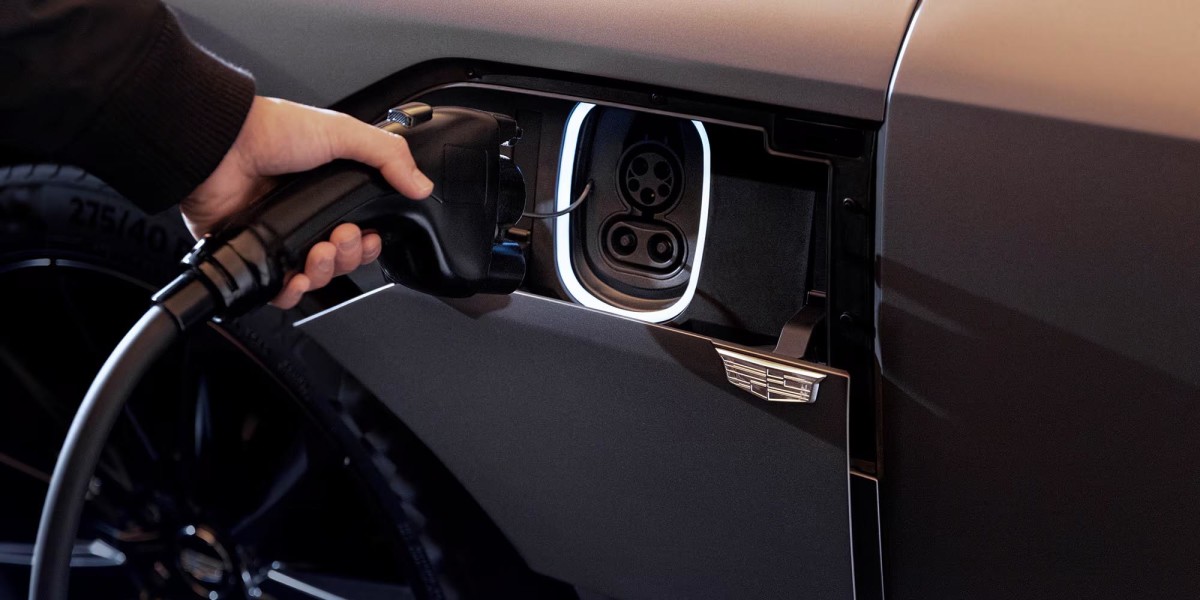
Cadillac Lyriq-V Charging

Cadillac

TRI-FLEX adopts a unique approach to integrate diverse energy sources

During the interview, Sosinov highlighted TRI-FLEX’s ability to integrate with diverse energy sources, which he considers “the coolest part” of the platform. Sosinov noted that TRI-FLEX splits up AC and DC conversion into two separate modules in the power modules, whereas most companies would typically integrate them into one power module.

He added: “That design choice allows us to effectively create a DC microgrid.” With this DC microgrid, charge operators can: “Integrate any DC source or use in the system. Battery storage, solar, I’ve actually seen natural gas generators in some cases, fully integrated on the DC side of things, which means that those DC technologies don’t hit the grid. The biggest problem with integrating these renewable technologies is that you have to get them permitted to hit the grid, like solar in your house, for example, but if you can keep them all in a microgrid, not impacting the utility side of things, you can integrate anything you want.”

Tritium’s CEO talks cybersecurity measures

Given the increasing connectivity of EV chargers, I asked Sosinov what steps Tritium is taking to protect against cybersecurity threats and ensure user data remains private. The CEO explained: “We actually have a cybersecurity engineer whose sole job is to manage cybersecurity on the charging infrastructure.” Sosinov noted that Tritium uses a cybersecurity framework called ISO 27001, which is the high-level framework that most companies in information security use to lock down their systems. He also highlighted that in addition to the general cybersecurity framework, the company can also work toward meeting more specific security requirements for its customers. Tritium’s work with essentially all of the largest global charge point operators, including BP and IONITY, on top of its general framework compliance that requires continual adaptation, ultimately makes Sosinov comfortable with managing cybersecurity risks.

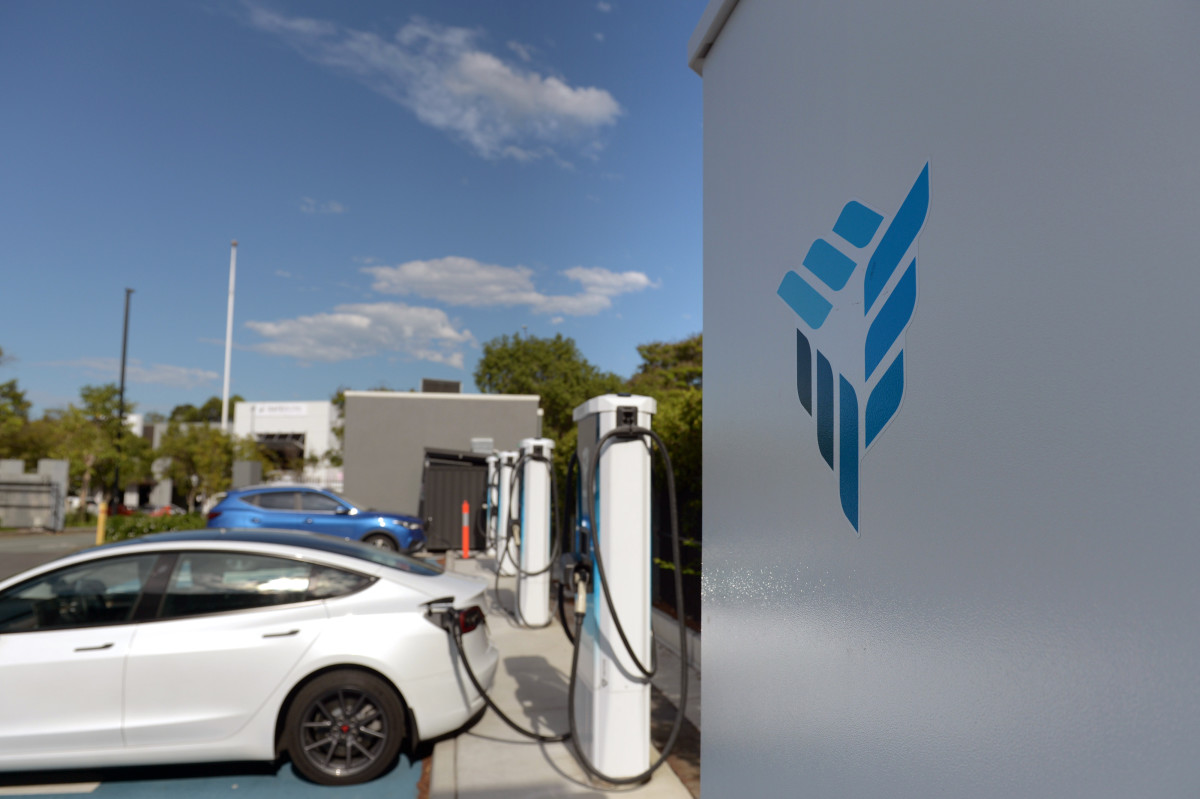
Tritium chargers

Getty

How TRI-FLEX customers sustain the system 

When asked how Tritium is investing in workforce development and training to have enough technicians to install, maintain, and service TRI-FLEX systems as adoption scales, Sosinov said: “In almost every case, it’s the customer’s responsibility for dispatching people to [the] site. So it’s their service providers now. Why is it not our service providers? For large operators like BP and Shell, they’re used to having their own technicians. For fuel pumps, for HVAC in the store, [or] for whatever else that happens on their sites, they’re used to having their own dedicated technicians who’ve gone through their own safety trainings, and they prefer to continue using that. So they don’t want every single time to have to qualify a new technician from Tritium, or from anybody else. So, we work within that construct. What we are responsible for is providing them training and documentation.” Sosinov added that Tritium is also responsible for resolving customer tickets, which is a remote solution, and the company can dispatch spare parts to customers if needed.

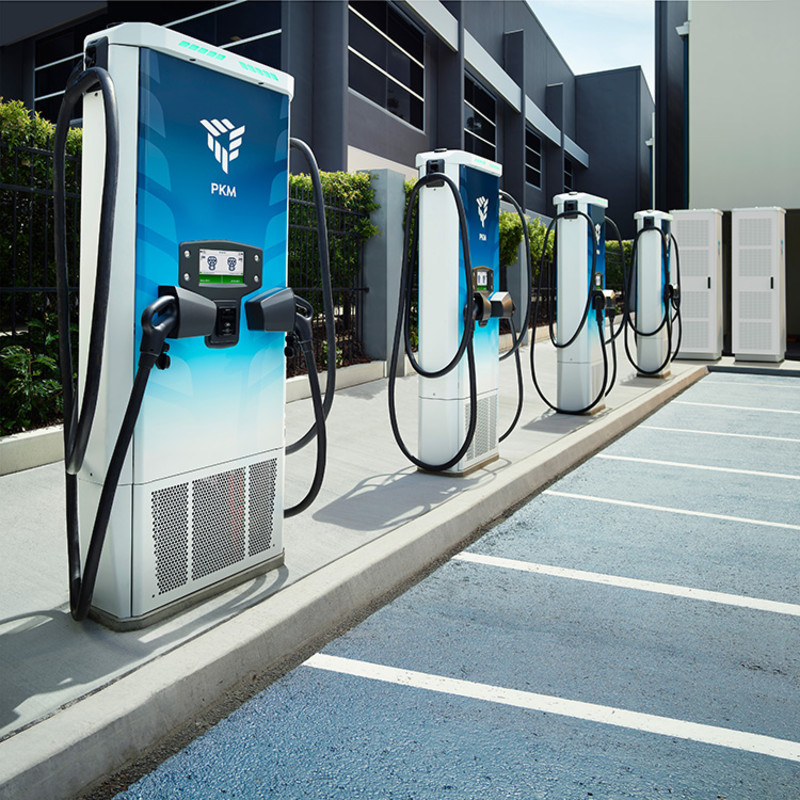
Tritium chargers

Tritium

Final thoughts

Tritium’s approach with its new TRI-FLEX system is significant since it can scale one hub up to 64 charge points in a cost-efficient manner. Most systems today cap at eight charging points per power cabinet, and when site owners want to expand, they face steep costs, which are compounded by the need to serve different vehicle types, from passenger cars to commercial trucks. While at a slightly slower pace than previous years, EV adoption is increasing within the United States, and government mandates promoting electric driving underscore the call for adaptable and sustainable charging solutions—a requirement that TRI-FLEX is designed to fill. Tritium’s solution appears especially valuable with its ability to help charging operators scale as demand increases without replacing their initial investment.

  • Digg
  • Del.icio.us
  • StumbleUpon
  • Reddit
  • RSS
Post Icon

Ferrari reveals hot, new 868-horsepower 296 Stradale


via Ferrari reveals hot, new 868-horsepower 296 Stradale

The Prancing Horse cooked up one "Speciale" GTB for thrill-seekers

When it comes to words used to describe the stylish, 830 horsepower Ferrari 296 GTB plug-in hybrid sports car, one of those words is not the word 'slow.' However, for the overachieving engineers at Ferrari's Maranello factory and development center, there is always a higher accolade to reach and another benchmark to break.

This process is best shown with the progression of each Ferrari model. Since Ferrari introduced the 360 Challenge Stradale, customers and fans were treated to a special "hot" version of their mid-engined sports cars a few years after their introduction — an additional nod by Ferrari engineers to the Prancing Horse's dedication to making the best driver's cars.

Ferrari

View the 3 images of this gallery on the original article

The 296 Speciale is one special Prancing Horse

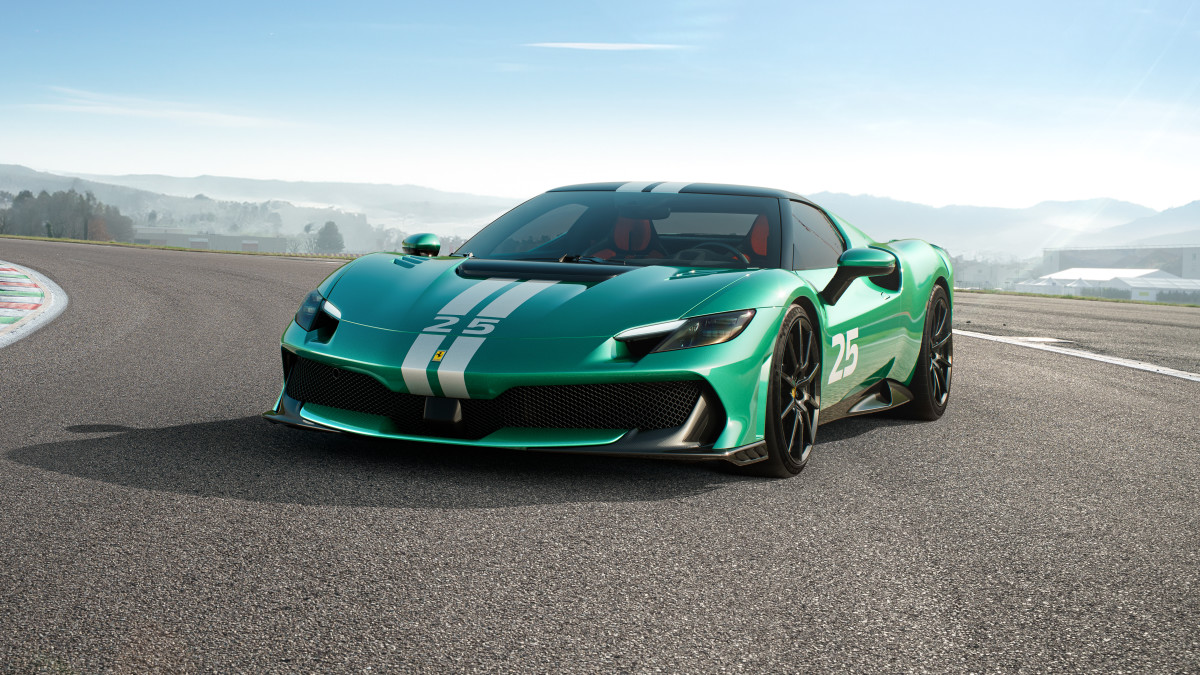
As part of a bloodline that includes the 488 Pista, the 458 Speciale, the 430 Scuderia, and the 360 Challenge Stradale, the 296 Speciale is the newest child born into a family of world-class performers. Compared to the standard 296 GTB, the Speciale partly lives up to its name due to its newly added features; it's lighter, more powerful, and contains aerodynamic alterations that make a difference on the racetrack.

Under the hood, the turbocharged V6 hybrid receives a few modifications to extract more power. The turbochargers receive a different boost mapping setup, more akin to the one used in the 296 Challenge race car. Meanwhile, the engine is upgraded with forged pistons and a titanium crankshaft from the F80 hypercar, resulting in an additional 37 horsepower. In addition, the electric motor between the 3-liter V6 and the eight-speed sequential gearbox receives a slight power boost, increasing from 165 horsepower to 178 horsepower.

Ferrari

View the 2 images of this gallery on the original article

Overall, it makes for a powertrain that delivers 868 horsepower, about 50 more than what customers get in the 'regular' GTB. Zero to sixty miles per hour is achieved in a blistering 2.8 seconds, while top speed is pegged at 205 miles per hour.

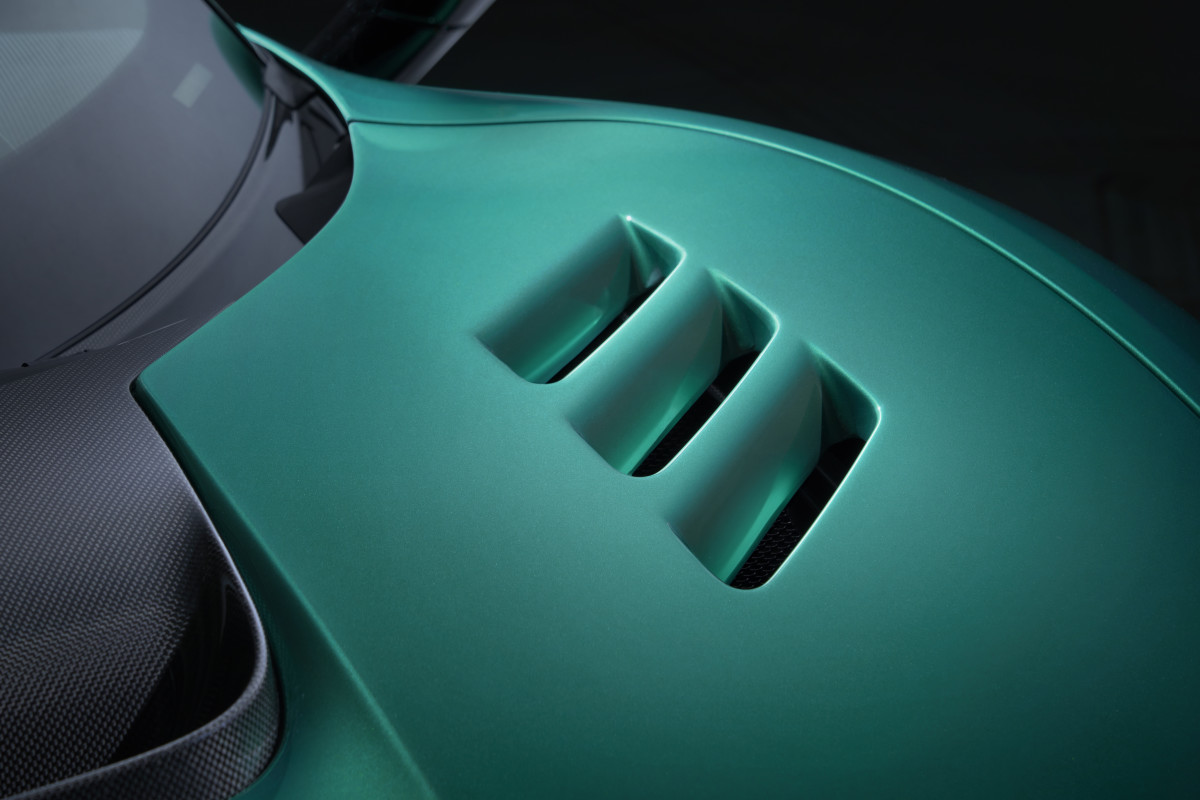
To keep all that power on the ground, the 296 Speciale gets some aerodynamic enhancements designed to eek out every last ounce of downforce possible. From the front to the back are new bits designed to channel air where needed. Up front is a new 'aero damper,' another 296 Challenge feature that brings air from under the front end of the 296 Speciale, to over the hood and windshield for extra front-end stability.

Over in the back are two, short, little side-mounted wings that Ferrari calls the "Gamma" wings, which are designed to increase the car's rear downforce, reduce drag and improve the flow of air going to the inverter and the oil cooler. These little wings work in conjunction with the car's active rear spoiler, which can rise to its maximum height of 2.75 inches in a half-second and rise to a sort of "halfway mode when full downforce isn't needed.

Ferrari

View the 5 images of this gallery on the original article

In addition to the retuned aero, the 296 Speciale gets a new suspension setup to keep the car closer to earth. The springs on the Speciale are stiffer than the GTB and GTS models and are made of lighter titanium. They ride on Multimatic shocks from the 296 GT3 car, which helps it sit slightly lower than the standard model. The new wheels are fitted with special Michelin Pilot Sport Cup 2s, designed explicitly for the Speciale.

Ferrari engineers also put the 296 on a crash diet specifically programmed for the Speciale, which removed 60 kilograms (about 132 pounds) from the car. The turbochargers are lighter units, while the engine itself gets lighter titanium parts, including its head studs, fasteners, and exhaust system. If that wasn't thorough enough, Ferrari's engineers removed any unnecessary excess metal from the engine block and crankcase to chase away those extra pounds.

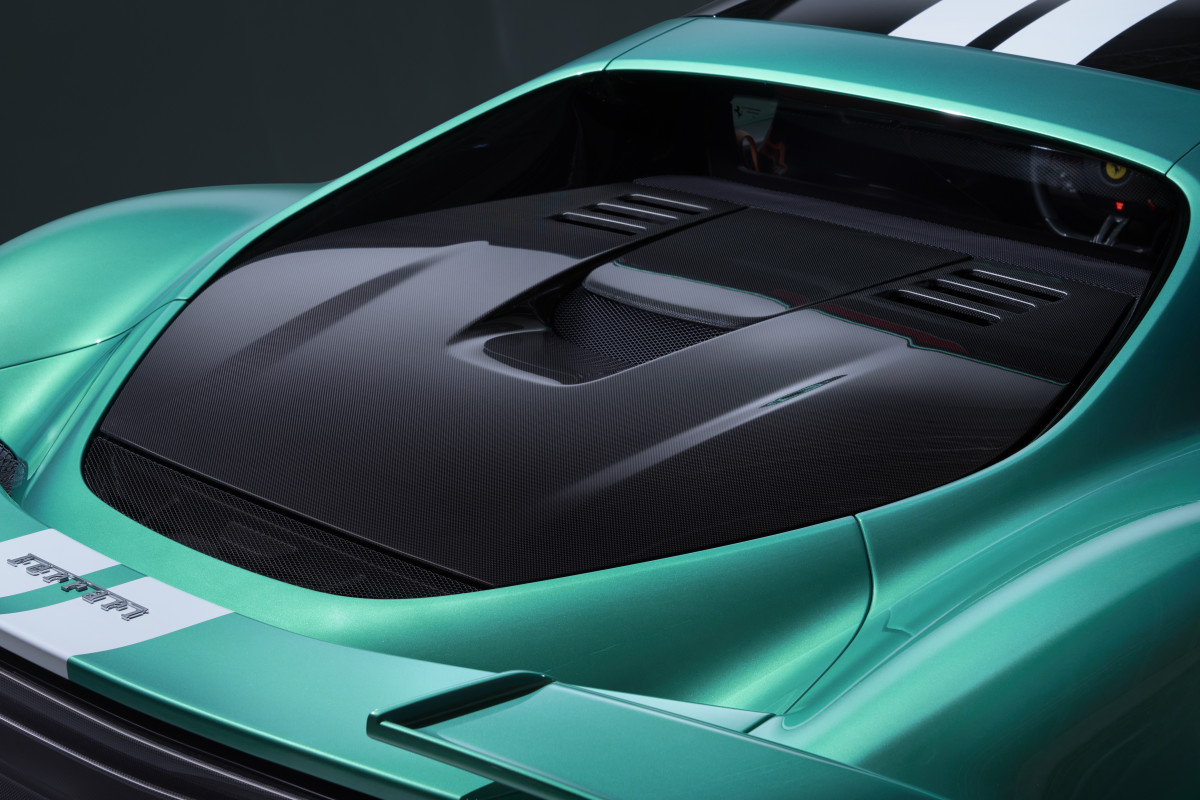
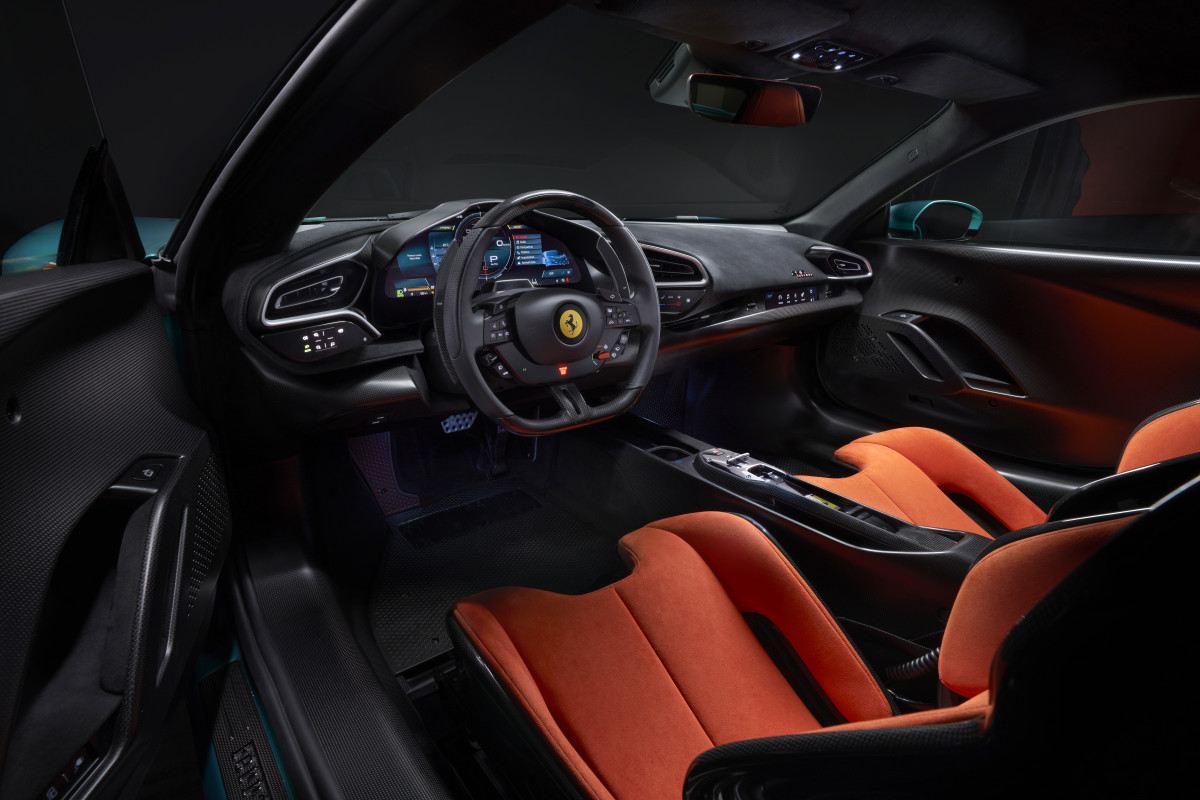
Additionally, carbon fiber is used throughout the car, even in unexpected places. For instance, Ferrari says that the door cards in the 296 Speciale are made from a single, shaped sheet of carbon fiber. This sheet contains speakers but no grille, so customers will have to hear their tunes through holes drilled into the carbon itself. For an extra cost option, you can have the bumpers, engine cover and wheels in carbon fiber.

Ferrari

View the 3 images of this gallery on the original article

Ferrari says that the hardtop coupe Speciale will arrive in the U.S. during the first quarter of 2026, with the spider to follow later in the year. However, curious customers would be out of luck, as all the cars have been sold out before their introduction.

Final Thoughts

It's admirable that Ferrari engineers can create a piece of art like the Speciale when tasked with making one of their creations even more "hardcore" than it already is. My favorite detail, personally, is the little winglets on the rear quarter panels; they make the car look more like a spaceship than anything else. I would spec mine as a convertible (the Speciale A) in the new Verde Nürburgring color or in red, as in the pictures.

  • Digg
  • Del.icio.us
  • StumbleUpon
  • Reddit
  • RSS