via Surplus Teslas Flood Parking Lot in Detroit Suburb
A parking lot problem grows in Detroit
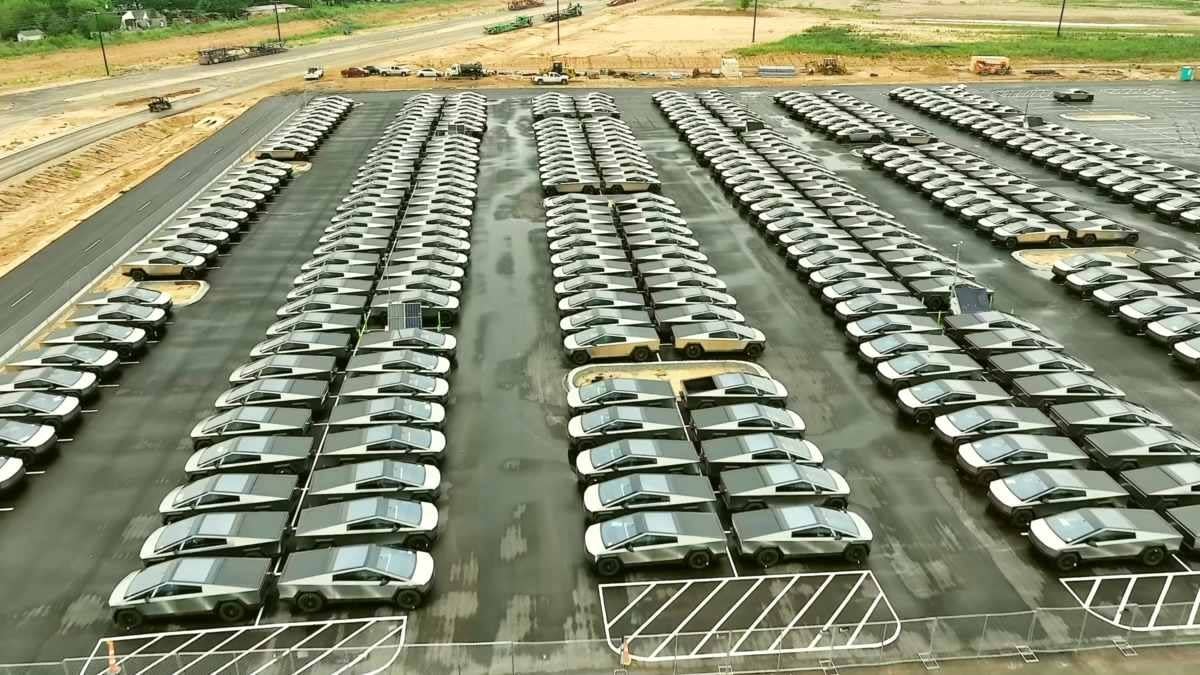
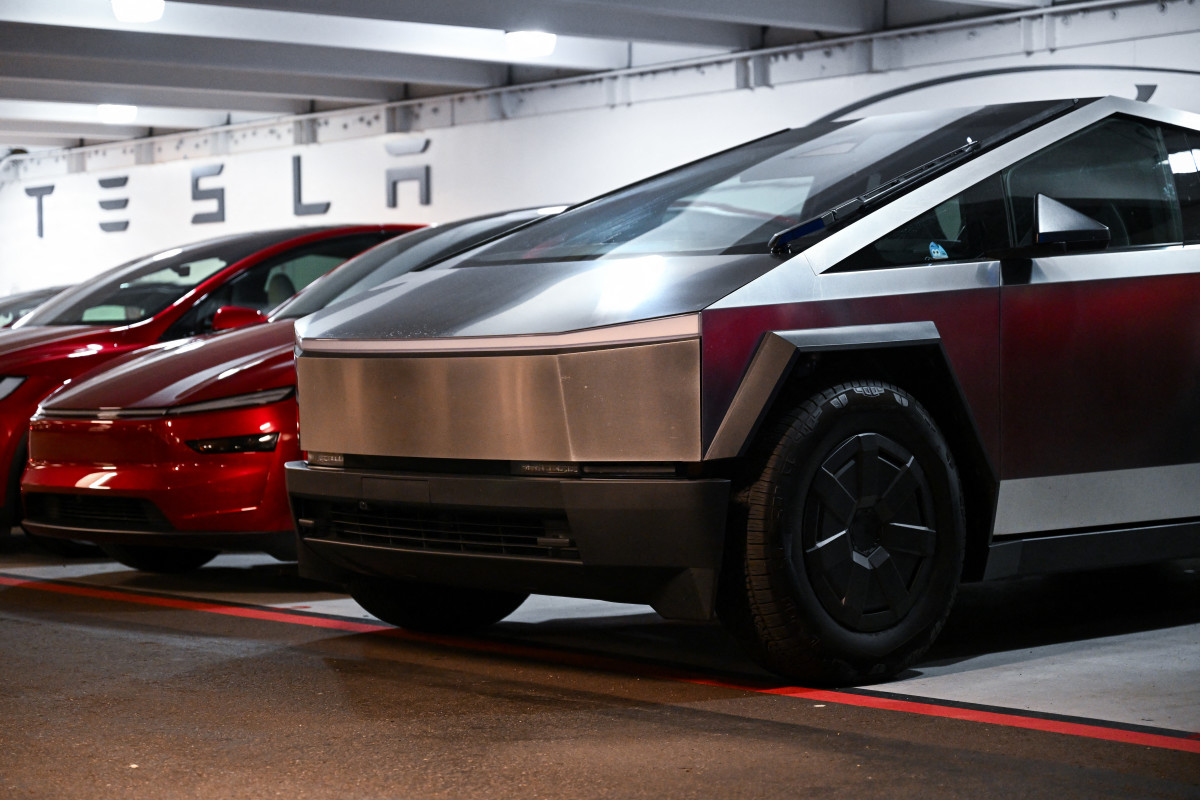
In the Detroit suburb of Farmington Hills, a vacant Bed Bath & Beyond parking lot has quietly transformed into a holding zone for dozens of unsold Tesla vehicles, mostly Cybertrucks. The unusual sight caught local attention when an Instagram video surfaced showing unregistered EVs sprawled across the asphalt. Since then, the number of Teslas has only grown, drawing concern from city officials.
While the vehicles aren't abandoned, city leaders say they shouldn’t be there. “Storage of vehicles is not a permitted use” of the land, Farmington Hills’ director of planning and community development said in a statement. The city has notified the landlord and is pursuing enforcement, though it admits the process takes time.
Cybertruck demand is cooling off
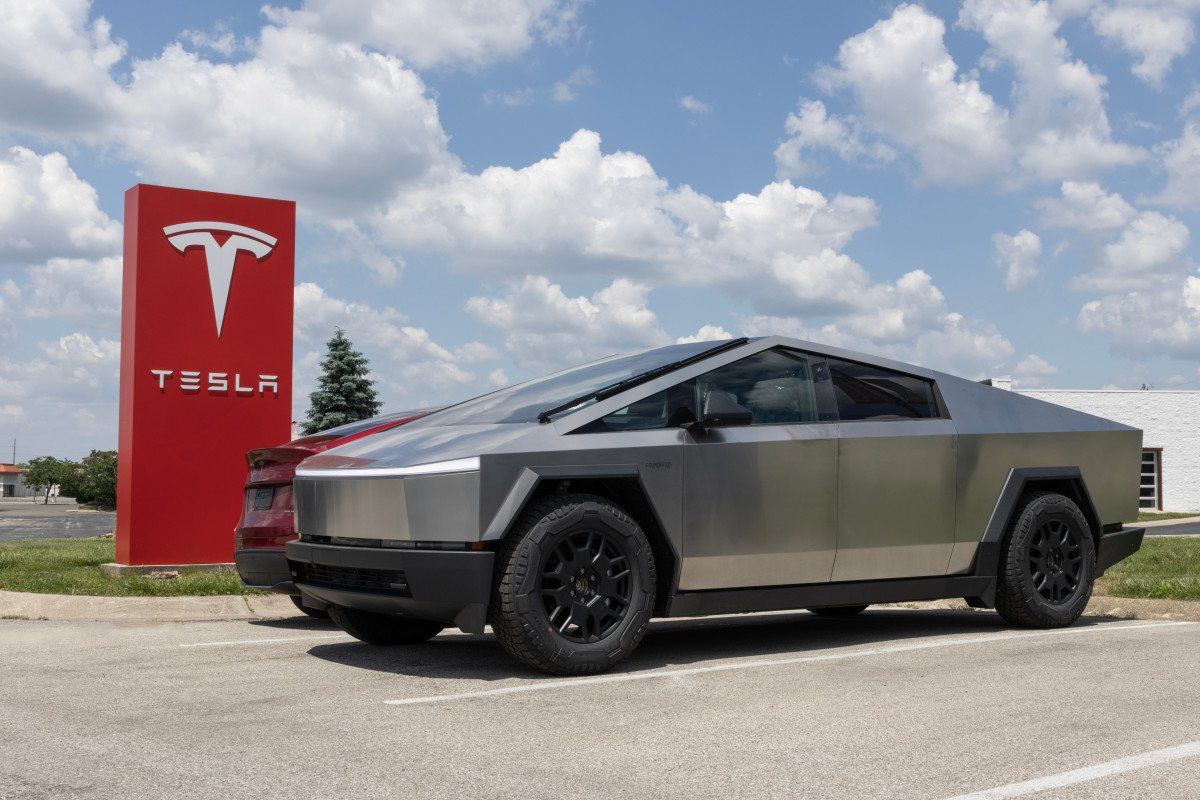
Tesla Cybertruck
Tesla
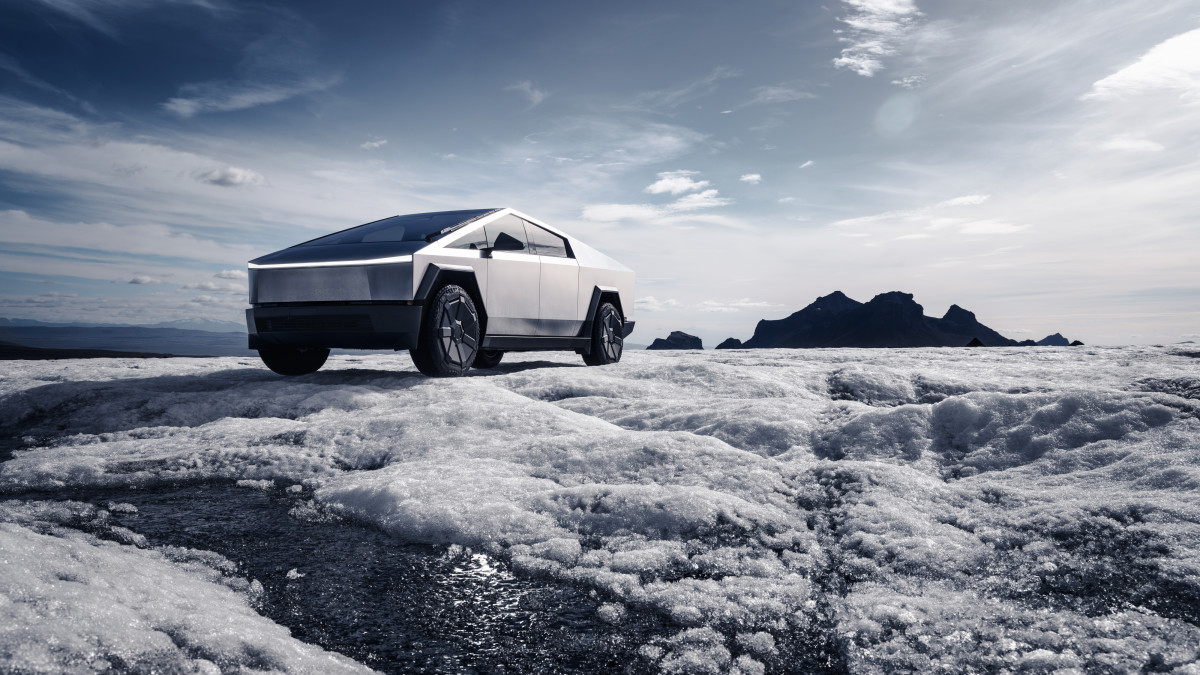
The swelling number of Cybertrucks parked on the lot is indicative of bigger problems at the electric vehicle maker. Tesla’s angular, stainless steel pickup was once the most popular electric truck in the country, but sales are slipping fast. In the first quarter of this year, Tesla delivered only 6,400 to 7,100 Cybertrucks — a sharp drop from about 13,000 in the previous quarter. While some seasonal decline is expected after Q4, the plunge was steep enough for Ford’s F-150 Lightning to reclaim the title of best-selling electric pickup.
This isn’t a new tactic for Tesla
Tesla has a long history of using unconventional overflow lots. It has parked surplus vehicles in everything from mall lots to vacant land near its showrooms. That’s likely the case here, as the company opened a nearby store just a mile away late last year in a former Barnes & Noble. The store is one of only a few in Michigan, where Tesla previously faced legal barriers to direct-to-consumer sales. A 2016 lawsuit helped overturn that ban.
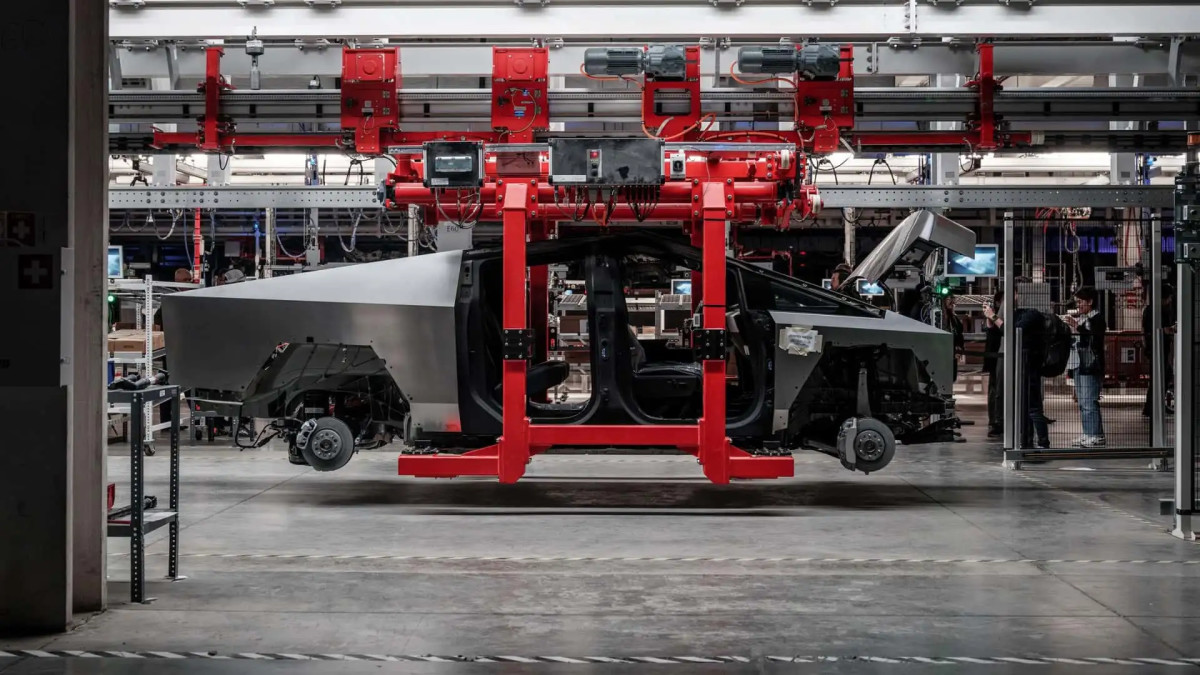
Tesla Cybertruck - Production Line
Tesla
While Tesla’s ability to sell directly to consumers in Michigan marks a big shift, the company is now facing a more localized challenge: what to do with a growing fleet of unsold trucks. The suburban sprawl of unclaimed Cybertrucks may be a symptom of waning interest or overproduction, but to Farmington Hills officials, it’s a code violation either way. Whether Tesla will find a new place to store its excess inventory or manage to sell off the lot full of Cybertrucks remains to be seen.
Final thoughts
Tesla’s overflow of unsold Cybertrucks into a suburban Detroit parking lot is more than just an eyesore — it’s a snapshot of the company’s growing pains. As demand shifts and logistics get messier, even the most disruptive automakers have to play by local rules. Farmington Hills may just want its lot back, but the scene also raises bigger questions about how Tesla will manage its supply, demand, and reputation as it enters a more competitive and less forgiving EV market.
via Volvo Responds to Tariffs with Mass Layoffs & EX30 Delay
Another victim of tariffs
As tariffs continue to cause uncertainty in the automotive industry, Volvo is cutting jobs and raising prices. Though tariffs have yet to be implemented by the United States government, Volvo is being proactive. Like many automakers, the automaker is taking steps to navigate an uncertain future, both in the short and long term.
Volvo plans to cut approximately 3,000 jobs as part of its “cost and cash action plan,” which, in part, aims to eliminate redundancies across the company. The automaker says it will eliminate approximately 1,000 consultants across its organization, 1,200 roles at offices in Sweden, and roughly 800 positions in its remaining global markets. The cuts represent about 15 percent of Volvo’s total global workforce.
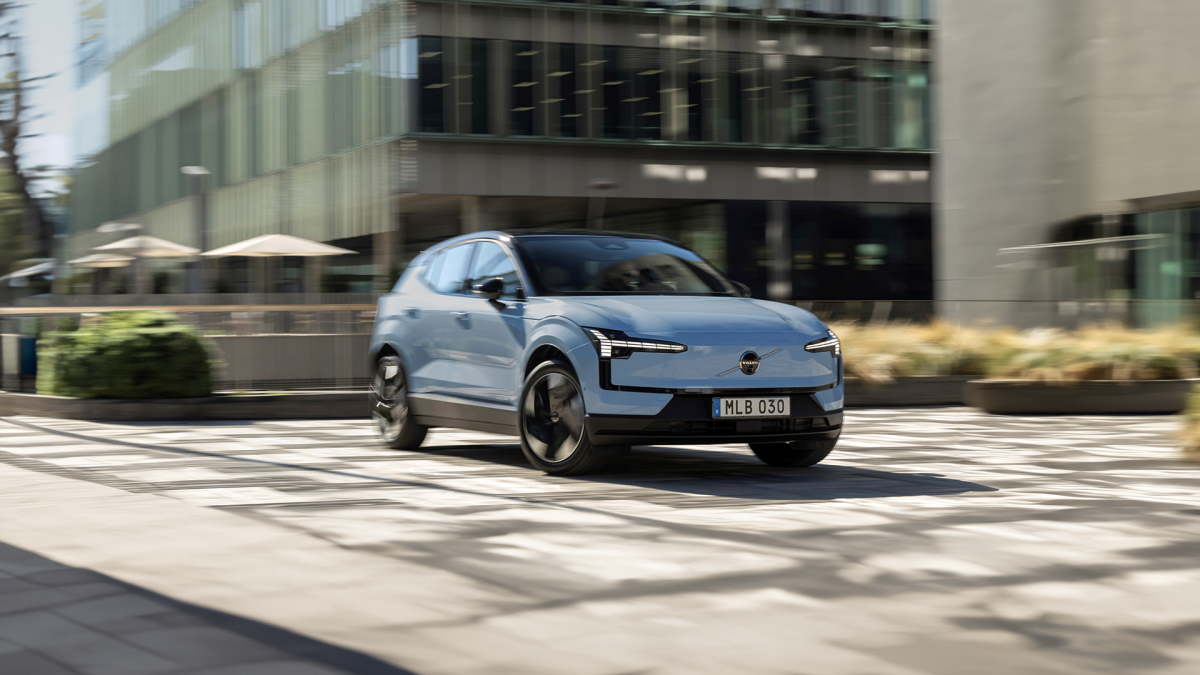
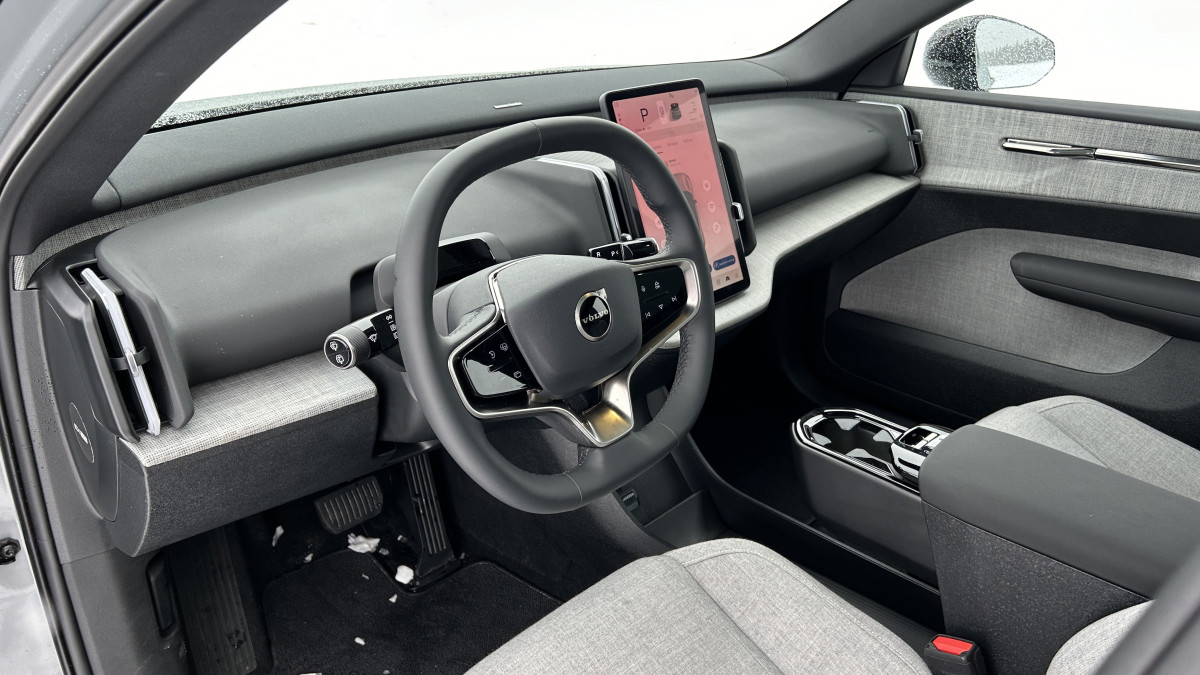
2025 Volvo EX30 AWD
Zac Palmer
Selling the EX30 from $34,950 now "almost impossible"
When Volvo announced the EX30, it boldly claimed that the small SUV would arrive for $34,950—an incredible price point for any electric vehicle. Since that announcement, the U.S. government has imposed tariffs on electric vehicles (EVs) made in China, prompting Volvo to avoid importing EX30s built in China to the United States. To avoid tariff charges, Volvo is delaying the introduction of the car to the U.S. until production begins at its factory in Ghent, Belgium.
Volvo CEO Hakan Samuelsson said on Friday that selling the automaker’s Belgium-made EX30 stateside for the original $34,950 price tag would be “almost impossible” at this point. The only EX30 currently available in the US is the $46,195 Twin Motor Performance model in Plus and Ultra trim levels. According to a Volvo source, all future EX30s bound for the U.S. will stem from the Ghent plant.
Most Volvo cars sold in the United States are imported from Europe. Samuelson, hopeful the EU and the U.S. can find common ground on trade, said, "I believe there will be a deal soon. It could not be in the interest of Europe or the U.S. to shut down trade between them."
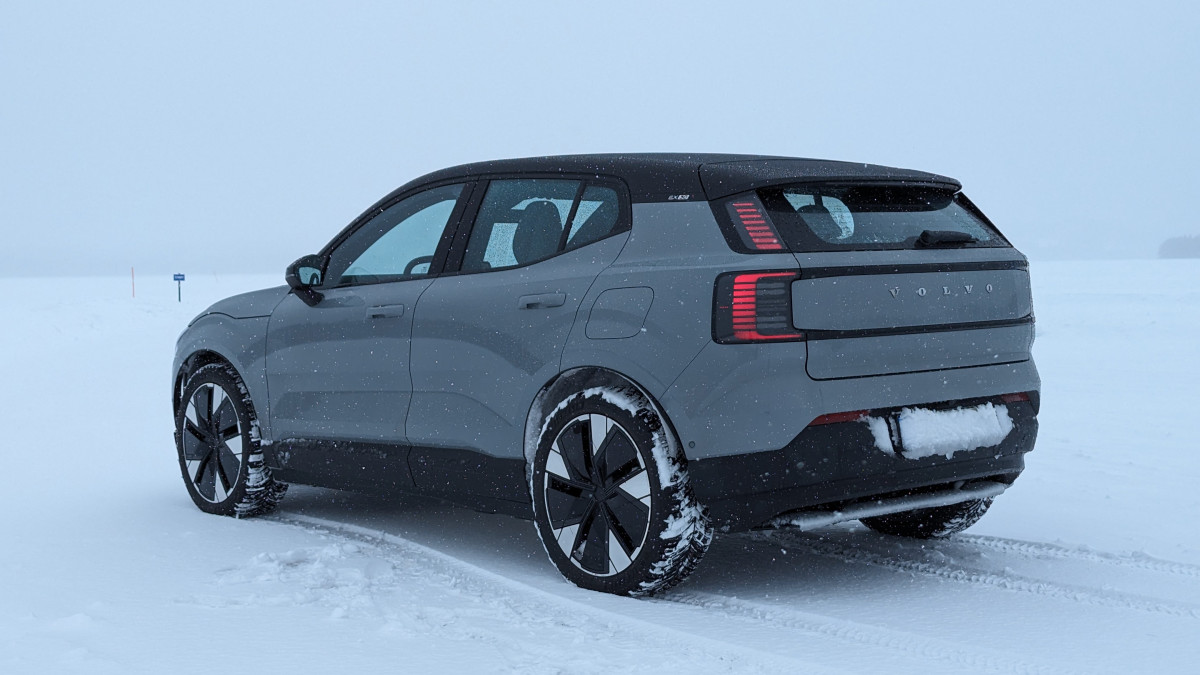
2025 Volvo EX30 AWD
Zac Palmer
Tariffs scare more than Volvo
Tariffs are rattling several European automakers, not just Volvo. BMW recently halted its EV efforts in the United States, VW put a freeze on pricing to ease consumer fears, Nissan is drastically cutting back on production, Hyundai is cautioning dealerships about potential price increases, and Jaguar Land Rover has halted shipments of vehicles into the United States.
Even the threat of tariffs has automakers on high alert. The industry is built on the back of a global supply chain, and creating a fully U.S.-based manufacturing and supply chain to avoid tariffs is likely impractical and impossible.
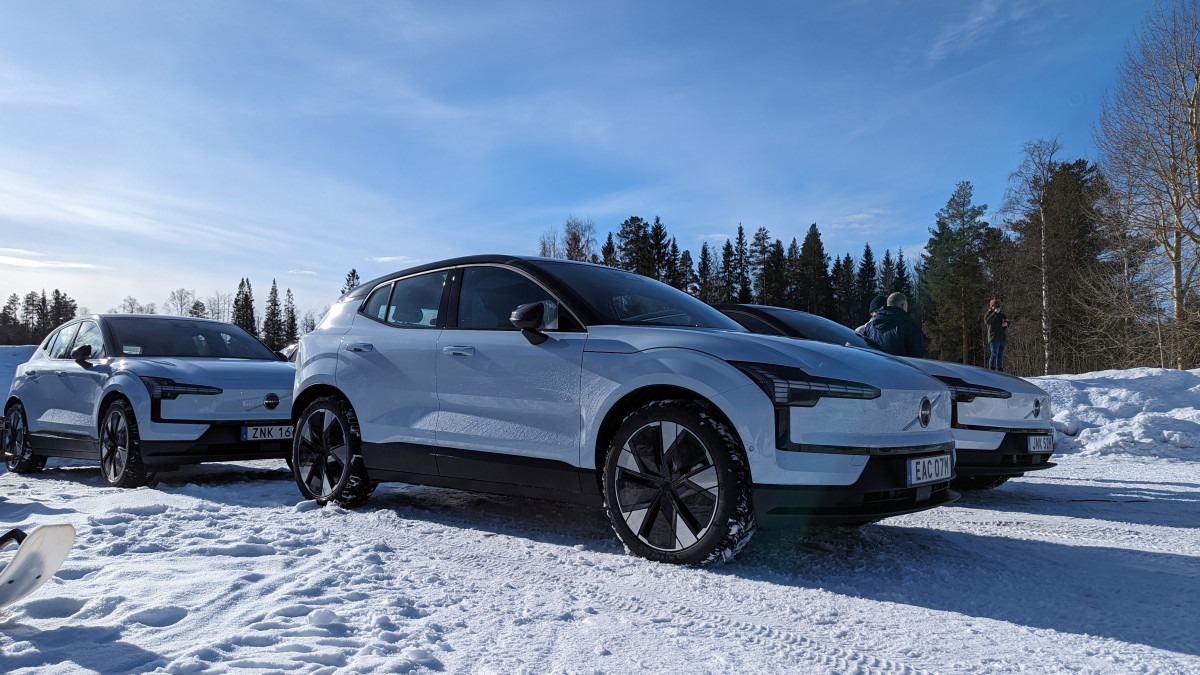
2025 Volvo EX30
Zac Palmer
Final thoughts
Automakers are worried, but consumers are the ones paying the price—literally. Volvo has a large factory in Charleston, South Carolina, and says it'll ramp up production there. However, the plant doesn’t currently manufacture fully electric vehicles, so we can expect to see more hybrids available on Volvo lots soon. Tariffs also interrupt the push toward full electrification.
via Ford Maverick, Other Trucks See Price Hikes as Tariffs Raise Auto Costs Nationwide
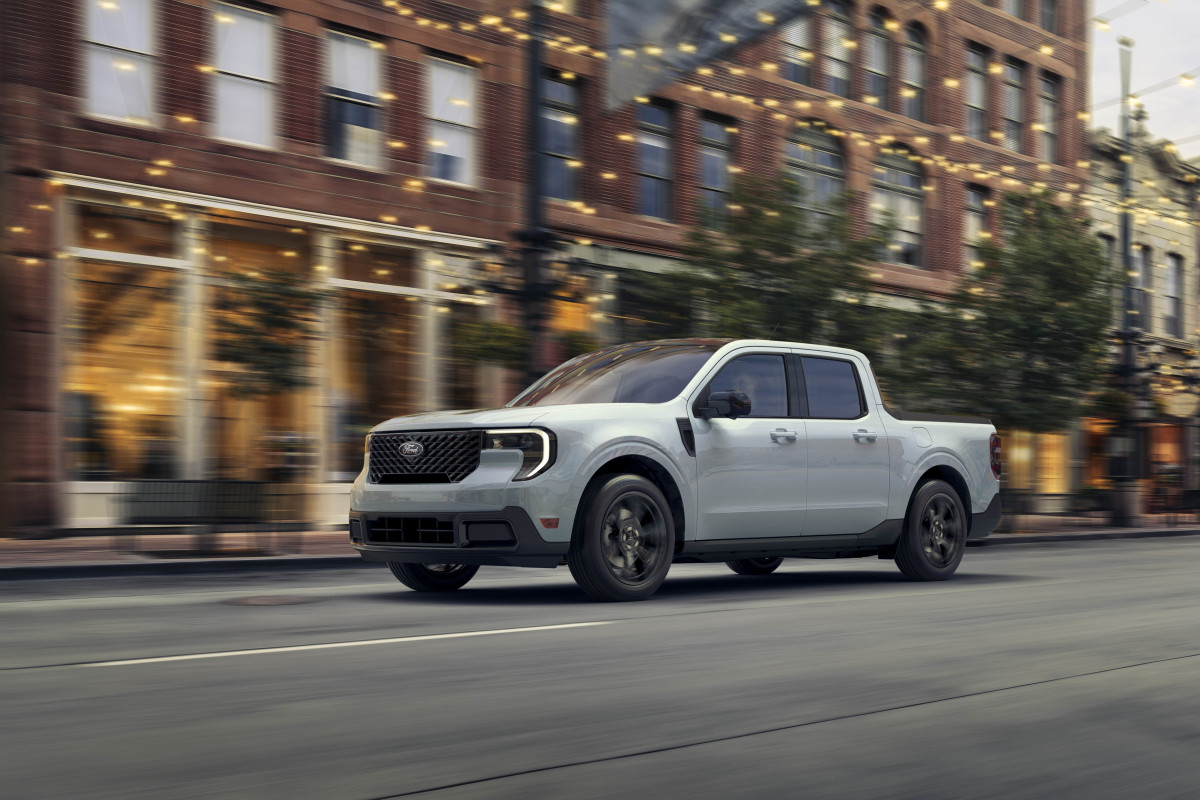
Why the Ford Maverick Now Costs Over $8K More Than Last Year
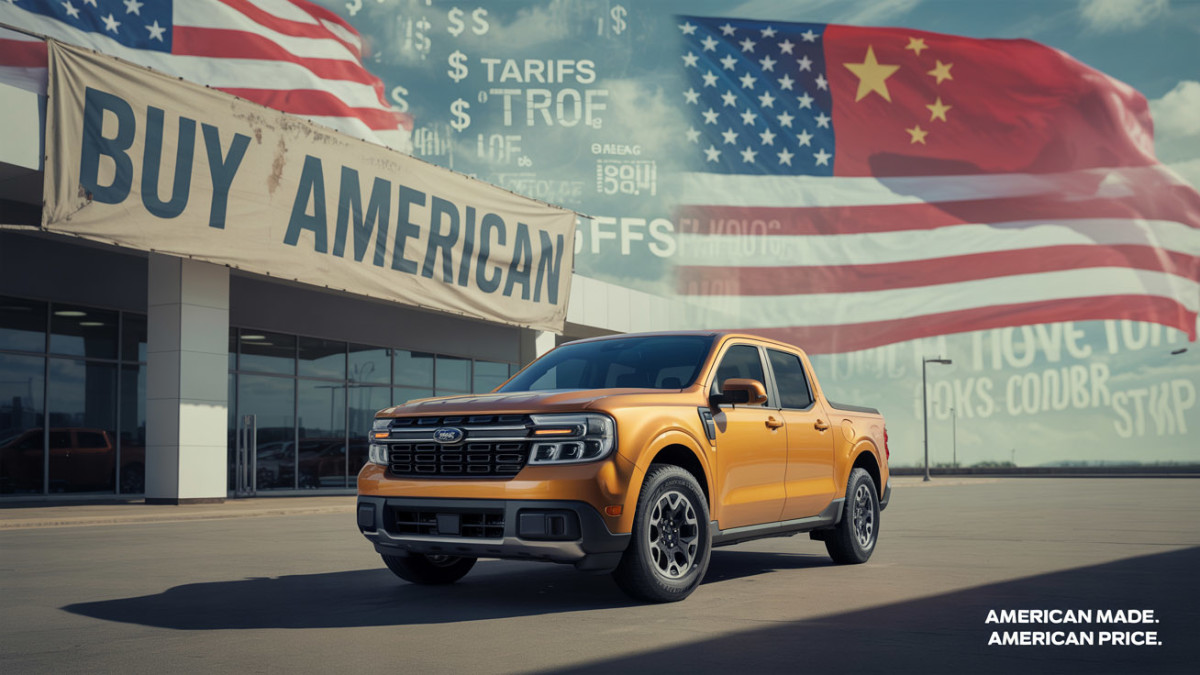
That “Buy American” sticker? It’s costing you more than patriotism. The scene: You’re eyeing a Ford Maverick, imagining weekend road trips, when the dealer slides over a quote. The price? $8,641 higher than last year’s model. Suddenly, your practical truck feels like a fiscal hostage. Welcome to the era where tariffs transform workhorses into white elephants—and Washington’s trade wars roll up in your driveway.
Trump’s Auto Part Tariffs: A $42 Billion Burden for Buyers
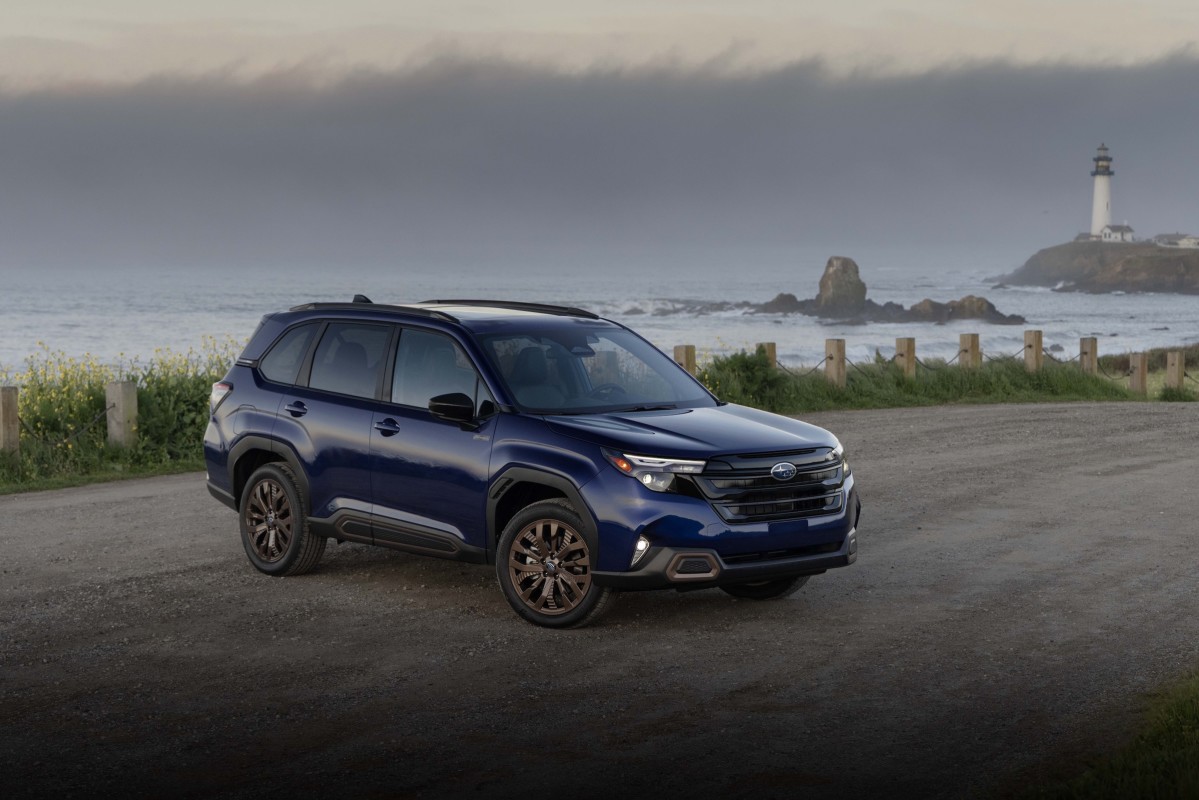
Let’s cut through the exhaust fumes. Trump’s 25% tariffs on Chinese auto parts aren’t just policy—they’re a masterclass in economic jiujitsu. That Subaru Forester Hybrid you’ve been eyeing? Its price tag ballooned by $4,000 overnight, not because of inflation, but geopolitical theater. Detroit’s Big Three will pocket $42 billion in tariff costs by 2025, but here’s the kicker: You’re funding 90% of it through padded MSRPs. This is gaslighting with a V8 engine.
2025 Subaru Forester Hybrid
Subaru
How ‘American-Made’ Trucks Use Global Parts to Dodge Tariffs
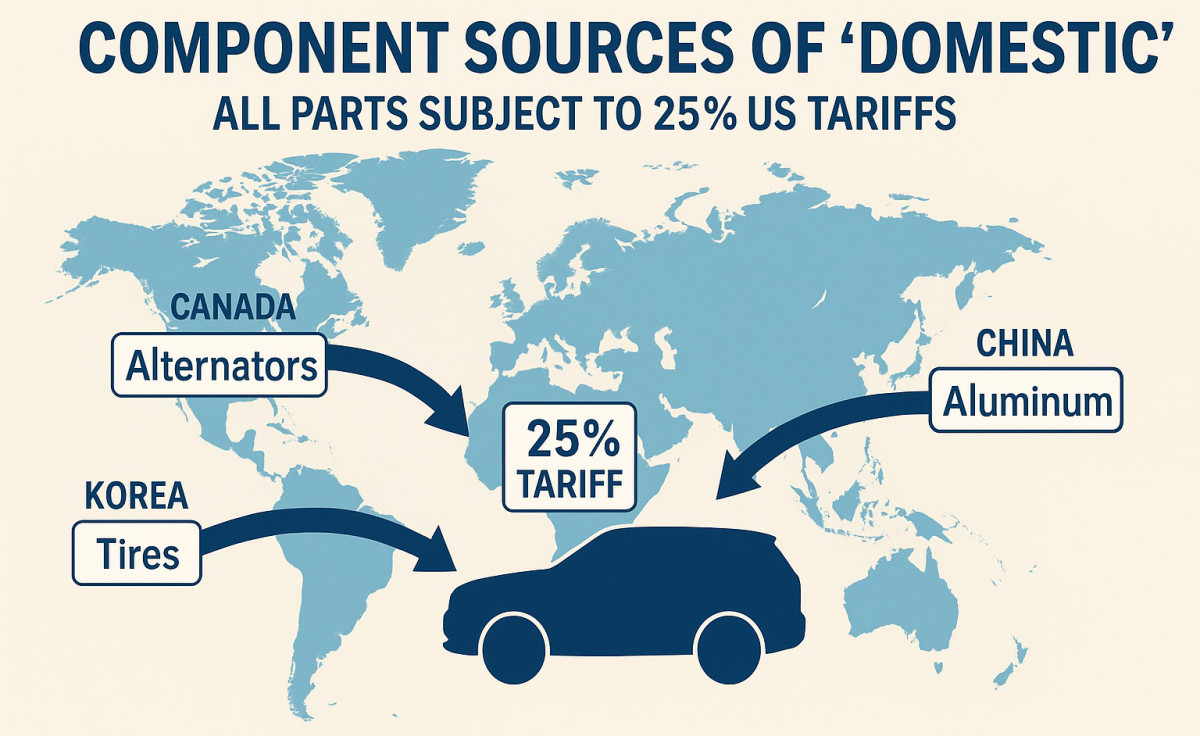
Ford’s F-150—that titan of truck commercials—runs on a Mexican alternator, Canadian half-shafts, and Korean tires. Only 32% of its components are U.S.-sourced, yet it sidesteps tariffs via NAFTA’s “substantial transformation” loopholes. Translation: Assemble a global parts bin in Michigan, slap on a Stars-and-Stripes decal, and charge a $2,055 “market adjustment” because freedom isn’t free. Meanwhile, GM’s Texas-built Escalade sources aluminum tied to Xinjiang’s Uyghur forced labor camps. Your armrest? A $100K tribute to oppression and corporate amnesia.
2024 Ford F-150 XLT
Why Car Dealers Profit Most From Your Patriotic Purchases
Meet the real winners: dealerships. When Ram’s “Born in Michigan” ads play, they omit that heavy-duty models roll off Saltillo, Mexico lines—a plant churning out 250,000 units annually. Yet dealers markup these trucks by $1,150 overnight, exploiting your red-white-and-blue reflex. It’s not supply and demand. This is psychological warfare with a 72-month financing plan.
Are EVs the Answer to Rising Truck and SUV Prices?
Amidst the markup madness, here’s your lifeline: Go electric. While GM axed the $30K Chevy Bolt to focus on luxury behemoths, Tesla’s Model Y persists as a tariff-proof anomaly. Its battery? 50% cheaper per kWh than 2019, with no hidden “patriotism tax.” Hyundai’s Ioniq 5 offers 303-mile range and wireless CarPlay—a tech suite that laughs at Detroit’s dated infotainment.
Pro tip: Lease. Let the tariffs depreciate on someone else’s driveway.
Should Tariffs Be Listed on Car Stickers?
Tariffs are the new dealer add-ons—unavoidable, infuriating, and dressed in patriotic veneer. Every overpriced SUV is a referendum on what we value. Do we bankroll boardroom greed masked as nationalism? Or demand transparency with our wallets? Amazon was on the money, no pun intended, with wanting to put the “tariff burden” on the receipt.
What about the true value of those tariffs on the sticker price? Your move, America. That extra 8 grand on your F-150 has a cause.
via Recent Auto Loan Trends Bring Opportunities and Challenges for Buyers
March, April bring shifts in approval rates and lending criteria
New reports have shown that March and April represented a mixed bag for drivers applying for car loans. A Cox Automotive index analyzing how difficult it is to receive approval on car loans found that the market moved slightly against borrowers in April after making positive gains in March, according to Kelley Blue Book. The share of subprime loan approvals for borrowers with credit scores of 620 or below fell by 280 basis points (2.8%), representing a significant one-month drop. Loans with terms longer than 72 months also increased. While 96 months is the most common maximum auto loan term length, some lenders cap their terms at 84 months.
The number of borrowers who went underwater on auto financing, or owe more than their vehicle’s worth, increased by 10 basis points (0.10%) in April. However, the overall approval rate for car loans increased by 20 basis points (0.20%), highlighting how lenders view subprime borrowers with credit scores 620 or below as more risky than in recent months.
A high credit score remains key
During the second quarter of 2024, the average monthly car loan interest rate for borrowers with super prime credit (above 780) was 5.25%, whereas drivers financing a vehicle with deep subprime ratings (below 500) faced a steep 15.77% average rate, Experian reports. While the most recent data for 2025 from Experian doesn’t list average loan interest rates in detail by specific credit tiers, in Q4, 2024, the credit agency notes that the average new car loan applicant had a credit score of 755 and received a 6.35% interest rate over 67.98 months, while borrowers for used vehicles had a 691 average score and received an 11.62% interest rate over 67.2 months.
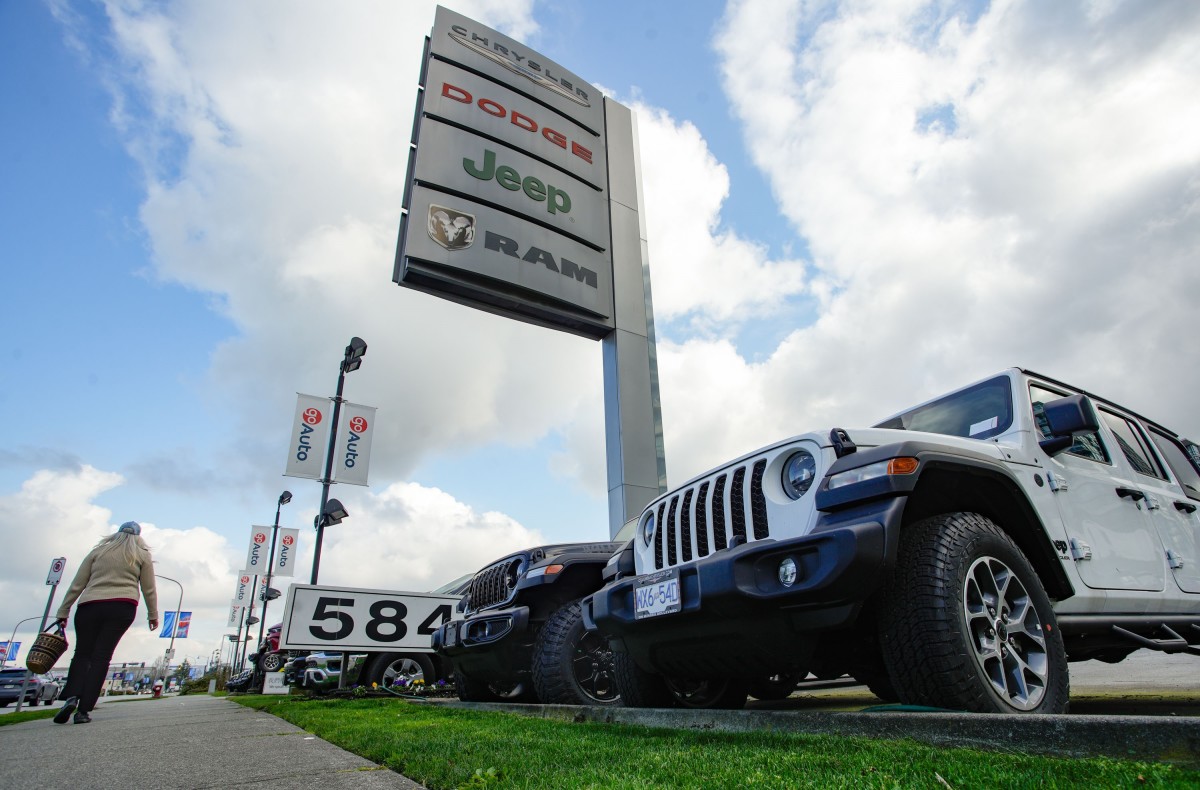
New vehicles on display at a car dealership in Vancouver, British Columbia, Canada, on April 3, 2025.
In comparison, May data sourced from myAutoloan.com, which uses slightly different score bands reflecting offers, shows that the average interest rate for new and used vehicle loans is 18.93% and 19.18%, respectively, for those with a rating between 451 and 599, while borrowers with a 750 or higher rating received 11.38% and 11.63% average interest rates, according to the U.S. News & World Report.
Final thoughts
Tariffs and uncertainty regarding future economic prospects are fueling lenders’ views of subprime borrowers with 620 or below credit scores being increasingly risky. Additionally, the amount of borrowers underwater on auto loans rising by .10% in April reflects the ill effects of drivers taking out longer car loans with more interest, escalating the chances of defaults. The Federal Open Market Committee (FOMC) announced the third federal funds rate cut in December 2024, but rates are still high, resulting in drivers paying more for auto loans. FOMC officials didn’t announce another cut this month, signaling that rates will likely remain high for auto loan applicants.
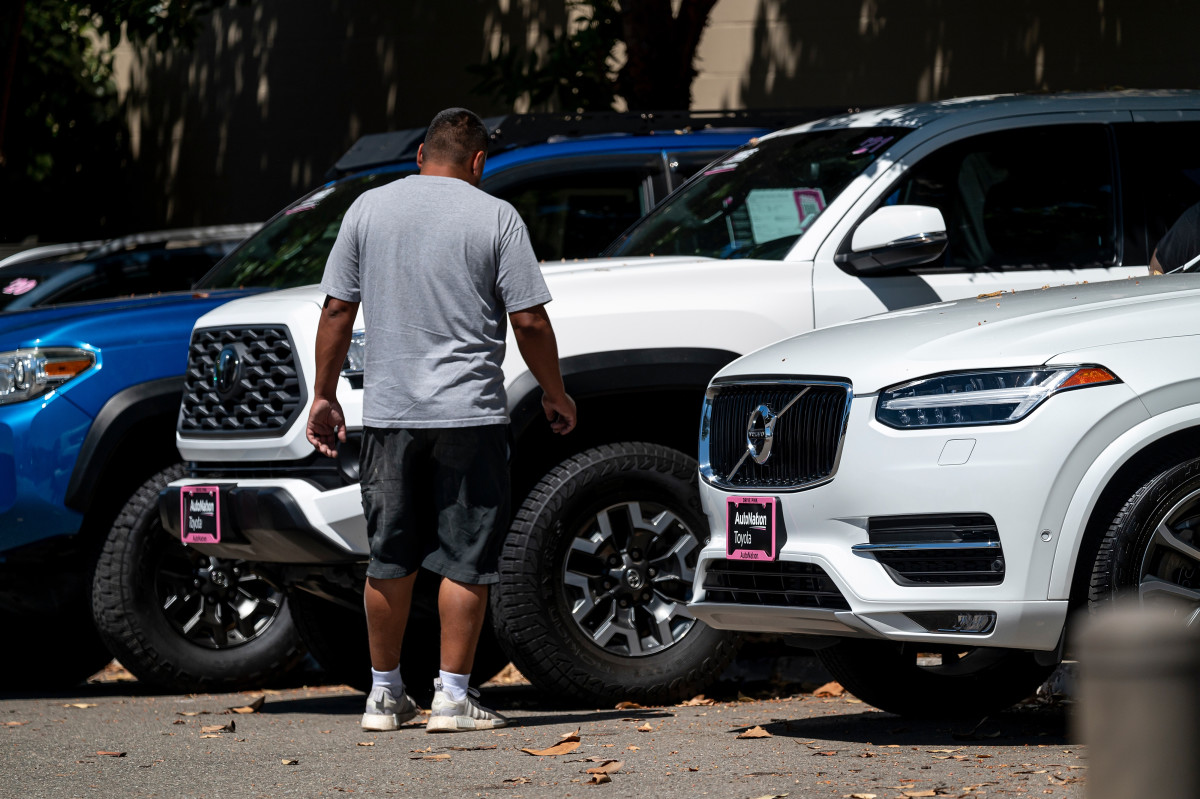
A customer looks at vehicles for sale at an AutoNation Toyota dealership
Drivers can respond by comparing rates with multiple lenders or waiting to see if rates continue falling over the coming months before applying. Last week, Bill Huizenga, a Congressman serving in the U.S. House of Representatives introduced legislation allowing car and truck buyers to write-off auto loan interest on their taxes worth up to $2,500 if the vehicle was assembled domestically. If approved, the legislation would apply to vehicles purchased in the 2025 calendar year or later.
via Tesla is Planning a Major Cybertruck and Model Y Production Pause
Tesla workers in Austin are about to get a major break this Memorial Day
According to a new report published by Business Insider, electric car manufacturer Tesla is planning a major production pause of Cybertruck and Model Y cars at its Austin, Texas factory. Three workers working on the respective production lines told the publication that Tesla told workers to stay home for Memorial Day, an unusually long break for them.
The workers who spoke to BI said they were notified about the decision early last week. They are paid hourly and were told they could take paid time off or come into the factory for cleaning and training, but wouldn't be assembling any cars on the production line.
A Tesla Cybertruck and Model Y Juniper
Getty Images
The long break is the latest in a pattern affecting Austin factory workers
It isn't the first time Tesla has attempted to reduce Cybertruck output. In April, Tesla reduced production targets for the Cybertruck and moved some workers off its production line to work on other Tesla models, while in December, it shut the line for three days.
However, workers who spoke to Business Insider noted that the long break around Memorial Day comes amid an unusual pattern of inconsistent hours and scheduling that has persisted since February. Some of them indicated that supervisors sent them home early during the workday on multiple occasions.
The sources also stated that management at the Austin factory began cracking down on overtime hours. Two workers said that factory management told them they could eventually face disciplinary action if they were found clocking in overtime hours. In addition, a Worker Adjustment and Retraining Notification notice issued by the Texas Workforce Commission earlier this month noted that Trigo, a third-party contractor who licenses employees to Tesla, laid off 50 workers at the Austin factory.
Tesla faces a "fork in the road," an influential analyst said
The news about the Cybertruck factory comes shortly after Tesla reported some abysmal financial and delivery numbers for the first quarter of 2025.
Last month, Tesla reported that during Q1 2025, it delivered 336,681 vehicles, a 13% year-over-year drop. At the same time, its factories produced 362,615 vehicles; nearly 26,000 more EVs than it delivered. In its earnings report, Tesla reported that profits fell 71% to $409 million, a far cry from the $1.39 billion figure during the same quarter just a year prior.
Shortly after Q1 2025 Tesla delivery figures went out, social media figure and influential Wedbush Securities analyst Dan Ives posted on the social media platform X that the numbers were a “fork in the road moment” for the electric vehicle company.
“We knew 1Q Tesla deliveries would be soft, but these numbers were bad,” he said. “We are not going to look at these numbers with rose colored glasses…they were a disaster on every metric. Refresh issues but brand crisis key.”
Final thoughts
I encounter both Tesla Cybertrucks and Model Ys regularly; however, the situation regarding them, especially the latter, is pretty surprising. According to a recent report by Electrek, Cybertruck inventory has reached upwards of 10,000 units sitting on lots near Tesla retail locations. These Cybertrucks have been sitting for a worryingly long time. Houston-area Cybertruck owner, Reza Soltani, posted on the Cybertruck Owner's Club Facebook group that Tesla sold him a car that had been sitting for about four months on the same lot before giving him the keys.
"I placed an order for a Cybertruck on Friday, and they instantly assigned me a VIN and are ready to deliver the car this week in Houston," he said. "The car was built on January 8th. It’s been sitting out in the Tesla parking lot for 4 months."
Aesthetics opinions aside, I think that Tesla needs to offer some significant discounts or offer sales to fleets to offload the Cybertrucks, or it risks building an unmanageable backlog of cars that it can't sell.
via 2025 Cadillac Escalade Driven & Reviewed: Is It Worth $125,000?
Enter an oasis
During my time with the 2025 Cadillac Escalade Platinum, I never understood what made it unique until I drove it out on one of the worst rainy days North Jersey has seen in quite a while.
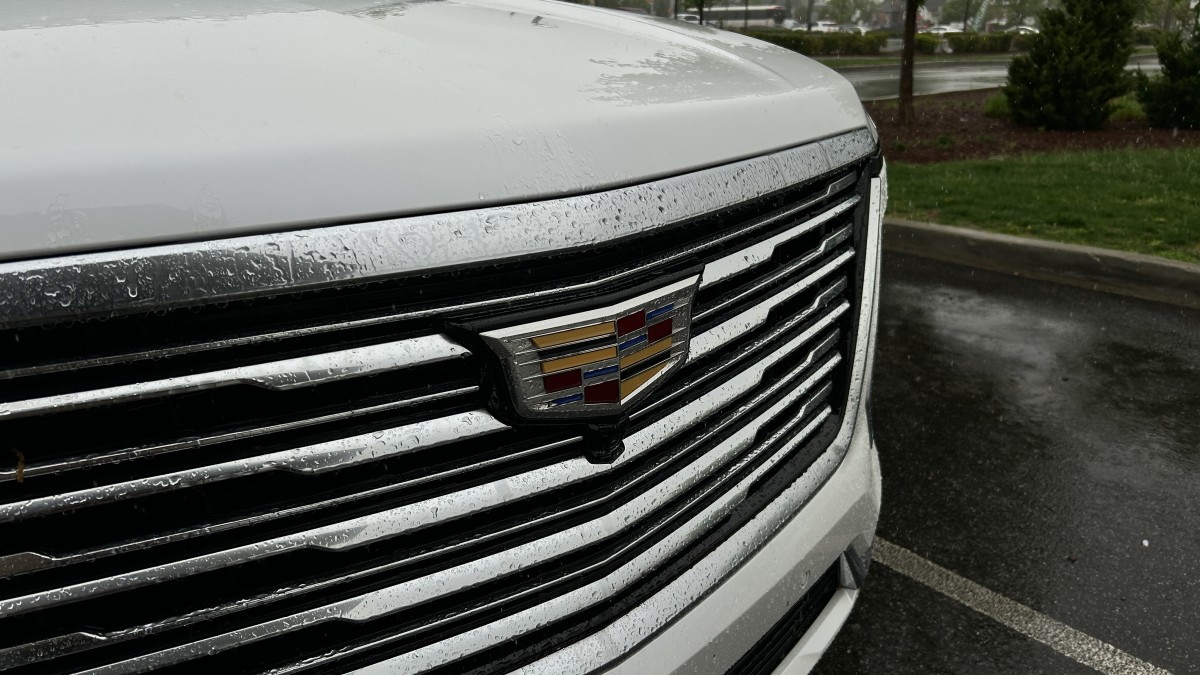
I forgot an umbrella, but walking up to the Escalade on a dark, gloomy rainy day feels like walking up to salvation. Once you get within a few meters of the car, the LED lights that line the Cadillac badge and the big grille that surrounds it flicker on and call on you like an illuminated beacon of goodwill, recognizing that you, the person holding its key, are looking for that place of comfort—and what a place it is.
The Cadillac Escalade has a rich history that dates back to 1998, when it was introduced as a more luxury-focused variant of the GMC Yukon Denali. Throughout its 25-year-plus history, it has become a VIP chariot for the stars and a symbol of excess on the screen, especially as the second and third generations of the car earned starring roles in everything from rap videos to cult TV shows like The Sopranos and Entourage.
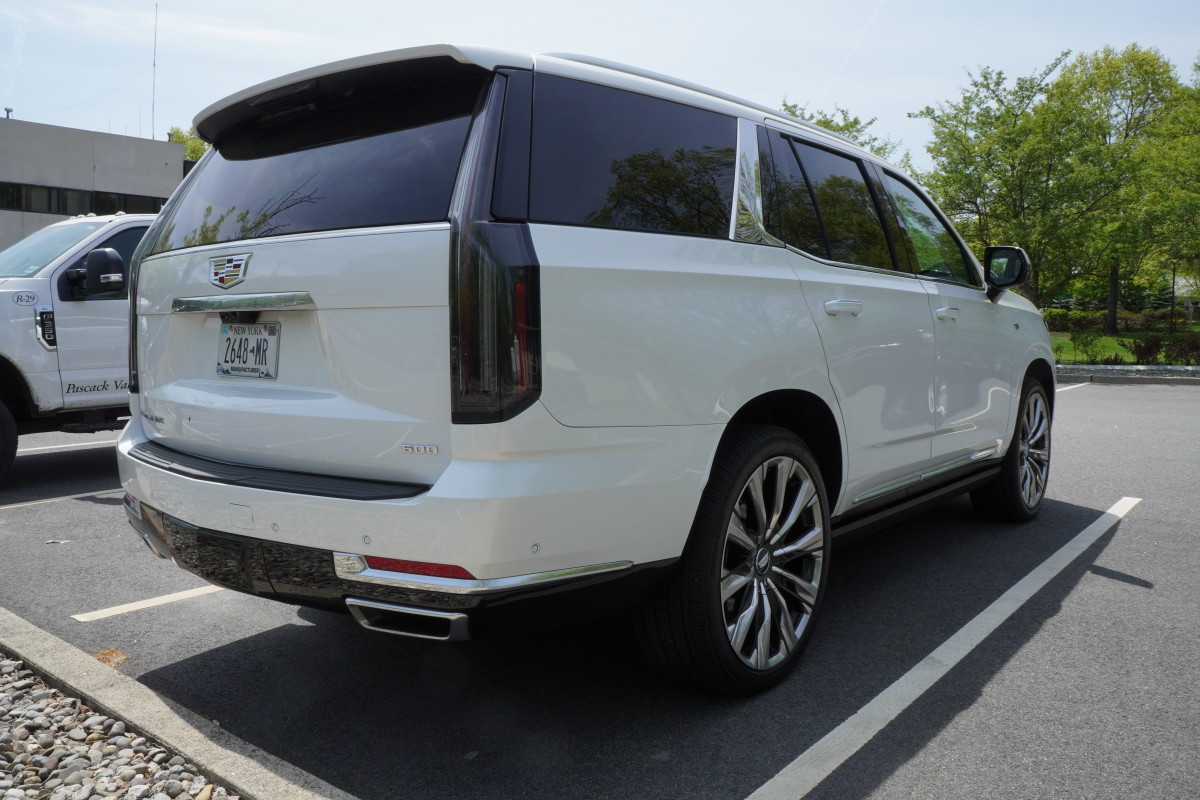
Today, the Cadillac Escalade is a modern, large-and-in-charge machine whose presence is felt both on the inside and outside. For 2025, the Cadillac Escalade gets a smattering of upgrades, including revised styling that includes a bigger grille, newly revised LED headlights and taillights, and available 24-inch wheels, which this vehicle had. I found that many of these styling choices were made to mirror its electric sibling, the Escalade IQ, which I think added some futuristic touches to a sleek design that formerly leaned more conservative than striking.
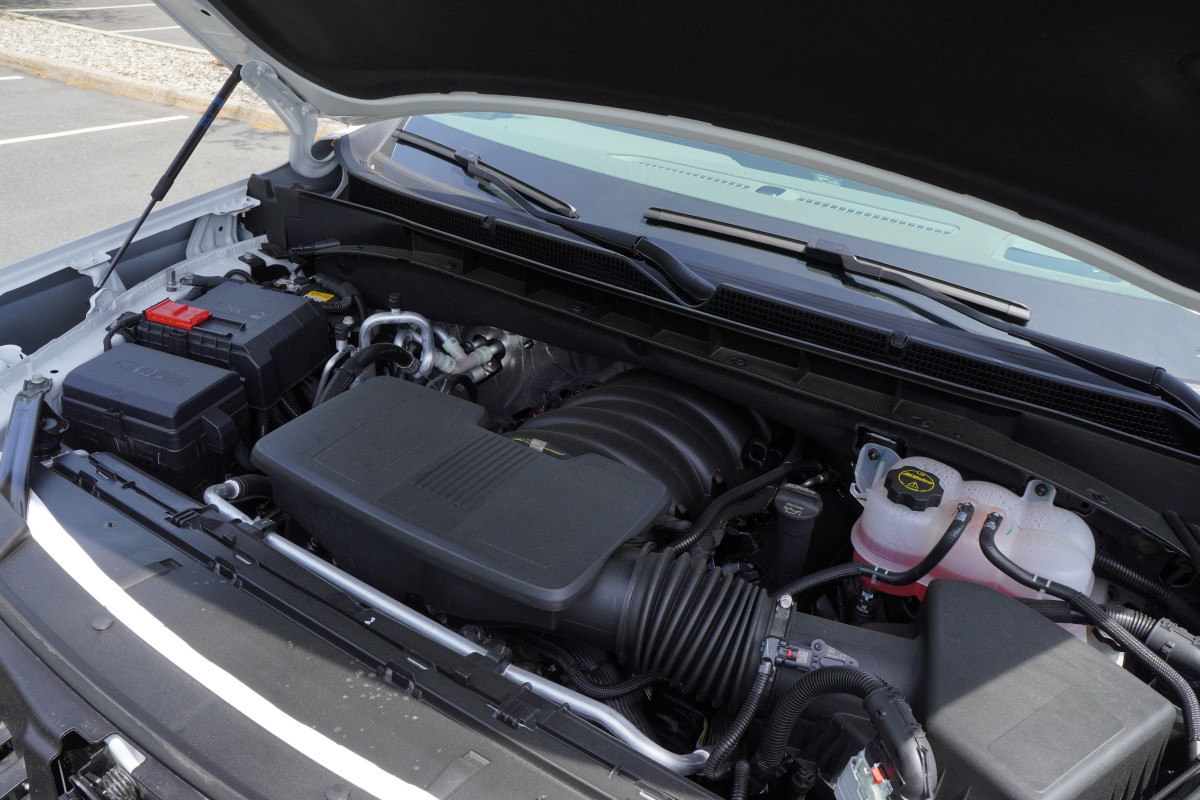
The L87 engine under the hood of the 2025 Cadillac Escalade Platinum
James Ochoa
Under the hood of virtually all the trim levels of the 2025 Cadillac Escalade (excluding the V-Series) is a 6.2-liter L87 V8 pumping out 420 horsepower and 460 lb-ft of torque. The power comes through all four wheels through a responsive and smooth-shifting 10-speed automatic transmission. One caveat that I observed throughout my time was that the powertrain was quite thirsty; the EPA estimates the 4WD variant I drove at 14 miles per gallon in the city, 18 mpg in the highway and 16 mpg combined city and highway.
Though it is powerful and thirsty, the Escalade’s redeeming factors really come into play while I traversed the pothole-ridden, rough roads around North Jersey and New York City. The 2025 Escalade Platinum came with adaptive air suspension, as well as GM’s own Magnetic Ride Control, which absorbed bumps, cobblestones, and other road blemishes with ease; an impressive feat given that it rode on the optional 24-inch wheels.
Like its mechanical cousins, the Chevy Suburban and GMC Yukon, it has an independent rear suspension. However, if I were to describe the handling of the Cadillac Escalade, I wouldn’t use words like swift, sporty, or any other buzzwords that indicate that it handles like anything within a breath of being a performance or track day car. To be completely straight to the point: it doesn’t, it doesn’t pretend to, and it doesn’t need to.
Inside, the cabin of the Cadillac Escalade Platinum is a comfortable setting loaded with ornate details, soft and solid touches, and high-tech toys. Sitting in the driver's seat of the Cadillac Escalade feels like you’re the complete opposite of what Lewis Hamilton does; it's a place where driving can feel as relaxing as it can, even when you’re stuck in gridlock traffic.
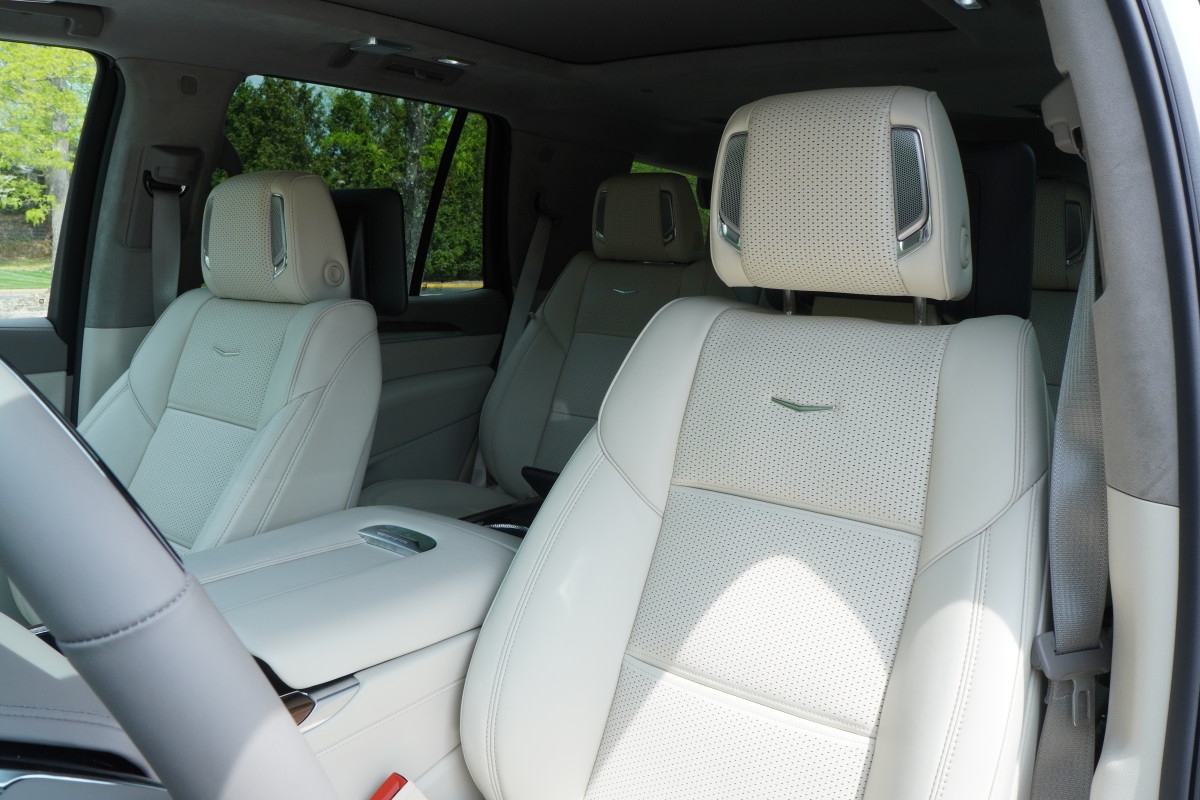
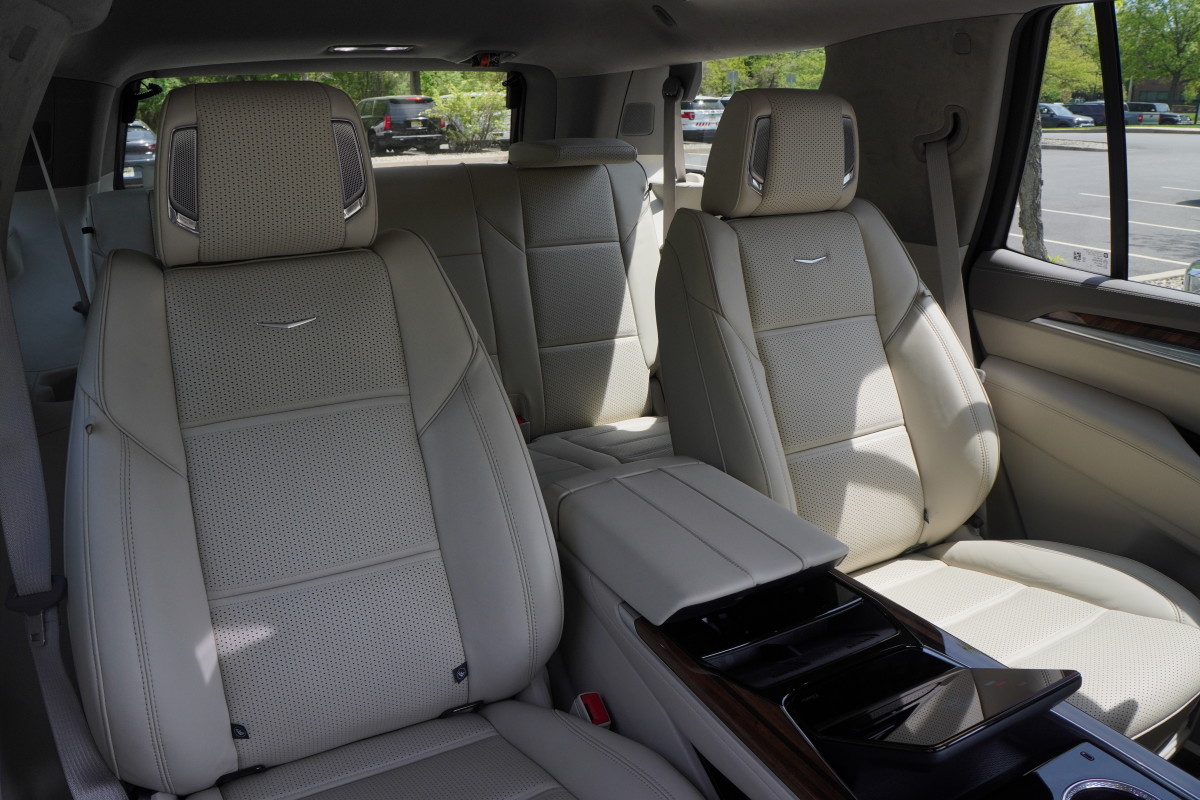
Up front, both the driver and front passenger sit on plush 16-way power-adjustable heated and ventilated front seats that feel more like leather La-Z-Boys than Recaros. The interior itself is a statement of luxury, as most seating surfaces are finished in semi-aniline leather seats, while the dashboard and select trim pieces lining the door cards and center console are finished in a parquet-looking wood trim. Additionally, a power panoramic sunroof adds a little bit of sun to an otherwise cavernous interior. Unlike the glass roof of a Tesla, it is a proper sunroof that tilts and slides out for a taste of outside air.
Though the Escalade feels great behind the wheel with its driver-oriented setup, this is the kind of car you’d much rather be driven in than drive. This 2025 Cadillac Escalade Platinum came with the Executive Second Row Seating package, and for the $7,500 it costs on the options list, it is worth absolutely every penny.
This package replaces the 2nd row bench seat with two power-reclining, heated, ventilated, and massaging captain’s chairs that make car journeys, long drives, and road trips feel like traveling in first class. Between the two seats is a center console containing airline-esque stowable tray tables, a small touchscreen that acts as a rear command center, as well as dual wireless phone charging pads and speakers in the headrests.
The Escalade packs in a lot of tech between the front and the back seats. Up front, a 55-inch screen spans the entire dashboard. On first thought, the idea of a panoramic screen in front of the windshield sounds like overkill, but it oddly makes sense behind the wheel. The screen itself provides three functions: as a screen for the instrument cluster, infotainment system, and as a personal screen for the front seat passenger, which can be configured with downloadable apps like YouTube, Hulu, Netflix, as well as an internet browser.
Included with the Executive Second Row Seating package are 12.6-inch personal screens behind the front seat headrests that act much like the personal screen in front of the front seat passenger. Altogether with the 40-speaker AKG speaker system and the 5G Wi-Fi hotspot, the backseats can doubly function as a properly comfortable place to get some work done.
A close-up of the Cadillac badge on the 2025 Cadillac Escalade Platinum
James Ochoa
Final thoughts
As tested, this 2025 Cadillac Escalade Platinum was $132,615, including destination. I admit that a large chunk of my experience behind the wheel was getting to grips with the extensive learning curve that comes with driving a big, heavy SUV like this. It was hard to get acquainted, but it was smooth sailing afterward.
Despite its size, thirsty engine, and ubiquity compared to competing SUVs, the Escalade still does what it's designed to do: transport you, your family, and all their stuff in absolute, blissful comfort. As I got more acquainted with how the Escalade behaved, I found that the driving experience was nothing but magnificent. The L87 V8 under the hood provides enough power to haul you and your passengers around, while its air suspension can make even the worst roads feel freshly paved.
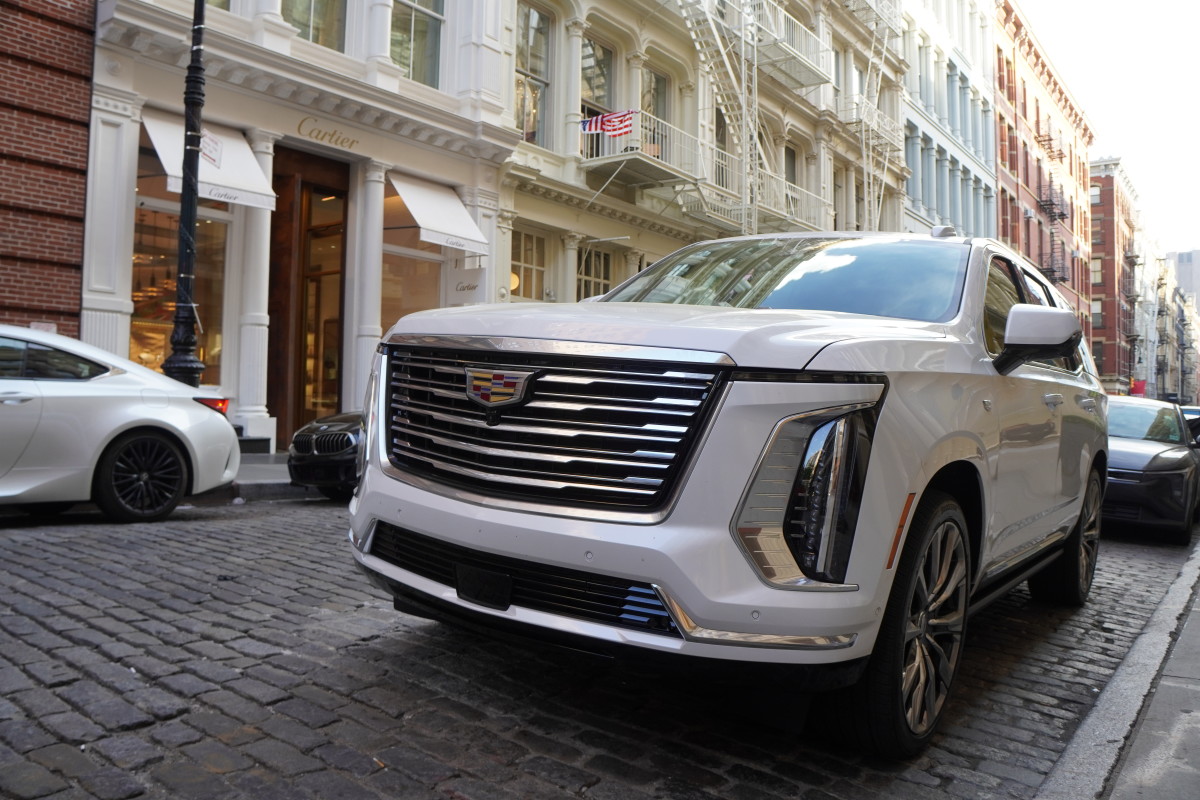
The 2025 Cadillac Escalade Platinum in the Meatpacking District in New York City
James Ochoa
There were a few rough edges to address. For instance, the heads-up display had patterns of working and not working. In an era of open-pore wood trim, the parquet-esque trimmings on the dashboard feel too much like the plastic it sits next to, and the power-assisted doors feel like escaping a vault when getting in and out.
But despite these relatively small, little gremlins, the Escalade is in a league of its own in a world where luxury SUVs are the new status symbols and certain automakers are like fashion brands. Despite this, there's an innocent, coy, and keen quality, a kind of "unapologetic brashness" in its character that I don't find from other similarly-priced SUVs from BMW, Mercedes, and Land Rover. In a world where other big luxury SUVs try to shed their "big car" image with sculpted styling and faux-sporty handling characteristics, the Escalade is characteristically uncanny, and that's okay. It leaves a heartfelt gooey feeling for those who want to be different.
via U.S. Makes Revised Deal Slashing Import Tariffs for U.K. Automakers
Trump cuts U.K. automakers some slack
The U.S. and the U.K. have confirmed a limited trade deal to reduce tariffs on U.K. vehicle imports from 27.5% to 10%. Discounted levies on auto part imports are not part of the agreement, and the decreased tariffs have a limit of 100,000 cars annually. Jaguar Land Rover, which sends the most vehicles to the U.S. out of any automaker, sold about 95,000 cars last year in the U.S., according to The New York Times. The U.K. as a whole exported around 102,000 total cars to the U.S. in 2024, according to Automotive Logistics. In April, Jaguar Land Rover announced it was pausing shipments to the U.S. because of tariff impacts, but resumed vehicle exports earlier this week. The Trump administration is also cutting U.K. steel and aluminum import tariffs from 25% to 0% with quotas, which have yet to be announced, and will allow Rolls-Royce to export engines and plane parts into the U.S. tariff-free. In return, the U.K. slashed its 19% tariff on imported ethanol from the U.S. to 0%. Since 2021, the U.K.’s standard unleaded fuel, E10 petrol, has contained up to 10% ethanol.
President Trump listens as Britain’s Prime Minister Keir Starmer speaks to him on the phone
When finalized, the tariff reduction deal will be the U.S.’s first of its kind with another nation, and some domestic automakers aren’t happy about it. “The U.S. automotive industry is highly integrated with Canada and Mexico; the same is not true for the U.S. and the U.K. We are disappointed that the administration prioritized the U.K. ahead of our North American partners,” said American Automotive Policy Council President Matt Blunt. The council represents the U.S.’ “big three” automakers; Ford, Stellantis, and General Motors (GM). Current tariff policy states that USMCA-compliant (United States-Mexico-Canada Agreement) auto parts are temporarily exempt from tariffs, but USMCA-compliant vehicles imported into the U.S. from Canada and Mexico face tariffs on their non-U.S. content.
Matt Blunt added: “Under this deal, it will now be cheaper to import a U.K. vehicle with very little U.S. content than a USMCA-compliant vehicle from Mexico or Canada that is half American parts.” Cars are the U.K.’s largest export to the U.S., worth around £9 billion ($11.9 billion) in 2024, according to the BBC. “The car industry is vital to the U.K.’s economic prosperity, sustaining 250,000 jobs. We warmly welcome this deal which secures greater certainty for our sector and the communities it supports,” Jaguar Land Rover CEO Adrian Mardell said according to Ars Technica.
American Automotive Policy Council President Matt Blunt is unsurprisingly dissatisfied with the President’s prioritization of foreign automakers over domestic ones. A portion of Blunt’s release read: “We hope this preferential access for U.K. vehicles over North American ones does not set a precedent for future negotiations with Asian and European competitors.” Still, the U.K.-U.S. deal is more symbolic, as it will likely have a limited impact. Most U.K. automakers, such as Jaguar Land Rover, operate at the higher end of the pricing spectrum, restricting their overall U.S. market presence despite strong sales in the luxury segment.
via Ford Warns of Massive Tariff Profit Loss for 2025
Inside Ford’s tariff damage control
Ford has pulled its annual guidance after reporting its Q1 earnings, noting tariffs will cost the company about $1.5 billion in revenue before interest and taxes. The U.S. tariffs on imported vehicles and parts are predicted to add $2.5 billion to Ford’s overall 2025 costs, but the automaker lowered this figure by around $1 billion through actions like moving vehicles from Mexico to Canada with bond carriers so they don’t face levies, Reuters reports.
Bond carriers are transportation companies authorized by customs to move goods across international borders under a customs bond, allowing shipments to cross into the U.S. without immediately being subject to customs duties or tariffs at the border. Ford also mitigated tariff impacts by halting exports to China, but will continue using the country as an export hub to regions like Australia, South America, and other areas with favorable trade relations, according to the Detroit Free Press.
The Michigan-based auto manufacturer gave four material reasons for pulling its 2025 guidance. These reasons include an industry-wide supply chain disruption impacting production, additional or increased U.S. tariffs, changes in tariff implementation, the possibility of retaliatory tariffs from other countries or other restrictions, and uncertainty surrounding tax and emission policy, MarketWatch reports. Ford noted that its forecast of a $1.5 billion projected tariff hit during 2025 is subject to ongoing policy developments. The automaker expects to update Wall Street on its 2025 guidance when reporting its Q2 earnings around mid-summer.
Earnings per share at Ford declined to 14 cents during Q1, down from 49 cents year-over-year, but London Stock Exchange Group analysts expected this figure to be significantly lower at two cents per share. Ford’s net income dropped from $1.3 billion a year earlier to $471 million, and its gross revenue fell 5% to $40.7 billion, which still beat the $36 billion expectation. Ford cited production disruptions with numerous product launches at several plants as negatively impacting Q1 results, but better-than-expected figures for January-March helped ease tariff uncertainty. The automaker made progress throughout Q1 by fulfilling cost reduction and quality improvement goals, which are keeping the company on pace to deliver $1 billion in net cost reductions for 2025, excluding tariff impacts.
Ford’s CEO, Jim Farley, highlighted how automakers with the most significant U.S. footprint will have a big advantage against tariffs, and said that Ford is one of them. However, Ford’s footprint isn’t as large as some may imagine. Aside from its Mustang, Ford doesn’t produce any sedan or compact car models in the U.S., and one of the company’s executives noted how trouble with a few parts could have a highly detrimental impact.
Ford’s Chief Operating Officer, Kumar Galhotra, said during the company’s Q1 earnings call: “The rare earth materials from China, for example, how they are imported, not just for us, but for the entire industry, has become rather complicated over the last few weeks. It would take only a few parts to potentially cause some disruption into our production,” according to Insider Media. General Motors also suspended its 2025 financial guidance after Q1 and is facing steeper losses as high as $5 billion.
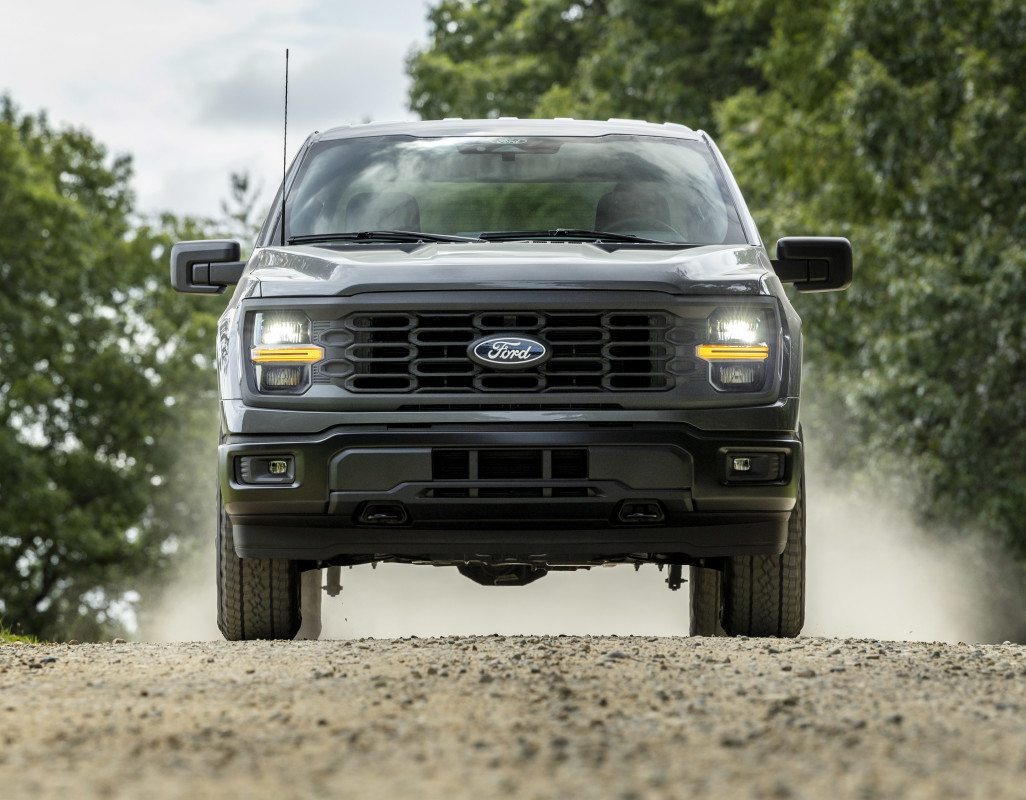
via Ram Reveals Revamped, Stylish Sub-$50K 1500 Express
It seems like everybody wants a truck these days
From rural pastures to the quiet cul-de-sacs of the suburbs outside America's big cities, pickup trucks are vehicles driven by people from all walks of life. Their size and practical utility are some of the characteristics that keep new and potential truck buyers interested in these machines and set them apart from other segments.
Like many new cars these days, brand-new pickup trucks are more than a pretty penny to get into, which leaves some buyers having to decide between breaking the bank or settling for something else. However, Ram's newest truck for 2026 is aimed at buyers who want more premium features and utility for their dollar.
Stellantis
Return of the Express
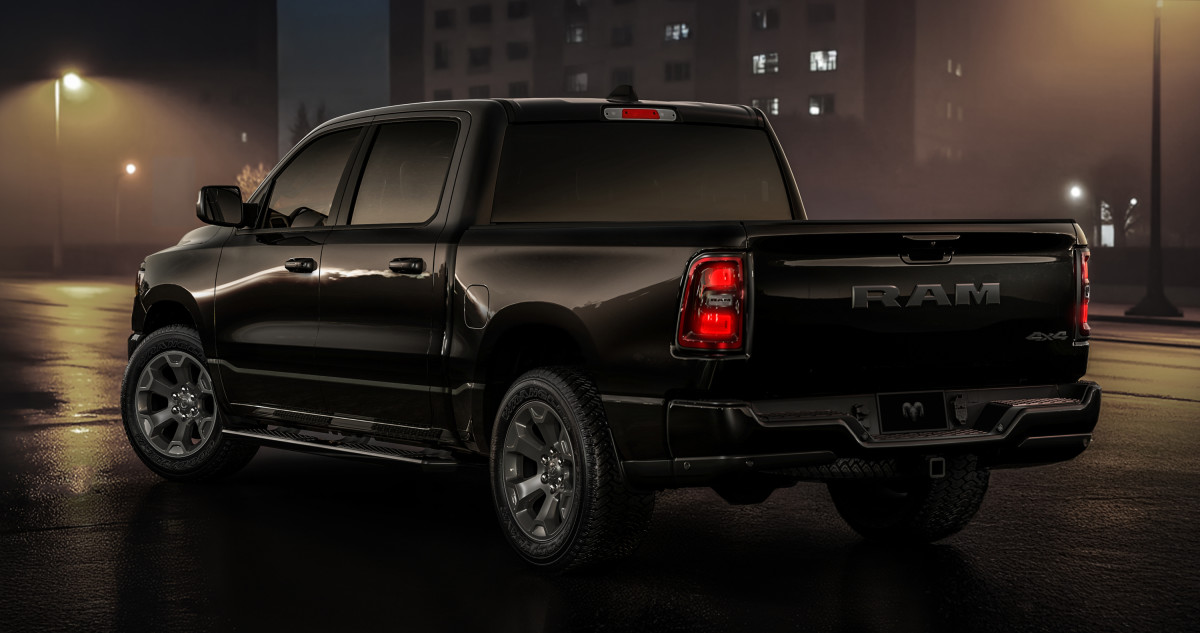
Though the Stellantis-owned Ram already brought back the Ram 1500 with a new skin for the 2025 model year, it is now reviving one of its most popular trim levels with an entirely new spin for 2026. The Ram 1500 Express may be the cheapest Ram in the shed, but it's being presented as a feature-packed machine for not much more money than the work-centric 1500 Tradesman.
Stellantis
Available as a crew cab and a quad cab with the choice of rear—or four-wheel drive, the Ram 1500 Express packs a lot of truck for a base price of $44,495, which includes destination fees. Under the hood is a 305 horsepower 3.6-liter Pentastar V6, and for $1,695, buyers can upgrade to the 420 horsepower 3-liter Hurricane SO inline-six. Ram says that rear-wheel drive quad cab Express trucks with the optional engine are tow rated up to 11,550 lbs.
Though it may sound like a tall order to promise so much truck for under $50,000, this Ram packs a laundry list of features for the price. Standard on the Express are 20-inch wheels, adaptive cruise control, automatic emergency braking, pedestrian emergency braking, and black-bezel LED headlights.
Stellantis
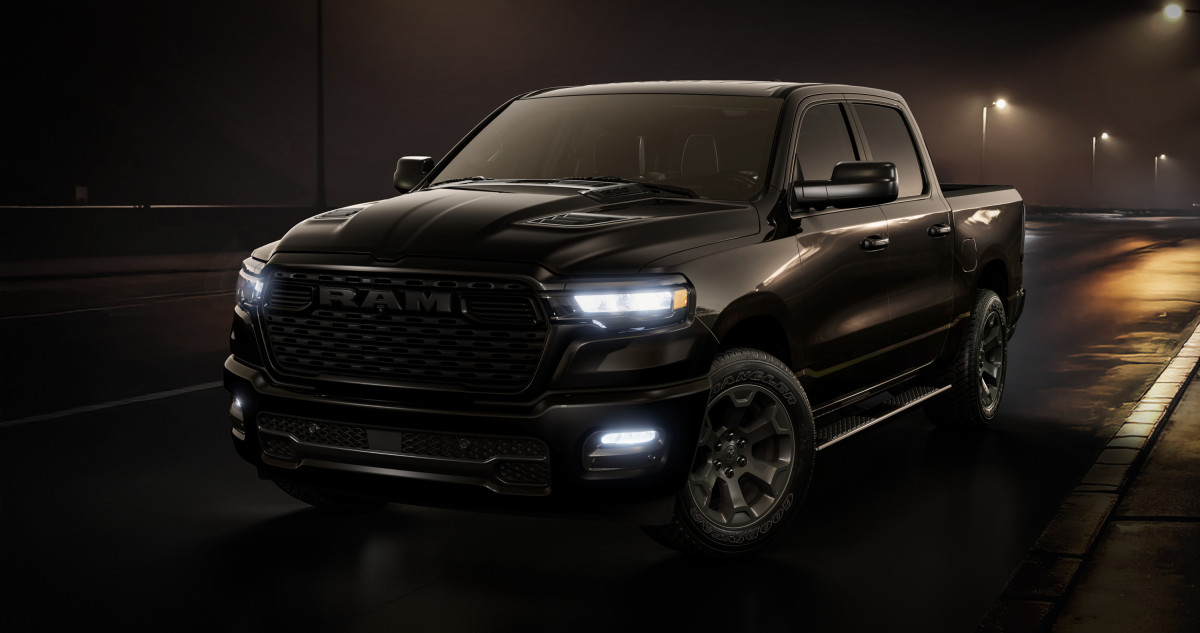
Ram says that the Express version of the 1500 has a "menacing, badge-less monochromatic paint scheme," featuring gloss-black grille surrounds and body-colored front and rear bumpers for the a subdued, stylish, and stealthy look. Though the Express looks like a secret agent's special ride in Diamond Black, Ram is also offering the truck in Bright White, Granite Crystal, Forged Blue, and Hydro Blue.
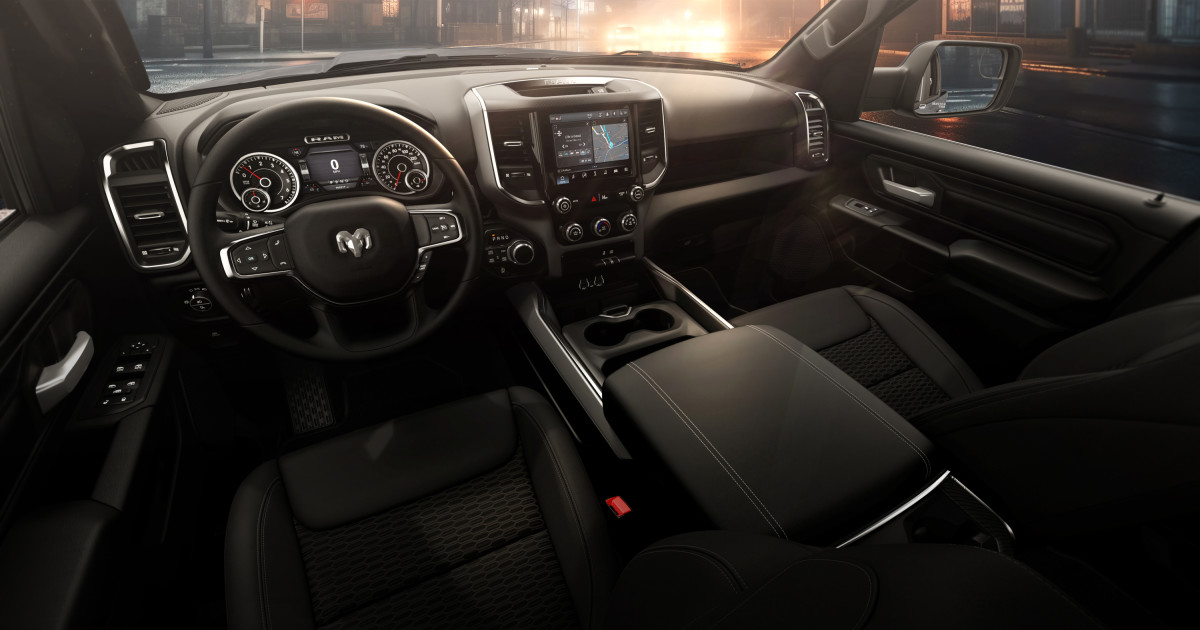
Buyers of four-wheel drive Quad and Crew cab Express models will also have the chance to get the Black Express package, which offers a litany of blacked-out trim pieces and accessories, including black 20-inch wheels, black color badges, a sport hood, side steps, and LED fog lights. The package also includes an upgraded cabin with black cloth bucket seats, a floor console, and a 7-inch gauge cluster.
Ram says that the new 1500 Express will be built at its truck plant in Sterling Heights, Michigan. It expects to open orders for the 2026 Ram 1500 Express sometime in the third quarter of 2025. Before options, the most expensive variant, the 4WD Crew Cab will start at $51,095.
Final thoughts
In the official press release, Ram brand CEO Tim Kuniskis noted that the introduction of the 1500 Express is the latest move in revamping the brand's strategy for selling more trucks in the future.
“The Express is the latest drop in Ram’s product offensive,” Kuniskis said. “We started the 2025 model year with a new Ram 1500 and new Ram Heavy Duty lineup. With the platforms refreshed, we begin rolling out trim level enhancements.”
Kuniskis also said that Ram isn't done introducing new products, as it has "25 more product announcements planned within the next 18 months, ranging from mild to wild with something for every truck buyer." The existence of the Express as an "essentials" truck with some of the toys of the higher trims, like the Big Horn and Tungsten, seems like a great package at a time when buyers want a foot-in-the-door into a cool-looking truck they can feel proud of having.
via Rivian Bet Big on Batteries Before Trump’s Tariffs - And It’s Paying Off
Rivian stays ahead of the curve
President Trump’s executive order imposing a 25% tariff on vehicle and part imports sent a shockwave through the auto industry, but some companies appear to have been more prepared than others. A Bloomberg report from people familiar with the matter who asked not to be identified says Rivian quietly assembled a reserve of electric vehicle (EV) batteries late last year ahead of Trump’s tariff policy. Rivian is said to have purchased the lithium iron phosphate cells from China’s Gotion High-Tech company and more recently worked with cell supplier Samsung SDI to ship a large amount of battery inventory to the U.S. from South Korea. The measures aim to maintain a supply flow and mitigate negative ripple effects from Trump’s policies in areas like pricing, which the president enacted on April 3 for vehicle imports, whereas part levies will begin on May 3. The number of cells that Rivian purchased from Gotion High-Tech was undisclosed.
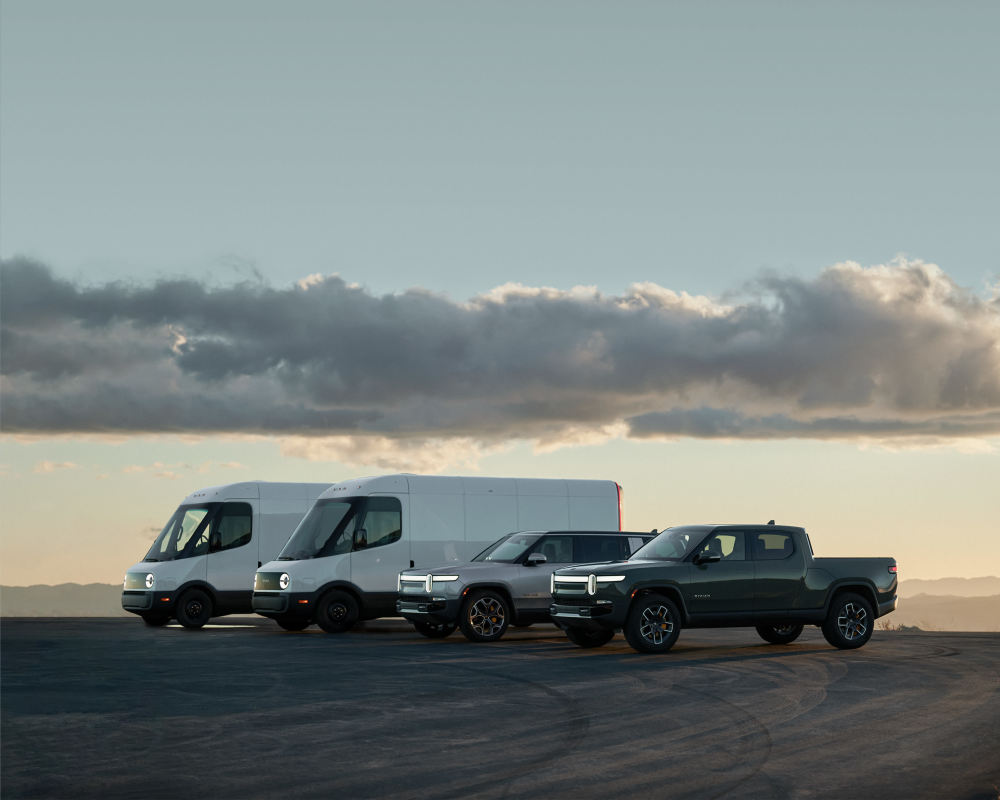
Rivian uses lithium-ion phosphate batteries in its base version, the RS1 SUV and R1T pickup, along with its commercial RCV van. However, the Gotion High-Tech order before Trump’s tariffs was said to be primarily for the RCV. These vehicles are assembled in Normal, Illinois, at Rivian’s plant. The report from Bloomberg states that Rivian paid upfront for the batteries’ shipping costs while Gotion paid and maintained its separate stockpile in the U.S., according to InsideEVs. Rivian is also said to be pursuing similar deals for batteries on raw materials in the future, with a first agreement already signed.
The automaker’s upcoming 5-seat R2 SUV will use new batteries from LG Energy Solution, which it will initially source from Korea before LG begins production in Arizona. The switch aimed to better accommodate the Inflation Reduction Act (IRA) enacted under former President Biden, which requires that a certain percentage of a vehicle’s battery components be manufactured or assembled in North America to qualify for up to $7,500 in federal EV tax credits. Rivian is currently building a second U.S. plant in Georgia.
Rivian’s stock increased from $13.19 on Monday to $13.83 at the end of Friday trading following reports of its strategic response to impending tariffs. Other automakers, such as General Motors, have projected a $4 billion to $5 billion loss in EBIT (earnings before interest and taxes) for 2025 as a result of Trump’s policies, down from the company’s initial EBIT forecast for the year of between $13.7 billion and $15.7 billion.
Rivian’s move with China Gotion High-Tech could save significant sums, given that U.S. tariffs on Chinese EV components and lithium-ion battery imports have hit a staggering 145%. The EV manufacturer received more good news when Trump signed a new executive order on Tuesday preventing multiple tariffs from being stacked on the same imported product for companies making cars in the U.S. While the timeline for how long Rivian can maintain its supply chain remains to be seen, the company’s big bet on batteries is paying off.
via GM Issues Major Production Shift at Canadian Factory
Tariffs hit GM's production once more
In a move meant to respond to the changing tariff-centric trade environment, General Motors slashed production at its Oshawa Assembly Plant in Ontario, Canada, to the dismay of labor organizers and local political leaders. The plant, which produces heavy-duty and light-duty Chevrolet Silverado pickup trucks, will be cutting production output from three shifts to two, effectively reducing the total number of pickups made there by about 50,000 per year. GM's move comes less than a month after President Donald Trump imposed 25% tariffs on auto imports from Canada and shortly after he signed two proclamations that eased auto tariffs and established a credits program on imported vehicles.
GM Oshawa Assembly Plant in Ontario, Canada
General Motors
According to data from Automotive News, the Oshawa Assembly Plant built approximately 152,190 heavy-duty and light-duty Chevrolet Silverados in 2024. Oshawa’s output will be moved stateside, as Silverados are also built at factories in Flint, Michigan, and Fort Wayne, Indiana. In a letter to shareholders released this week, GM CEO Mary Barra wrote that the tariff situation would cost GM about $4 to 5 billion, while GM Canada President Kristian Aquilina said in a separate statement that the automaker needs to adapt where it can.
“Shifting trade policies, changing market dynamics, and growing global competition present new realities. We must adapt—and we are.” GM Canada President Kristian Aquilina said. “For GM, this means building more in Canada, for Canada. As part of this strategic realignment, we are adjusting truck production at Oshawa Assembly to better reflect Canadian market demand. These decisions are never easy, but they are necessary to preserve and strengthen Canada’s auto manufacturing base for the long term.”
GM Oshawa Assembly Plant in Ontario, Canada
General Motors
Production cuts mean job losses, union and political leaders say
Unifor, the Canadian autoworkers union that represents the workers at GM's Oshawa plant, warns that the cuts will impact 700 of the 3,000 workers at the plant, adding that another 1,500 jobs will be lost within the supplier network that feeds the plant. In a statement, the union's National President Lana Payne called the move a "reckless decision that deals a direct blow to our members," and urged GM to reverse its decision, especially as President Trump and Canadian Prime Minister Mark Carney are due to meet in Washington to negotiate.
“Trump’s tariffs are designed to crush Canadian production — but GM doesn’t get a free pass to abandon its commitments, and the U.S. doesn’t get to free ride in Canada,” Payne warned. "GM has had strong support from workers, the community, and governments. Canadians invested millions to revive this plant. Cutting jobs now has consequences. The company has six months to fix this."
GM Oshawa Assembly Plant in Ontario, Canada
General Motors
Similarly, Ontario Premier Doug Ford called the announcement “extremely tough” for autoworkers in Oshawa in a post on X (formerly known as Twitter), noting that the affected "are hardworking people who have helped build Ontario’s auto industry." He also noted that GM reaffirmed its commitment to the Oshawa plant and that Ontario "remains a global leader in auto manufacturing, attracting billions in new electric vehicle and battery manufacturing investments."
"We are not slowing down. We are building Ontario into the engine of North America’s auto future, and the workers of Oshawa and across the province are a key part of that." Premier Ford said. "In the face of economic uncertainty caused by the chaos of President Trump’s tariffs and tariff threats, we will continue to fight every single day to attract new investment, secure good-paying jobs, and support workers and their families."
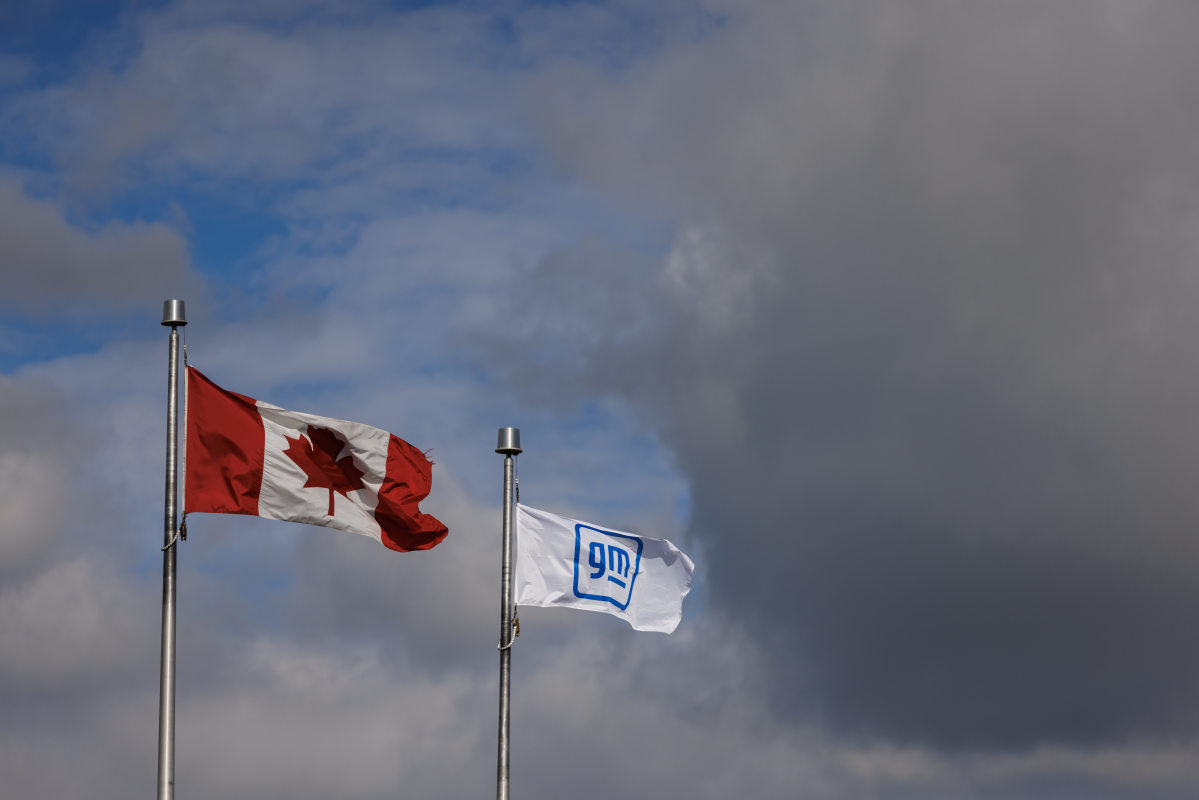
The Canadian and General Motors flags outside General Motors Canada's Oshawa Assembly Complex in Oshawa, Ontario, Canada
Unfortunately, these moves will happen as the Trump Administration's economic plan comes into fruition, whether it be the parts that are installed into cars or, in this case, the vehicles themselves. Given that automakers like GM, Stellantis, and Honda have significant Canadian investments, I wonder how these tariff talks will go between Trump and Prime Minister Carney at the White House on Tuesday.
via Hyundai IONIQ 5 N vs. the Grueling One Lap Race: Hyundai & Grassroots Motorsports Take on America's Toughest Road Challenge
Hyundai is hunting the checkered flag once more
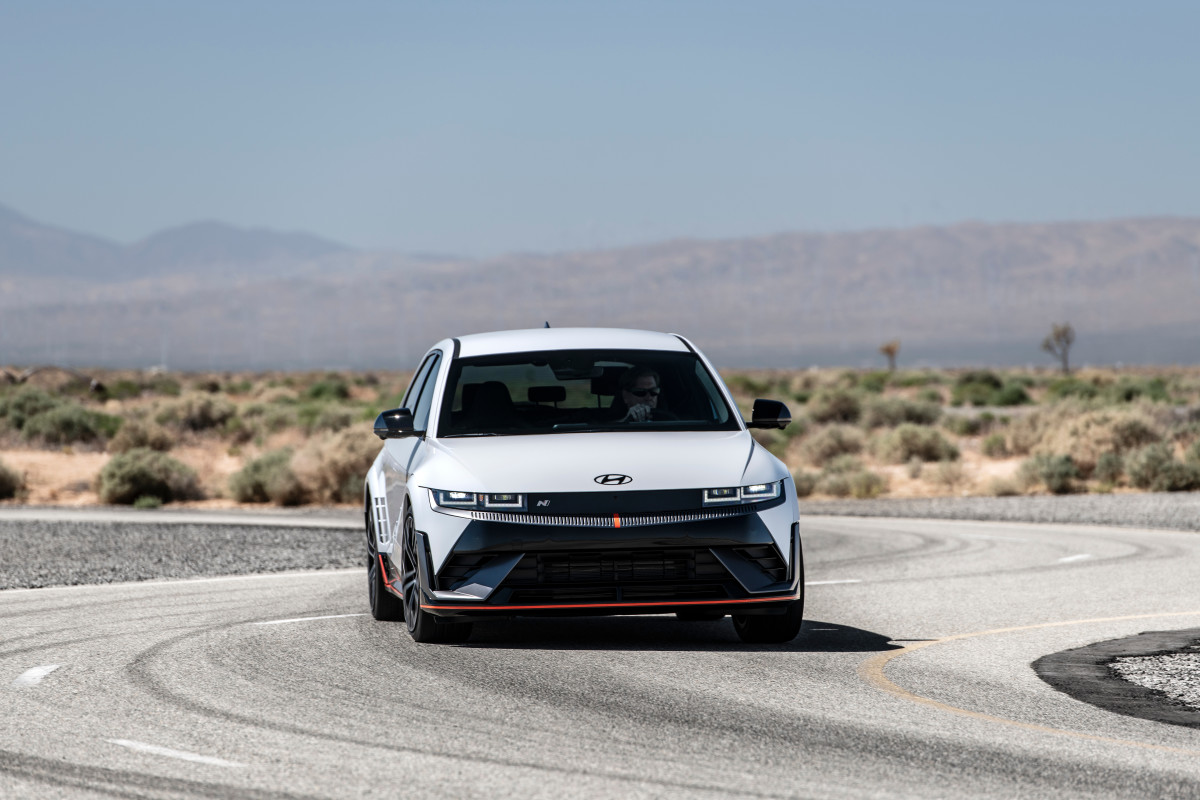
After announcing its foray into racing with the luxury brand Genesis, Hyundai will make yet another appearance that should excite automotive enthusiasts. In partnership with Grassroots Motorsports magazine, Hyundai will enter a 2025 Hyundai IONIQ 5 N into the Alternative Fuels class of the 2025 Tire Rack One Lap of America race. To make their entry even more special, Hyundai has also been named the Official Automaker of the 41st running of the One Lap of America race.
What is the One Lap Race?
One Lap of America was created by the late legendary automotive journalist Brock Yates, who you might know from Cannonball Run fame. Spanning from May 3 to May 10, teams will compete in a series of racetrack challenges around the U.S. in both stock and heavily modified vehicles of all makes and models. The challenges include timed events at road courses, drag strips, skid pads, and autocross courses. As if that wasn't enough of a test of the cars’ abilities, teams will have to drive the cars thousands of miles across the country to each track. This year’s run will host 86 teams from all over the country with 17 scored events over the course of eight days at Virginia International Raceway and NCM Motorsports Park.
2025 Hyundai IONIQ 5 N
Hyundai
Hyundai IONIQ 5 N, from showroom to track
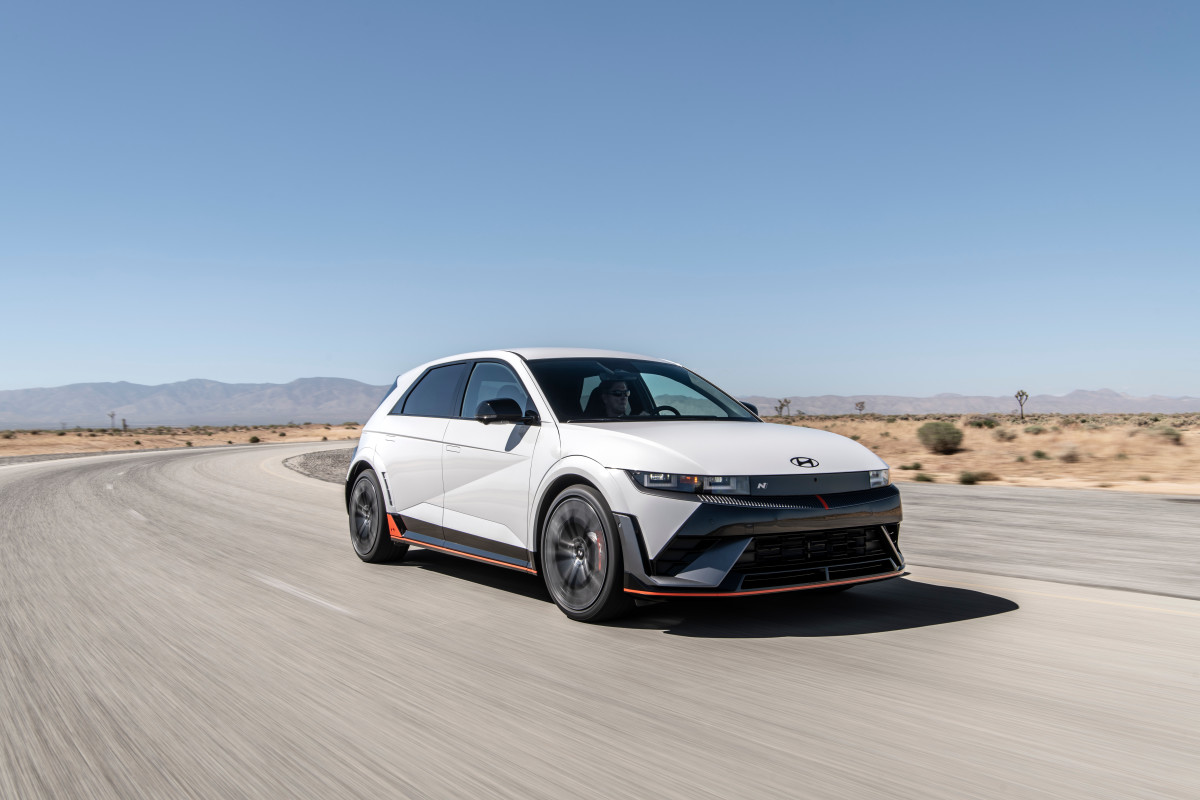
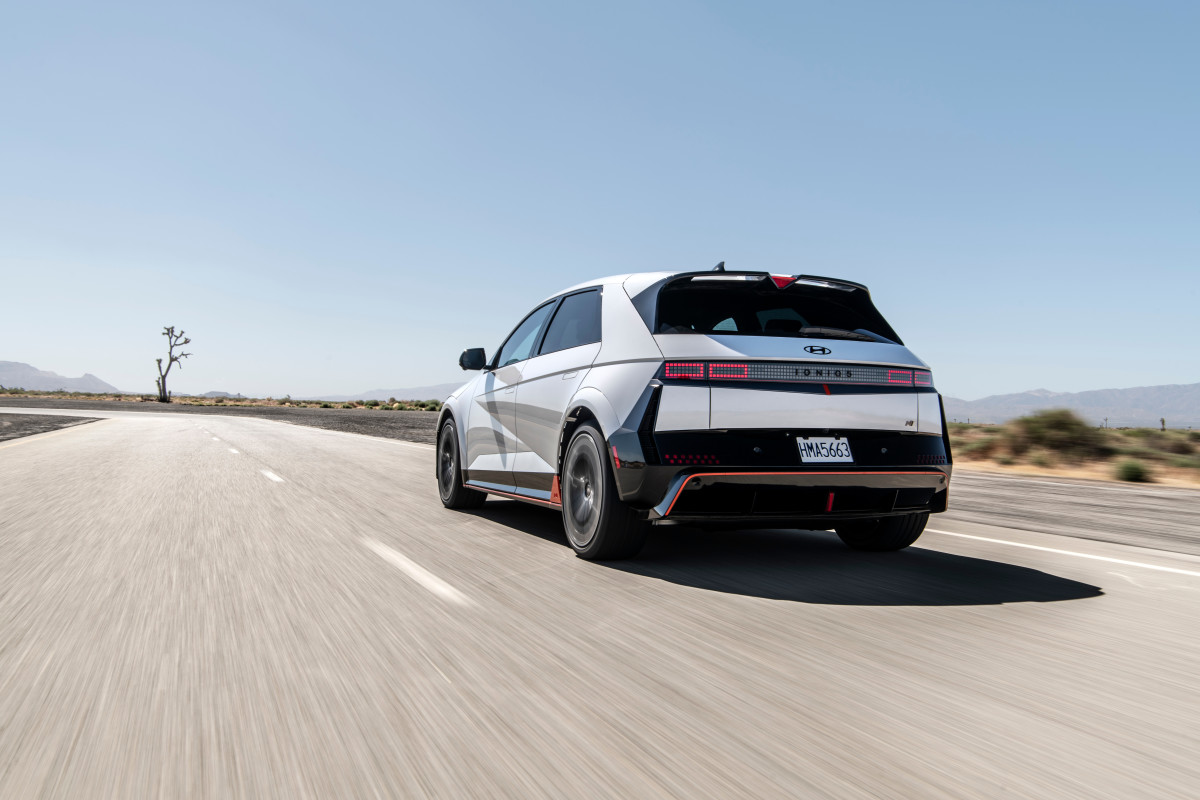
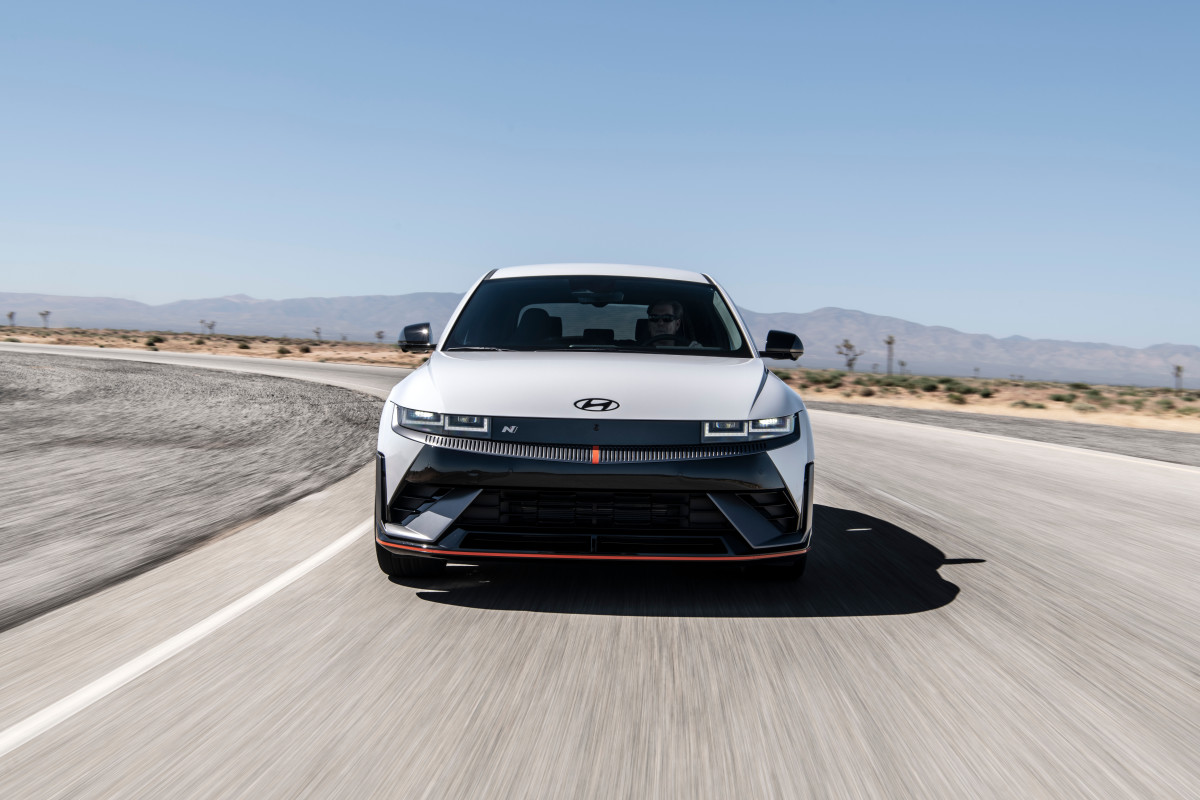
The N variant of the Hyundai IONIQ 5 takes the retro-inspired SUV to new levels both aesthetically and mechanically. Exterior changes include a revised front end with larger air intakes, additional air curtains and air flaps for improved cooling, as well as a rear diffuser. Several new body and motor reinforcements help keep the 601 hp and 546 lb-ft of torque planted as the IONIQ 5 N accelerates from 0-62 mph in 3.5 seconds. Not fast enough for you? N Grin Boost mode will boost power to 641 hp and 568 lb-ft of torque for 10 seconds and drop the 0-62 mph time to 3.4 seconds. The lithium-ion battery is also bigger than the regular IONIQ 5, with a capacity of 84 kWh.
Perhaps the most interesting feature of the IONIQ 5 N is its N e-shift transmission, which is designed to emulate the feel of an 8-speed dual-clutch automatic transmission by controlling motor torque to simulate the feeling between shifts. That transmission is also paired with the N Active Sound+ system, which plays three different sound profiles through eight interior and two exterior speakers: a 2.0-liter turbocharged internal combustion engine from other Hyundai N cars, futuristic EV sounds, and twin-engine fighter jet sounds.
2025 Hyundai IONIQ 5 N
Hyundai
At the wheel of the No. 44 stock IONIQ 5 N will be One Lap veterans Andy Hollis and Tom Suddard. The duo are no strangers to high-speed events, as Suddard is the publisher of Grassroots Motorsports while Hollis is the magazine's tire tester and a 13-time SCCA Solo national champion and professional high-performance driving instructor, with ten One Lap class wins under his belt. Although two of those wins were alongside Suddard, neither has driven an EV in the race before.
Is the IONIQ 5 N right for the event?
Not only is the IONIQ 5 N unique and attractive, but it's also a track-ready machine from the factory. With 601 instantly available horses on tap, the stock electric SUV beats out some of the sports cars on the market in terms of power.
“I was smitten with the massive torque of an EV the first time I drove one. But until now, none have been truly track-capable right off the showroom floor,” said Hollis. “Hyundai’s IONIQ 5 N checks all the boxes with excellent cornering, great brakes, and sophisticated battery conditioning that allows all that torque to be used for an entire session. I can't wait to get behind the wheel on some of the country's best tracks.”
2025 Hyundai IONIQ 5 N
Hyundai
Final thoughts
The One Lap of America race will be a tremendous rest of the Hyundai IONIQ 5 N's abilities. There's no doubt that it's impressively fast, but track events like this require a precise combination of speed, handling, and braking abilities. If it ends up impressing here too, the event could further cement Hyundai’s image as a true competitor in the motorsports space.
Porsche is bracing for one of its most difficult years in recent memory. The German sports car maker warned it now expects profit margins to dip into the single digits — between 6.5% and 8% — a significant drop from its earlier forecast of at least 10%. The company cited multiple headwinds, including sluggish electric vehicle sales, a sharp decline in China demand, and the mounting cost of U.S. tariffs.
Porsche, which imports all its vehicles into the U.S. from Europe, is especially vulnerable to the tariff regime introduced under President Donald Trump. Despite surging U.S. demand for its Macan and Cayenne SUVs, the company has no plans to localize production, arguing that it would be more costly than absorbing the tariffs. Citi analysts estimate those duties could cost Porsche up to $2.3 billion annually if no price increases are implemented.
EV demand fizzles, forcing strategy shift
A broader slowdown in global EV adoption is also hitting Porsche hard. The company had been investing heavily in electric mobility, but it’s now pulling back. On Monday, Porsche said it will no longer independently expand high-performance battery production through its Cellforce subsidiary, a move that adds roughly $1.5 billion in one-off costs this year.
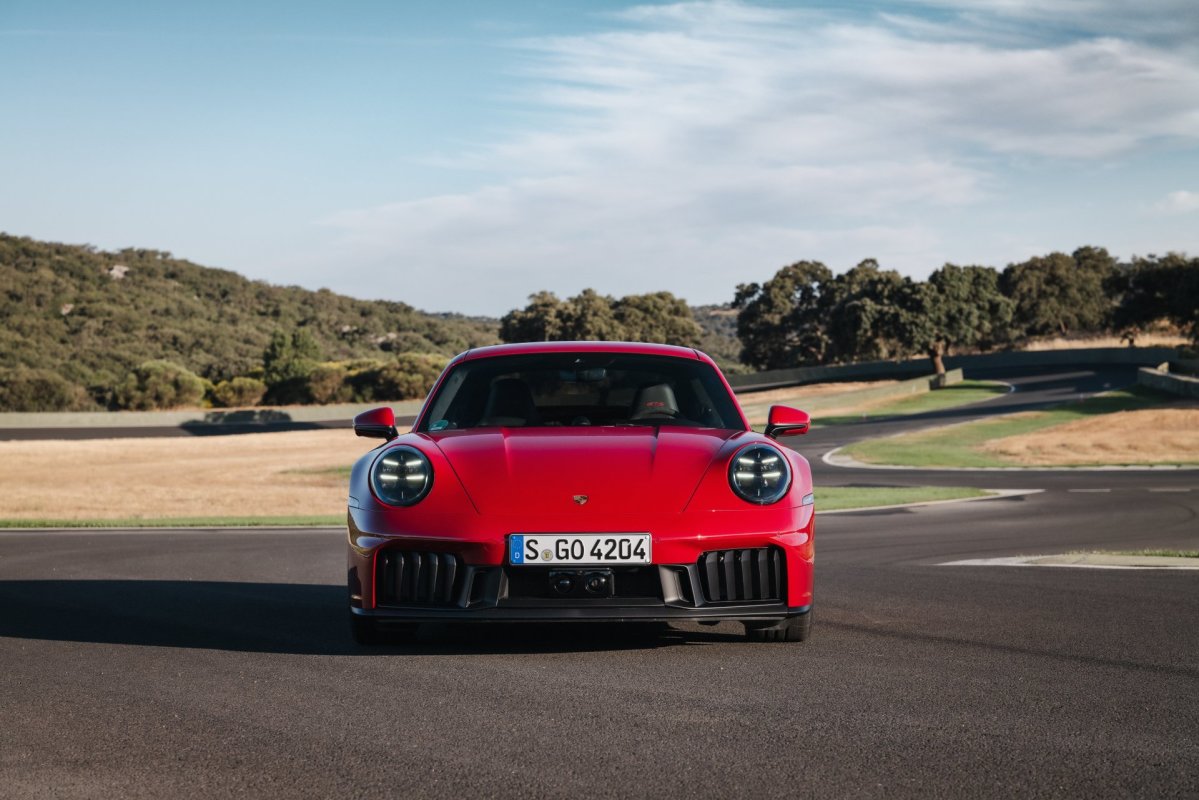
Porsche 992.2 911 Carrera 4 GTS
Porsche
“We have to face the reality that we see from the markets, namely a complete slowdown when it comes to electric mobility,” CFO Jochen Breckner said during a call with reporters.
To compensate, Porsche is pivoting toward expanding its offerings of combustion-engine and plug-in hybrid vehicles, despite previously ambitious EV targets. That shift will cost the company an additional $900 million in 2025.
China sales collapse adds pressure
The picture is equally grim in China. Once Porsche’s second-largest market, the country saw a stunning 42% drop in Porsche deliveries in the first quarter — the brand’s worst performance there since 2013. The company now expects total China deliveries to fall 30% this year to around 40,000 units.
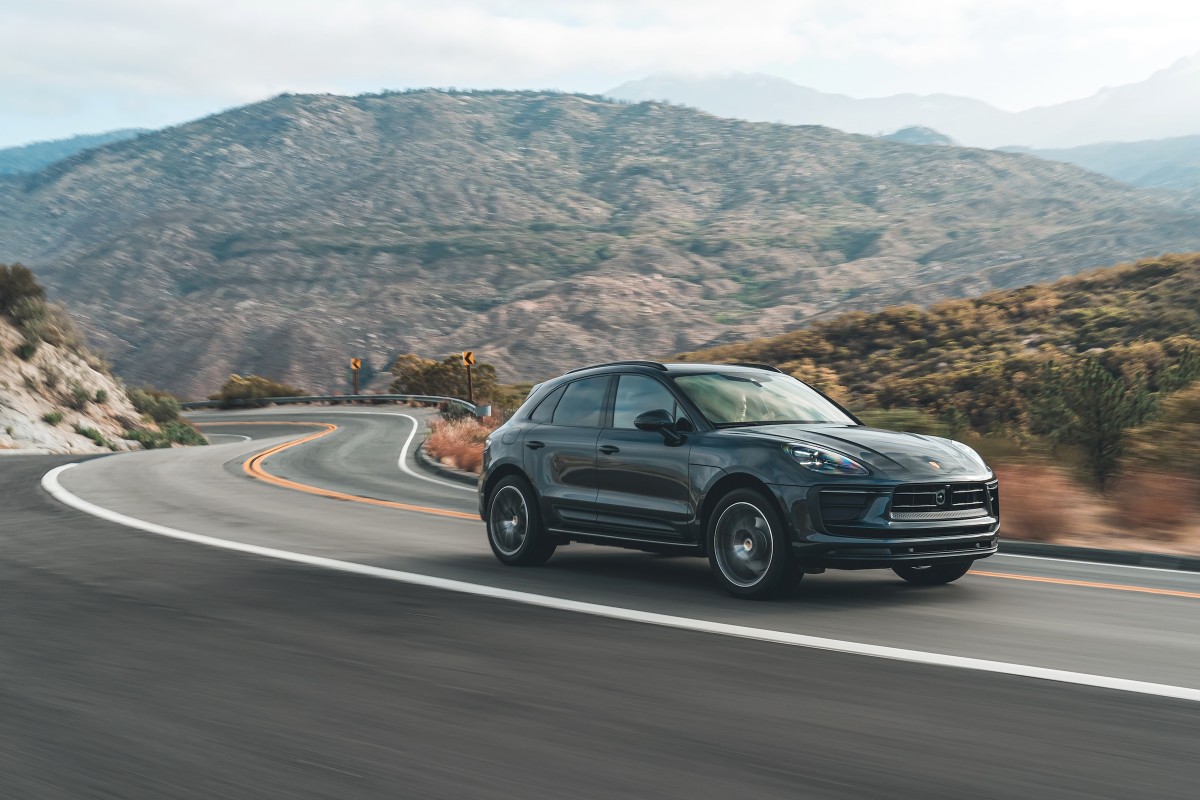
2025 Porsche Macan
Porsche
The culprit? Fierce competition from domestic automakers like BYD and a sluggish Chinese economy. Porsche has responded by reshuffling key executives and initiating job cuts in Germany to trim costs.
Final thoughts
First-quarter earnings reflect the pressure that automakers are facing in China and in the EV segment. Porsche’s operating profit dropped 40% year-over-year to $860 million, and it recorded its first-ever single-digit quarterly return on sales at 8.6%. The company also lowered its full-year revenue guidance to as low as $42 billion, down from previous expectations of $44 billion to $45 billion.
While external factors are partly to blame, analysts say Porsche needs to regain control of its narrative. “It has work to do to exhibit greater control of its problems,” wrote Citi’s Harald Hendrikse. For a brand known for precision and performance, 2025 is shaping up to be a bumpy ride.
.jpeg)